Grand Theft Auto VI: Inside the Decade-Long Development of a Billion-Dollar Cultural Phenomenon

 London
 8 °C

 Manchester
 5 °C
 Glasgow
7 °C
 Dublin
 2 °C
 Belfast
 3 °C
 Washington
10 °C
 Denver
 14 °C
 Atlanta
10 °C
 Dallas
9 °C
 Houston Texas
 12 °C
 New Orleans
13 °C
 El Paso
 18 °C
 Phoenix
24 °C
 Los Angeles
23 °C
San Diego
 22 °C
San Francisco
15 °C
Chicago
8 °C
Minneapolis
7 °C
Seattle
10 °C
Portland
 10 °C
Salt Lake City
13 °C
Las Vegas
20 °C
Miami
23 °C
Jacksonville
 14 °C
San Antonio
14 °C
Bermuda
20 °C
Nassau
8 °C
Iqaluit
 -7 °C
Yellowknife
1 °C
Anchorage
-3 °C
Fairbanks
-6 °C
Barrow
-9 °C
Calgary
12 °C
Edmonton
7 °C
Winnipeg
9 °C
Goose Bay
6 °C
Halifax
5 °C
Boston
6 °C
Ottawa
5 °C
Toronto
5 °C
Detroit
6 °C
Cleveland
7 °C
New York
8 °C
Baltimore
8 °C
Philadelphia
7 °C
Nuuk (Godthåb)
-2 °C
Hong Kong
22 °C
Singapore
26 °C
Melbourne
20 °C
Canberra
10 °C
Adelaide
15 °C
Darwin
31 °C
Perth
19 °C
Fort Worth
9 °C
Honolulu
 29 °C
Sydney
16 °C
Johannesburg
14 °C
Dubai
24 °C
Mumbai
27 °C
Zürich
8 °C
Tokyo
17 °C
Seoul
6 °C
Delhi
17 °C
Beijing
6 °C
Riyadh
14 °C
Prague
4 °C
Pennsylvania
7 °C
Valletta
19 °C
Manama
22 °C
Warsaw
1 °C
Stockholm
6 °C
After more than a decade of development and an estimated investment exceeding one billion dollars, Rockstar Games is set to release Grand Theft Auto VI on November 19. The latest installment marks a significant evolution for the franchise, introducing dual protagonists Jason and Lucia in the neon-drenched setting of Vice City while navigating complex studio dynamics and global anticipation.
Grand Theft Auto VI, the latest installment in one of the world’s most popular and controversial video game franchises, is poised for release on November 19. The launch follows a development period spanning more than ten years and an estimated budget surpassing one billion dollars, according to independent estimates that Rockstar Games has not officially confirmed. As the gaming industry contends with widespread studio closures, layoffs, and escalating production costs, the entire sector is looking to Grand Theft Auto VI as a critical economic stabilizer. The game’s predecessor, 2013’s Grand Theft Auto V, remains one of the most commercially successful entertainment products in history, having sold 230 million copies worldwide.
The anticipation for this release has reached unprecedented levels. When footage of the game premiered on Netflix, the streaming giant’s servers nearly collapsed under the traffic. The first trailer alone garnered 300 million views on YouTube. This global attention underscores a rare shared cultural moment in an era defined by fragmented digital consumption; across the world, individuals have booked time off work to experience the launch together on November 19. Despite this excitement, the atmosphere at Rockstar’s headquarters remains complex. The studio is currently navigating the tension between finalizing a massive creative project and managing significant internal labor disputes.
While Grand Theft Auto is often associated with American culture, its central development hub is located in Edinburgh, Scotland. Rockstar North, the studio responsible for the series’ core identity, operates in the shadow of Arthur’s Seat, far removed from the game’s fictional setting. The studio’s history is woven into the local mythology of Edinburgh, where former employees and testers have become part of the city’s informal lore. Rumors of extravagant parties among executives during the 2000s mirrored the decadent excesses depicted in the games themselves. Today, however, the mood at Rockstar North is strained. The studio is defending a high-profile employment tribunal case regarding the dismissal of 34 employees last year. These former staff members allege they were terminated due to their involvement in union organization efforts with the Independent Workers’ Union of Great Britain (IWGB). The legal proceedings, initially expected to conclude in October, will now extend through the game’s release date. Days before a recent visit to the studio, Rockstar’s head of publishing, Jennifer Kolbe, was testifying in court as protesters gathered outside.
Inside the quiet headquarters, where many staff members are taking leave after more than a decade of intensive work, the remaining team exists in a transitional phase between artistic completion and commercial release. A countdown to the launch date is displayed on a screen in one of the nearly deserted floors. The game’s creative leads, including Rob Nelson, co-studio head of Rockstar North, have spent years crafting a world that contrasts sharply with their Scottish environment. Grand Theft Auto VI transports players to Vice City, a fictionalized parody of Miami, Florida, located within the state of Leonida. The setting is described as a neon-soaked metropolis characterized by sleaze, struggle, and hard-partying excess, juxtaposed against a concealed criminal underworld and unpredictable regional chaos.
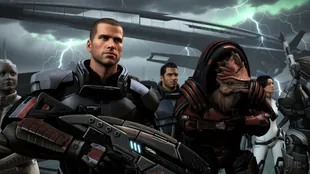
The narrative structure of Grand Theft Auto VI represents a fundamental shift for the franchise. For the first time in the series’ history, players control two protagonists: Jason and Lucia, a young criminal couple on the run. Lucia is the first female character to receive headline billing in a Grand Theft Auto game. The series has previously featured male protagonists ranging from psychopathic figures like Trevor in Grand Theft Auto V to more sympathetic characters such as Niko Bellic in Grand Theft Auto IV and Carl Johnson in San Andreas. In this installment, the story is shared between Jason and Lucia. While players are locked into one character’s perspective for certain missions, they can switch freely between them for most of the game. The relationship between the two characters is dynamic; if they are apart, they communicate via text and phone calls. If they are together, players can engage them in activities such as visiting the gym, going to bars, attending meditation retreats, or participating in heists. Neglecting this relationship carries consequences, with studio head Rob Nelson noting that whether the romance survives is entirely up to the player.
This focus on interpersonal dynamics marks a transformational change for a series historically defined by black humor and directionless violent mayhem. Previous entries allowed players to crash stolen cars and terrorize pedestrians in virtual pastiches of New York, Miami, or Los Angeles without significant emotional attachment to the characters. Grand Theft Auto VI asks players to care about its protagonists and act out their care for one another. Players can press a button to make the characters hold hands, fostering a sense of stewardship over their relationship. Nelson explained that this approach is driven by the narrative context: Jason and Lucia are a young couple with their backs against the wall, making it narratively inconsistent for them to engage in indiscriminate carnage early on.
The gameplay mechanics reflect this shift toward character-driven storytelling. Players must be more strategic than in previous titles. Early in the game, Jason and Lucia can only hotwire low-end vehicles and pick basic locks. They gradually unlock access to higher-value targets as their skills improve. Instead of immediately wielding assault rifles in crowded streets, players are encouraged to scope out targets such as gas stations or upscale boutiques. Success requires disabling security cameras, stealing footage, finding back doors, and obtaining safe codes to avoid confrontation. Failure to plan results in rapid escalation of chaos. During a demonstration at a protected jewelry store, Lucia confronts security guards while Jason retrieves cash from a safe. When one guard refuses to surrender and opens fire, the situation devolves into a desperate scramble. Jason knocks the guard out with the butt of his gun while Lucia provides cover. Their escape involves stealing a motorbike and evading police cars and helicopters in a chase that spans half the district. After escaping, the characters must change clothes and lie low in the outskirts of the city to avoid detection.
The game draws heavy inspiration from Rockstar’s 2018 title, Red Dead Redemption 2, which featured an outlaw protagonist who came to regret his life of violence. Nelson identified the challenge of encouraging players to behave differently without restricting their freedom as one of the greatest difficulties in development. This tension between the story developers wish to tell and the random whims of players is inherent to the open-world genre. Nelson stated that while crime remains a fundamental part of Grand Theft Auto, the game attempts to ensure that playing in character does not punish the player, though actions will influence how the game plays out. He acknowledged that this is the first Grand Theft Auto to provide mechanisms encouraging empathy, a product of the specific story being told.
The franchise has long been a lightning rod for moral panic regarding video game violence. In Grand Theft Auto III, players could hire a sex worker and then run her over to steal her money back. In the 2000s, the discovery of an explicit sex minigame hidden in the code of Grand Theft Auto San Andreas prompted class-action lawsuits in the United States. Haitian-American groups attempted to halt the sale of Grand Theft Auto Vice City in 2002 over its depictions of violence against specific groups. While US courts have consistently upheld Rockstar’s First Amendment rights, these incidents highlight a cultural double standard where film and television violence is often contextualized differently than interactive media violence.
As graphics have become more realistic, Grand Theft Auto has sought to contextualize its violence through cinematic storytelling and character development. The team size has quadrupled since Grand Theft Auto V, allowing for a level of detail previously unseen in the series. Nelson described the transition from being limited by technical constraints to being limited by human resource constraints as a key challenge. He noted that while money can solve some problems, it does not guarantee quality. The game features detailed animations for eating and drinking, realistic liquid physics in bottles carried by characters, and fully illustrated magazines that players can read. Every pedestrian is individually designed, down to their clothing.
The decision to spend over a decade on a single project rather than releasing a faster sequel stems from the studio’s ambition. Kolbe noted that Rockstar could have produced a Grand Theft Auto 5.5 more quickly but chose not to. Nelson agreed, stating that developers with such resources must take big swings and avoid creating just "more of the same." The game has been in development in some form since 2015, when the team conducted research trips to Miami under the codename Project Americas, which reflected an abandoned ambition to set the game across two continents. It was officially announced in December 2023 after being delayed twice.
Grand Theft Auto VI is scheduled for release on PlayStation 5 and Xbox Series X/S on November 19. The launch will mark the end of a 13-year wait for new mainline entries in the series, a period during which the game existed largely as fervent rumor and anticipation. As the industry watches to see if the title can deliver on its projected billions in revenue, the release stands as a testament to Rockstar’s capacity for ambitious, resource-intensive development amidst significant internal and external pressures.
(M.Scott--TAG)