Research into weight-loss drugs tipped for Nobel as award week opens / Photo: Jade GAO - AFP/File

 London
 12 °C
12 °C
 Manchester
14 °C
Manchester
14 °C
 Glasgow
9 °C
Glasgow
9 °C
 Dublin
 17 °C
17 °C
 Belfast
17 °C
Belfast
17 °C
 Washington
17 °C
Washington
17 °C
 Denver
 21 °C
21 °C
 Atlanta
20 °C
Atlanta
20 °C
 Dallas
24 °C
Dallas
24 °C
 Houston Texas
24 °C
Houston Texas
24 °C
 New Orleans
25 °C
New Orleans
25 °C
 El Paso
22 °C
El Paso
22 °C
 Phoenix
34 °C
Phoenix
34 °C
 Los Angeles
 32 °C
San Diego
33 °C
San Francisco
22 °C
Chicago
17 °C
Minneapolis
13 °C
Seattle
18 °C
Portland
24 °C
Salt Lake City
24 °C
Las Vegas
34 °C
Miami
28 °C
Jacksonville
24 °C
San Antonio
32 °C
San Diego
33 °C
San Francisco
22 °C
Chicago
17 °C
Minneapolis
13 °C
Seattle
18 °C
Portland
24 °C
Salt Lake City
24 °C
Las Vegas
34 °C
Miami
28 °C
Jacksonville
24 °C
San Antonio
 24 °C
Bermuda
25 °C
Nassau
13 °C
Iqaluit
24 °C
Bermuda
25 °C
Nassau
13 °C
Iqaluit
 -1 °C
Yellowknife
6 °C
Anchorage
-1 °C
Yellowknife
6 °C
Anchorage
 6 °C
Fairbanks
7 °C
Barrow
-6 °C
Calgary
6 °C
Fairbanks
7 °C
Barrow
-6 °C
Calgary
 15 °C
Edmonton
18 °C
Winnipeg
10 °C
Goose Bay
16 °C
Halifax
14 °C
Boston
15 °C
Ottawa
15 °C
Toronto
16 °C
Detroit
18 °C
Cleveland
15 °C
New York
14 °C
Baltimore
17 °C
Philadelphia
14 °C
Nuuk (Godthåb)
2 °C
Hong Kong
26 °C
Singapore
29 °C
Melbourne
28 °C
Canberra
15 °C
Adelaide
16 °C
Darwin
30 °C
Perth
20 °C
Fort Worth
23 °C
Honolulu
27 °C
Sydney
21 °C
Johannesburg
12 °C
Dubai
30 °C
Mumbai
28 °C
Zürich
15 °C
Tokyo
19 °C
Seoul
15 °C
Edmonton
18 °C
Winnipeg
10 °C
Goose Bay
16 °C
Halifax
14 °C
Boston
15 °C
Ottawa
15 °C
Toronto
16 °C
Detroit
18 °C
Cleveland
15 °C
New York
14 °C
Baltimore
17 °C
Philadelphia
14 °C
Nuuk (Godthåb)
2 °C
Hong Kong
26 °C
Singapore
29 °C
Melbourne
28 °C
Canberra
15 °C
Adelaide
16 °C
Darwin
30 °C
Perth
20 °C
Fort Worth
23 °C
Honolulu
27 °C
Sydney
21 °C
Johannesburg
12 °C
Dubai
30 °C
Mumbai
28 °C
Zürich
15 °C
Tokyo
19 °C
Seoul
 19 °C
Delhi
24 °C
Beijing
17 °C
Riyadh
26 °C
Prague
11 °C
Pennsylvania
15 °C
Valletta
22 °C
Manama
31 °C
Warsaw
11 °C
Stockholm
11 °C
19 °C
Delhi
24 °C
Beijing
17 °C
Riyadh
26 °C
Prague
11 °C
Pennsylvania
15 °C
Valletta
22 °C
Manama
31 °C
Warsaw
11 °C
Stockholm
11 °C
Research into hormones that regulate appetite is on everybody's lips for the Nobel medicine prize, to be announced on Monday when the 2026 Nobel season kicks off.
The winners of the six Nobel prizes for medicine, physics, chemistry, literature, peace and economics will be revealed daily from October 5-12.
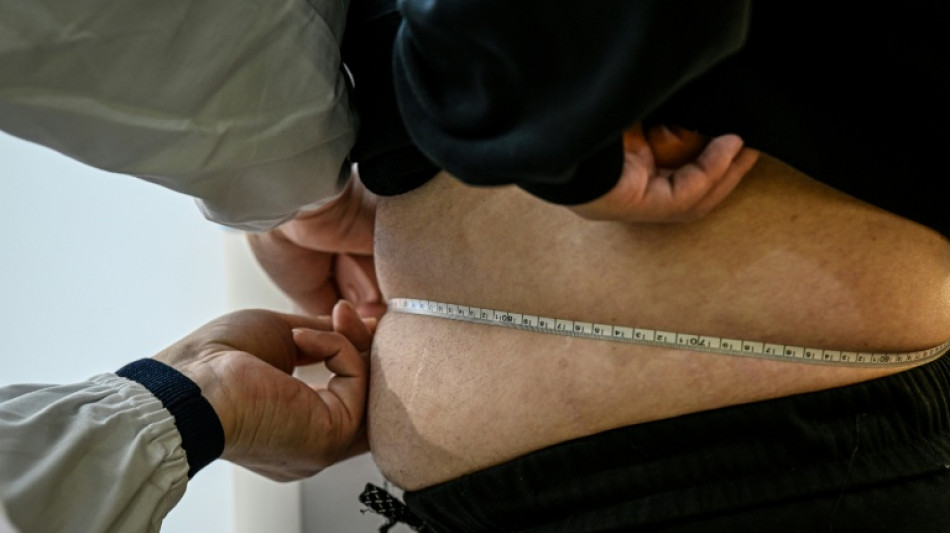
Monday's medicine prize, to be announced at 11:30 am (0930 GMT), could go to research that paved the way for weight-loss drugs such as Ozempic and Mounjaro, Nobel watchers told AFP.
That could include microbiome research, the discovery of the leptin and ghrelin hormones regulating satiety and hunger, and research into a hormone released by the intestine after we eat which signals satiety, called "glucagon-like peptide 1" (GLP-1), which drugs like Ozempic mimic.
"A Nobel Prize recognising any of that work is a likelihood," said David Pendlebury, who heads research analysis at data analytics firm Clarivate, which predicts potential Nobel winners based on the number of citations of their work.
"I would put GLP-1 at the top of the list, just because of its enormous worldwide clinical impact," he said.
Many scientists have made significant contributions in the field, though three regularly mentioned for the Nobel are Canadian endocrinologist Daniel Drucker, Danish physician Jens Juul Holst and Yugoslav-born American chemist Svetlana Mojsov.
- Skin science or immunology? -
If the Nobel committee were to go in another direction, stem cell research into how skin regenerates and heals wounds could get the nod, with American cell biologist Elaine Fuchs and her British colleague Fiona Watt recognised as leaders in the field, according to Annika Ostman, science reporter at Swedish public broadcaster SR.
The honour could also go to a new imaging technique, called optical coherence tomography.
The non-invasive technique uses reflected light to create high-resolution, cross-sectional images of biological tissues, particularly the retina and optic nerve, allowing doctors to detect and monitor disease.
Yet another field that may have caught the medicine committee's eye is that of adhesion receptors in the immune system, identified by US immunologist Timothy Springer.
These receptors are molecular grips on immune cells that help them stick to blood vessels, enter tissues, and reach infections.
They are crucial for directing the body's immune defences and are targets for research into treatments of several inflammatory and autoimmune diseases.
Research into breast cancer or DNA sequencing that helped combat coronavirus could also be honoured.
The medicine prize will be followed by the prizes for physics on Tuesday and chemistry on Wednesday.
The literature laureate will be revealed on Thursday, with some pundits suggesting that the Swedish Academy could follow up last year's award to Hungary's Laszlo Krasznahorkai with a woman writer, possibly from Latin America.
Argentine author Samanta Schweblin, 48, could be one such pick, literary critic Lina Kalmteg told AFP.
Others often mentioned in Nobel speculation include Antiguan-American author Jamaica Kincaid, Chinese writer Can Xue, Australia's Gerald Murnane and Alexis Wright, Thomas Pynchon of the US and Mexican writer Cristina Rivera Garza.
- All eyes on peace -
Perhaps the most keenly anticipated award is that due on Friday, the peace prize -- the only Nobel to be awarded in Oslo.
This year, some experts have suggested the jury could choose a laureate who enjoys broad consensus, after last year's winner, Venezuelan opposition leader Maria Corina Machado, stirred controversy.
US President Donald Trump lobbied intensively last year to get the prize -- Machado ended up giving him her Nobel medal -- and the committee is aware he will be watching closely again.
"There's always a lot of lobbying, and ultimately perhaps also attempts to exert pressure on the committee," the secretary of the Nobel committee, Kristian Berg Harpviken, told AFP in an interview.
"We're very used to that."
Among possible laureates this year are a joint prize to Save the Children and Mykola Kuleba, a Ukrainian children's rights activist campaigning for the return of Ukrainian children illegally taken to Russia from occupied territories.
Others include Sudan's Emergency Response Rooms (ERR), a vast network of volunteers risking their lives to help people facing the double threat of war and hunger, and the Committee to Protect Journalists (CPJ) after the deadliest year on record for the profession in 2025.
The economics prize wraps up the Nobel season on October 12.
(P.Davis--TAG)