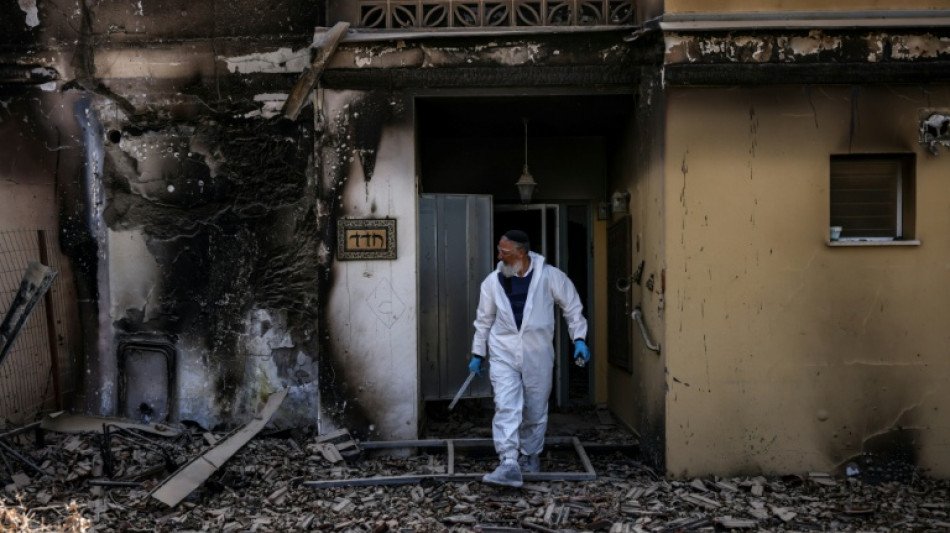
Three years on, Israeli rescuer cannot escape October 7 / Photo: RONALDO SCHEMIDT - AFP/File

 London
 12 °C
12 °C

 Manchester
14 °C
Manchester
14 °C
 Glasgow
9 °C
Glasgow
9 °C
 Dublin
 17 °C
17 °C
 Belfast
17 °C
Belfast
17 °C
 Washington
17 °C
Washington
17 °C
 Denver
 21 °C
21 °C
 Atlanta
20 °C
Atlanta
20 °C
 Dallas
24 °C
Dallas
24 °C
 Houston Texas
24 °C
Houston Texas
24 °C
 New Orleans
25 °C
New Orleans
25 °C
 El Paso
22 °C
El Paso
22 °C
 Phoenix
34 °C
Phoenix
34 °C
 Los Angeles
 32 °C
San Diego
33 °C
San Francisco
22 °C
Chicago
17 °C
Minneapolis
13 °C
Seattle
18 °C
Portland
24 °C
Salt Lake City
24 °C
Las Vegas
34 °C
Miami
28 °C
Jacksonville
24 °C
San Antonio
32 °C
San Diego
33 °C
San Francisco
22 °C
Chicago
17 °C
Minneapolis
13 °C
Seattle
18 °C
Portland
24 °C
Salt Lake City
24 °C
Las Vegas
34 °C
Miami
28 °C
Jacksonville
24 °C
San Antonio
 24 °C
Bermuda
25 °C
Nassau
13 °C
Iqaluit
24 °C
Bermuda
25 °C
Nassau
13 °C
Iqaluit
 -1 °C
Yellowknife
6 °C
Anchorage
-1 °C
Yellowknife
6 °C
Anchorage
 6 °C
Fairbanks
7 °C
Barrow
-6 °C
Calgary
6 °C
Fairbanks
7 °C
Barrow
-6 °C
Calgary
 15 °C
Edmonton
18 °C
Winnipeg
10 °C
Goose Bay
16 °C
Halifax
14 °C
Boston
15 °C
Ottawa
15 °C
Toronto
16 °C
Detroit
18 °C
Cleveland
15 °C
New York
14 °C
Baltimore
17 °C
Philadelphia
14 °C
Nuuk (Godthåb)
2 °C
Hong Kong
26 °C
Singapore
29 °C
Melbourne
28 °C
Canberra
15 °C
Adelaide
16 °C
Darwin
30 °C
Perth
20 °C
Fort Worth
23 °C
Honolulu
27 °C
Sydney
21 °C
Johannesburg
12 °C
Dubai
30 °C
Mumbai
28 °C
Zürich
15 °C
Tokyo
19 °C
Seoul
15 °C
Edmonton
18 °C
Winnipeg
10 °C
Goose Bay
16 °C
Halifax
14 °C
Boston
15 °C
Ottawa
15 °C
Toronto
16 °C
Detroit
18 °C
Cleveland
15 °C
New York
14 °C
Baltimore
17 °C
Philadelphia
14 °C
Nuuk (Godthåb)
2 °C
Hong Kong
26 °C
Singapore
29 °C
Melbourne
28 °C
Canberra
15 °C
Adelaide
16 °C
Darwin
30 °C
Perth
20 °C
Fort Worth
23 °C
Honolulu
27 °C
Sydney
21 °C
Johannesburg
12 °C
Dubai
30 °C
Mumbai
28 °C
Zürich
15 °C
Tokyo
19 °C
Seoul
 19 °C
Delhi
24 °C
Beijing
17 °C
Riyadh
26 °C
Prague
11 °C
Pennsylvania
15 °C
Valletta
22 °C
Manama
31 °C
Warsaw
11 °C
Stockholm
11 °C
19 °C
Delhi
24 °C
Beijing
17 °C
Riyadh
26 °C
Prague
11 °C
Pennsylvania
15 °C
Valletta
22 °C
Manama
31 °C
Warsaw
11 °C
Stockholm
11 °C
Israeli rescuer Natan Kenig says it does not take much of a trigger for him to relive the October 7, 2023 attack: his eyes open or closed, at home or out with friends, he still sees the rockets, torched cars and lifeless bodies.
"I saw atrocities. The most terrible things in the world," he said.
Three years after Hamas led the deadliest attack ever against Israel, Kenig, like so much of the country, remains traumatised. The flashbacks come daily, to the point that he has needed to see a therapist.
Outwardly, Kenig, with a sharp-featured face and salt-and-pepper beard, does not reveal his inner wounds. He retells his memories with an unflinching gaze.
"I wouldn't wish on anyone to see bodies burning in cars and to try to save them. It's inhumane," he told AFP.
It took a lot to shake up the 48-year-old. For three decades he has volunteered with Zaka, an Orthodox Jewish group that collects the remains of victims of violent deaths, down to their spilt blood, to fulfil Judaism's rule that the body be buried whole.
Famous for their rapid responses, the 3,000 members of Zaka are often the first to arrive on the scene of attacks or serious accidents and are trained to help survivors before tending to the dead.
True to his mission, Kenig got behind the steering wheel and raced towards the Gaza border in the early hours of October 7, 2023 after a colleague alerted him to what was happening.
"God and I found ourselves facing a row of burnt-out cars, the bodies of the people shot dead on the asphalt," he recounted.
"Suddenly, you enter another world, a world that has been frozen in time."
- October 7 for four months -
Kenig did not yet know the enormity of the attack when he found himself near the site of the Nova music festival, one of the sites of that day's mass killings.
More than 370 people were killed at the festival, which brought young revellers from around Israel. The attack killed 1,221 people in total, according to an AFP tally based on official Israeli figures.
In response, Israel launched a military offensive that has left most of Gaza in ruins and killed more than 74,200 people, according to Gaza's health ministry, which is under Hamas authority and whose figures are considered reliable by the United Nations.
When he arrived on the scene, Kenig threw himself into the task he knew: helping survivors, then combing the site to collect bodies, which were in harrowing conditions.
But looking back, he paused as he reflected on just how difficult it was to identify the victims, including people burnt in their cars or in their homes in the kibbutzim raided by Hamas.
From one car, he recalled collecting "a few hundred grams" of ash, along with a ring and a sliver of a charred phone, without knowing how many people had died inside.
"A month and a half later, four people were able to be identified and there were four burials," he said.
He continued collecting body remains through February 2024.
"For me, October 7 lasted four months," he said.
But the horror of the task, even with his experience, finally made him crack. "A deep scar" is how he explained his mental state.
- 'I am alive' -
On his social media accounts, the difference is striking: a face that was radiant in old pictures, now gone sullen.
This professional chef used to cook for private events, and specialised in smoked meats. "I brought joy to people through food," he said.
After seeing so many burnt bodies, the meat has lost its appeal and he has not been able to continue cooking. The trauma has also taken a toll on his social life.
"Sometimes I remember things that I saw there. It's not easy. You're sitting among people at the table eating and, suddenly, you just have to leave," he said.
But despite what he has been through, the devout Jew said he refuses to feel sorry for himself.
"I am alive. Thank you, God. I live and I want to live and I'll continue living, no matter how much that displeases those who want to destroy us," he said.
He took out his phone and scrolled old pictures. Among them remain hundreds of photos as well as videos of that dreadful day, a way for him to preserve evidence.
"It's important for me to bear witness," he said. "For the next generation. So that they make sure this never happens again."
(T.Martin--TAG)