EU will provisionally apply contested South America trade deal / Photo: Simon Wohlfahrt - AFP

 London
 36 °C
36 °C

 Manchester
 32 °C
32 °C
 Glasgow
 29 °C
29 °C
 Dublin
27 °C
Dublin
27 °C
 Belfast
26 °C
Belfast
26 °C
 Washington
30 °C
Washington
30 °C
 Denver
22 °C
Denver
22 °C
 Atlanta
32 °C
Atlanta
32 °C
 Dallas
32 °C
Dallas
32 °C
 Houston Texas
33 °C
Houston Texas
33 °C
 New Orleans
33 °C
New Orleans
33 °C
 El Paso
26 °C
El Paso
26 °C
 Phoenix
30 °C
Phoenix
30 °C
 Los Angeles
22 °C
San Diego
22 °C
San Francisco
17 °C
Chicago
25 °C
Minneapolis
23 °C
Seattle
18 °C
Portland
Los Angeles
22 °C
San Diego
22 °C
San Francisco
17 °C
Chicago
25 °C
Minneapolis
23 °C
Seattle
18 °C
Portland
 17 °C
Salt Lake City
23 °C
Las Vegas
28 °C
Miami
33 °C
Jacksonville
32 °C
San Antonio
31 °C
Bermuda
28 °C
Nassau
28 °C
Iqaluit
3 °C
Yellowknife
19 °C
Anchorage
15 °C
Fairbanks
13 °C
Barrow
9 °C
Calgary
11 °C
Edmonton
28 °C
Winnipeg
22 °C
Goose Bay
23 °C
Halifax
26 °C
Boston
27 °C
Ottawa
22 °C
Toronto
25 °C
Detroit
26 °C
Cleveland
24 °C
New York
29 °C
Baltimore
30 °C
Philadelphia
28 °C
Nuuk (Godthåb)
17 °C
Salt Lake City
23 °C
Las Vegas
28 °C
Miami
33 °C
Jacksonville
32 °C
San Antonio
31 °C
Bermuda
28 °C
Nassau
28 °C
Iqaluit
3 °C
Yellowknife
19 °C
Anchorage
15 °C
Fairbanks
13 °C
Barrow
9 °C
Calgary
11 °C
Edmonton
28 °C
Winnipeg
22 °C
Goose Bay
23 °C
Halifax
26 °C
Boston
27 °C
Ottawa
22 °C
Toronto
25 °C
Detroit
26 °C
Cleveland
24 °C
New York
29 °C
Baltimore
30 °C
Philadelphia
28 °C
Nuuk (Godthåb)
 7 °C
Hong Kong
30 °C
Singapore
29 °C
Melbourne
32 °C
Canberra
7 °C
Hong Kong
30 °C
Singapore
29 °C
Melbourne
32 °C
Canberra
 2 °C
Adelaide
12 °C
Darwin
23 °C
Perth
11 °C
Fort Worth
33 °C
Honolulu
26 °C
Sydney
10 °C
Johannesburg
11 °C
Dubai
40 °C
Mumbai
2 °C
Adelaide
12 °C
Darwin
23 °C
Perth
11 °C
Fort Worth
33 °C
Honolulu
26 °C
Sydney
10 °C
Johannesburg
11 °C
Dubai
40 °C
Mumbai
 28 °C
Zürich
35 °C
Tokyo
24 °C
Seoul
28 °C
Zürich
35 °C
Tokyo
24 °C
Seoul
 24 °C
Delhi
30 °C
Beijing
22 °C
Riyadh
24 °C
Delhi
30 °C
Beijing
22 °C
Riyadh
 42 °C
Prague
27 °C
Pennsylvania
28 °C
Valletta
31 °C
Manama
36 °C
Warsaw
22 °C
Stockholm
25 °C
42 °C
Prague
27 °C
Pennsylvania
28 °C
Valletta
31 °C
Manama
36 °C
Warsaw
22 °C
Stockholm
25 °C
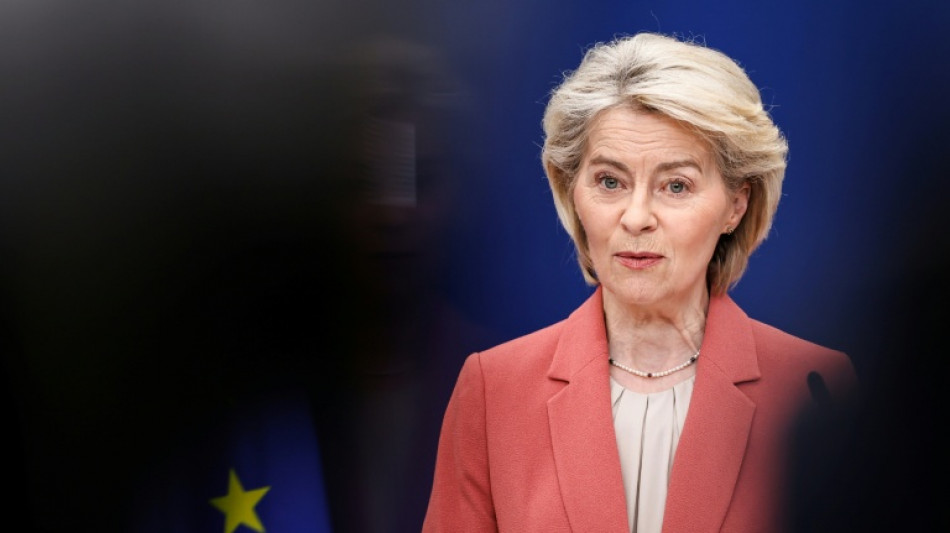
The European Union will implement a mammoth trade deal with the South American Mercosur bloc while waiting for a top court's ruling on its legality, EU chief Ursula von der Leyen said Friday.
The European Commission's move, announced after Argentina and Uruguay ratified the agreement Thursday, comes despite strong opposition from key power France.
"The commission will now proceed with provisional application," von der Leyen said in Brussels, recalling that member states had given the EU executive power to do so.
"Provisional application is, by its nature, provisional," she added, saying: "The agreement can only be fully concluded once the European Parliament has given its consent."
She hailed the ratification by the two South American countries as "good news".
The deal still needs a green light from lawmakers in the European Parliament, which referred it to the EU's top court within days of being inked in January.
France has led opposition to the deal and unsuccessfully attempted to block it over worries for its farmers, who fear being undercut by cheaper goods from Brazil and its neighbours.
The French government last month warned any provisional application would be a "democratic violation".
Reacting to von der Leyen's announcement, French EU lawmaker Celine Imart accused the commission of "showing contempt" to farmers.
"The commission is sending a disastrous signal to our farmers, who are already struggling, and is further fuelling distrust of the European Union," she said.
"We will continue to fight with determination to ensure that this provisional application never becomes permanent," she told AFP.
- Agriculture worries -
The deal between the EU and the four founding members of the Mercosur bloc -- Argentina, Brazil, Paraguay and Uruguay -- was a quarter century in the making.
The accord creates one of the world's biggest free trade zones and eliminates tariffs on more than 90 percent of trade between the two blocs, which together account for 30 percent of global GDP and over 700 million consumers.
Farmers across Europe remain unconvinced and are up in arms, including in Spain where they staged a protest against the deal in Madrid earlier this month.
The European Commission, however, insists it has fully addressed their concerns by approving a series of safeguards for its producers.
Von der Leyen stressed the deal offered "countless opportunities".
She added: "It allows our small and medium sized businesses to access markets and scale they could only dream of before."
Major exports from the South American grouping to the EU include agricultural products and minerals, while the 27-country bloc would export machinery, chemicals, and pharmaceuticals with smaller levies.
(P.Davis--TAG)