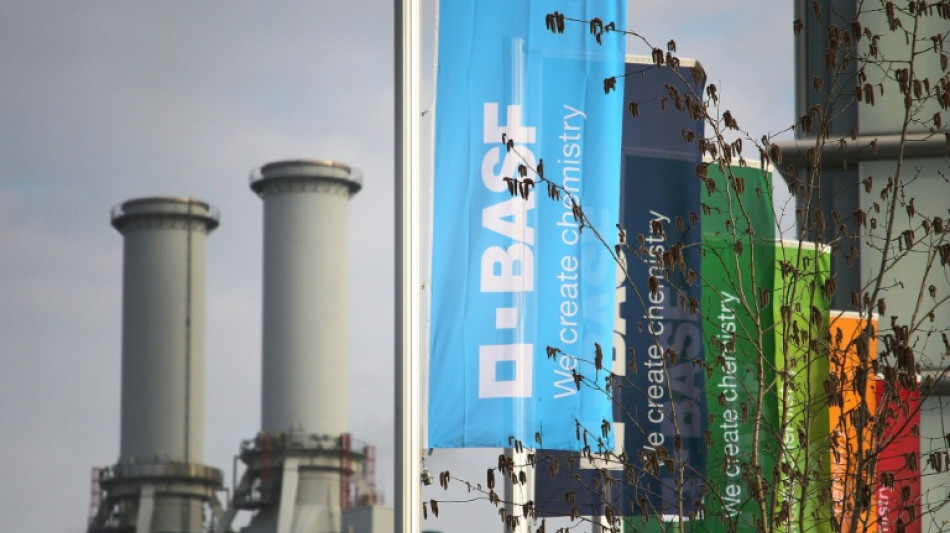
Chemical giant BASF to shift jobs from Germany to Asia / Photo: DANIEL ROLAND, - - AFP/File

 London
 27 °C
27 °C

 Manchester
21 °C
Manchester
21 °C
 Glasgow
18 °C
Glasgow
18 °C
 Dublin
21 °C
Dublin
21 °C
 Belfast
 18 °C
18 °C
 Washington
31 °C
Washington
31 °C
 Denver
 26 °C
26 °C
 Atlanta
34 °C
Atlanta
34 °C
 Dallas
36 °C
Dallas
36 °C
 Houston Texas
32 °C
Houston Texas
32 °C
 New Orleans
33 °C
New Orleans
33 °C
 El Paso
28 °C
El Paso
28 °C
 Phoenix
37 °C
Phoenix
37 °C
 Los Angeles
24 °C
San Diego
Los Angeles
24 °C
San Diego
 24 °C
San Francisco
16 °C
Chicago
23 °C
Minneapolis
26 °C
Seattle
16 °C
Portland
24 °C
San Francisco
16 °C
Chicago
23 °C
Minneapolis
26 °C
Seattle
16 °C
Portland
 17 °C
Salt Lake City
29 °C
Las Vegas
34 °C
Miami
33 °C
Jacksonville
34 °C
San Antonio
31 °C
Bermuda
29 °C
Nassau
23 °C
Iqaluit
7 °C
Yellowknife
14 °C
Anchorage
13 °C
Fairbanks
15 °C
Barrow
7 °C
Calgary
14 °C
Edmonton
31 °C
Winnipeg
20 °C
Goose Bay
23 °C
Halifax
22 °C
Boston
22 °C
Ottawa
23 °C
Toronto
25 °C
Detroit
23 °C
Cleveland
24 °C
New York
24 °C
Baltimore
31 °C
Philadelphia
26 °C
Nuuk (Godthåb)
8 °C
Hong Kong
29 °C
Singapore
17 °C
Salt Lake City
29 °C
Las Vegas
34 °C
Miami
33 °C
Jacksonville
34 °C
San Antonio
31 °C
Bermuda
29 °C
Nassau
23 °C
Iqaluit
7 °C
Yellowknife
14 °C
Anchorage
13 °C
Fairbanks
15 °C
Barrow
7 °C
Calgary
14 °C
Edmonton
31 °C
Winnipeg
20 °C
Goose Bay
23 °C
Halifax
22 °C
Boston
22 °C
Ottawa
23 °C
Toronto
25 °C
Detroit
23 °C
Cleveland
24 °C
New York
24 °C
Baltimore
31 °C
Philadelphia
26 °C
Nuuk (Godthåb)
8 °C
Hong Kong
29 °C
Singapore
 29 °C
Melbourne
33 °C
Canberra
5 °C
Adelaide
29 °C
Melbourne
33 °C
Canberra
5 °C
Adelaide
 14 °C
Darwin
26 °C
Perth
13 °C
Fort Worth
35 °C
Honolulu
25 °C
Sydney
11 °C
Johannesburg
14 °C
Darwin
26 °C
Perth
13 °C
Fort Worth
35 °C
Honolulu
25 °C
Sydney
11 °C
Johannesburg
 17 °C
Dubai
41 °C
Mumbai
28 °C
Zürich
22 °C
Tokyo
26 °C
Seoul
24 °C
Delhi
31 °C
Beijing
23 °C
Riyadh
43 °C
Prague
18 °C
Pennsylvania
29 °C
Valletta
31 °C
Manama
36 °C
Warsaw
24 °C
Stockholm
21 °C
17 °C
Dubai
41 °C
Mumbai
28 °C
Zürich
22 °C
Tokyo
26 °C
Seoul
24 °C
Delhi
31 °C
Beijing
23 °C
Riyadh
43 °C
Prague
18 °C
Pennsylvania
29 °C
Valletta
31 °C
Manama
36 °C
Warsaw
24 °C
Stockholm
21 °C
BASF signalled on Friday it would shift jobs from its home market of Germany to Asia, as the struggling chemical giant seeks to aggressively cut costs.
The vast German chemical sector has been mired in crisis in recent years due to overcapacity, weak demand and high energy costs.
BASF, the world's biggest chemical group and a key supplier to industries ranging from automotive to agriculture, has launched a major savings drive, in particular directed at its operations in Germany.
In its latest move, the group said it intended to cut administrative jobs, including at a major hub in Berlin, without giving a precise figure.
It outlined plans to build up hubs for a range of back-office roles in Asia -- a new one to be opened in India, and an existing centre in Malaysia.
"We will adapt our existing location structures and achieve significant cost savings as a result," BASF chief financial officer Dirk Elvermann told reporters, as the group reported falling operating profits and sales for 2025.
"We want to achieve efficiency gains through competitive service levels and targeted digitalisation, and we will also significantly reduce our overall workforce in the digital sector."
The business services division has about 8,500 employees in total.
He insisted that "we do not plan to close Berlin" but added that the "hub will be smaller in terms of staffing than it is today".
There was no "concrete figure" for future staffing levels in the German capital, he said.
On Friday a union representing BASF workers was organising a protest at the group's business services hub in Berlin, which has some 3,000 staff, against what it said were plans to "relocate large parts" of the business to India.
BASF reported Friday that its adjusted operating profit, a key metric for investors and analysts, slipped to 6.6 billion euros ($7.8 billion) in 2025 from 7.2 billion the year before.
Sales fell to 59.7 billion euros, from 61.4 billion in 2024.
BASF said it had cut around 4,800 jobs in recent times, and had achieved cost savings of 1.7 billion euros in 2025, ahead of its goals.
Its savings drive is targeted in particular at its historic site in Ludwigshafen, western Germany, the largest chemical complex in the world.
(T.Martin--TAG)