Canada's Environment Minister Defends Climate Record Ahead of COP31

 London
 9 °C

 Manchester
 8 °C
 Glasgow
 3 °C
 Dublin
10 °C
 Belfast
 7 °C
 Washington
 21 °C
 Denver
20 °C
 Atlanta
22 °C
 Dallas
 25 °C
 Houston Texas
 22 °C
 New Orleans
25 °C
 El Paso
 19 °C
 Phoenix
28 °C
 Los Angeles
30 °C
San Diego
29 °C
San Francisco
22 °C
Chicago
17 °C
Minneapolis
15 °C
Seattle
13 °C
Portland
15 °C
Salt Lake City
16 °C
Las Vegas
23 °C
Miami
28 °C
Jacksonville
26 °C
San Antonio
17 °C
Bermuda
22 °C
Nassau
16 °C
Iqaluit
 0 °C
Yellowknife
-5 °C
Anchorage
5 °C
Fairbanks
-3 °C
Barrow
-8 °C
Calgary
11 °C
Edmonton
22 °C
Winnipeg
8 °C
Goose Bay
12 °C
Halifax
12 °C
Boston
12 °C
Ottawa
10 °C
Toronto
15 °C
Detroit
18 °C
Cleveland
16 °C
New York
17 °C
Baltimore
20 °C
Philadelphia
18 °C
Nuuk (Godthåb)
5 °C
Hong Kong
17 °C
Singapore
26 °C
Melbourne
26 °C
Canberra
15 °C
Adelaide
15 °C
Darwin
27 °C
Perth
15 °C
Fort Worth
24 °C
Honolulu
27 °C
Sydney
19 °C
Johannesburg
 19 °C
Dubai
31 °C
Mumbai
27 °C
Zürich
11 °C
Tokyo
 8 °C
Seoul
3 °C
Delhi
17 °C
Beijing
-2 °C
Riyadh
17 °C
Prague
2 °C
Pennsylvania
19 °C
Valletta
21 °C
Manama
24 °C
Warsaw
1 °C
Stockholm
4 °C
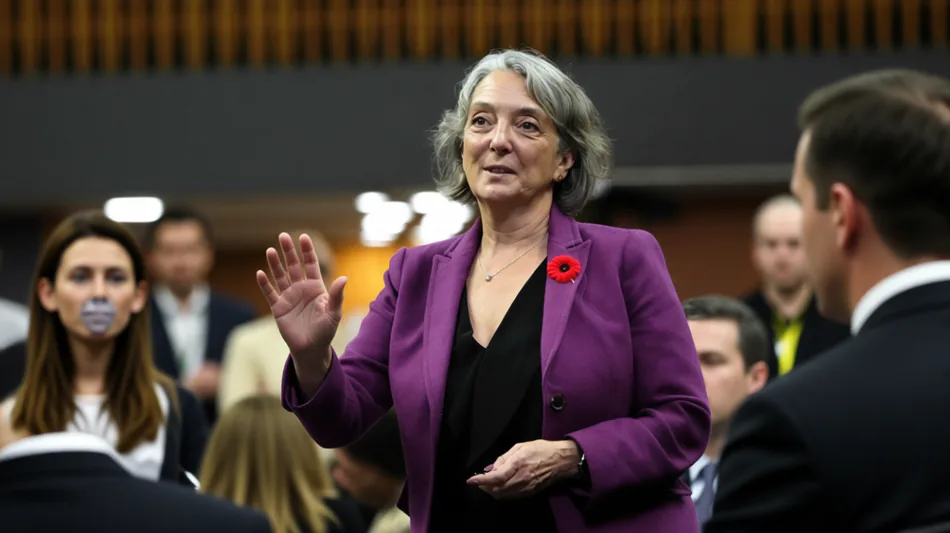
Environment Minister Julie Dabrusin has defended Canada’s climate policy record ahead of the COP31 United Nations climate conference, citing international finance commitments and methane reduction efforts. Her defense comes amid criticism from activists and opposition politicians regarding the government's decision to halt work on banning thermal coal exports.
Environment Minister Julie Dabrusin has mounted a defense of Canada’s climate policy record in the days leading up to the annual United Nations climate conference, emphasizing international finance contributions and leadership in methane reduction. Her statements come as the country faces scrutiny from climate activists and opposition figures regarding recent policy shifts, particularly concerning the export of thermal coal.
Dabrusin will attend the first week of COP31 in Turkey this week. She acknowledged that some climate activists expect Canada to face criticism from other nations over its recent climate policy changes but firmly rejected the characterization that the country has rolled back its commitments. Instead, she argued that Canada remains a leader in global climate action.
"When it comes to international climate finance, we’re one of only two countries that’s recommitted our international climate finance," Dabrusin told The Canadian Press. "When it comes to methane, we’re co-conveners of the global methane pledge."
International climate finance involves funding from wealthier nations, which have historically contributed more to greenhouse gas emissions, to assist smaller, less developed countries that are often disproportionately affected by climate change impacts.
During her time at the conference, Dabrusin is scheduled to convene a ministerial meeting with the European Union as part of the Global Methane Pledge. This group comprises 159 countries committed to collectively reducing global methane emissions by 30 per cent below 2020 levels by 2030. The initiative gained momentum in June when UN Secretary-General António Guterres launched a global call to action on methane during an address at the London Climate Action Week.
Dabrusin also noted that Canada has been asked to lead consultations with Palau on ocean issues at COP31. Additionally, Canada will host the 12th "Our Ocean" conference in May. The country continues to co-lead the Powering Past Coal Alliance with the United Kingdom, an organization dedicated to accelerating the global transition away from coal power.
However, Dabrusin’s defense faces significant pushback due to a report issued last month by Canada’s environment commissioner. The report stated that the government abandoned work in 2024 on a 2021 pledge to ban exports of thermal coal, with no record of a directive to do so. While Ottawa described the work as merely "paused," the report noted that the government formalized the end of this work in August 2025 as part of budget cuts.
Canada has largely phased out the burning of thermal coal to power its domestic electricity grid, one of the most polluting forms of electricity generation. Despite this domestic progress, the country has been accused of hypocrisy for continuing to export thermal coal to other parts of the world while maintaining a critical stance against it domestically.
When asked if Canada had informed international partners that the government had stopped work on banning thermal coal exports, Dabrusin attributed the decision to her predecessor. "I think that the choice was made to not pursue it under the previous government," she said, referring to former Environment Minister Steven Guilbeault, for whom she previously served as parliamentary secretary.
Although Dabrusin was the minister when Canada formally ended the work in August 2025, she disagreed with the suggestion that she bore responsibility for the outcome. "Making HR decisions around that — like, that was already work that wasn’t going ahead," she explained. "But what I will say is, we’re open to next steps. This is a new government, new minister, and we’re open to next steps on what we do."
Critics have been less forgiving. Julia Levin, associate director of national climate at Environmental Defence, criticized the government's stance. "The hypocrisy in saying it’s too dirty for us, but we’re happy to make millions from it, and we’re happy to allow — because most of that thermal coal is U.S. thermal coal that they can’t ship out of their own ports. So talk about the opposite of the 'elbows up,'" Levin said.
Levin told The Canadian Press that while Canada’s leadership on coal has helped other countries transition away from it, Ottawa’s reputation remains vulnerable. "Ideally, Canada should reaffirm the commitment to banning the export of thermal coal," she said. "If they refuse to do that, then they have no business chairing the (Powering Past Coal) Alliance."
Patrick Bonin, the Bloc Québécois climate critic and Member of Parliament, also called for Canada to withdraw from the alliance. "Very clearly Canada should step down. And short of that, we hope that the other member states that continue their commitments show Canada the door," Bonin said in French. "It’s as if there was a delinquent at the head of this initiative. It doesn’t make sense. For the good of this initiative, Canada should step aside."
Bonin is attending COP as part of the Canadian delegation. He acknowledged that Canada has done work on reducing methane emissions but noted that Ottawa has delayed the implementation of its methane regulations.
Dabrusin maintained that other countries remain keen to work with Canada and view it as a reliable energy partner. When asked how Canada reconciles responding to those calls with maintaining its climate goals, she cited the government’s electrification plans, for which Ottawa committed $50 billion in its latest budget, mostly through tax credits.
"We’re working on building our electricity grid. That actually allows for the switching to electrification, which needs to be done to reduce our emissions," Dabrusin said. "We’re focused on … increasing energy efficiency. And then the innovation, which we do have a lot of the great strong clean tech companies to be able to do what we need to do to get to net zero. And we’re absolutely committed to our Paris commitments."
This report by The Canadian Press was first published Nov. 10, 2026.
(L.Thomas--TAG)