In a first, AI helps UK lawmaker find her voice in parliament / Photo: - - PRU/AFP

 London
 19 °C
19 °C

 Manchester
 16 °C
16 °C
 Glasgow
14 °C
Glasgow
14 °C
 Dublin
15 °C
Dublin
15 °C
 Belfast
14 °C
Belfast
14 °C
 Washington
25 °C
Washington
25 °C
 Denver
11 °C
Denver
11 °C
 Atlanta
26 °C
Atlanta
26 °C
 Dallas
 29 °C
29 °C
 Houston Texas
31 °C
Houston Texas
31 °C
 New Orleans
 28 °C
28 °C
 El Paso
23 °C
El Paso
23 °C
 Phoenix
20 °C
Phoenix
20 °C
 Los Angeles
16 °C
San Diego
18 °C
San Francisco
13 °C
Chicago
23 °C
Minneapolis
12 °C
Seattle
10 °C
Portland
9 °C
Salt Lake City
8 °C
Las Vegas
13 °C
Miami
31 °C
Jacksonville
29 °C
San Antonio
29 °C
Bermuda
28 °C
Nassau
20 °C
Iqaluit
Los Angeles
16 °C
San Diego
18 °C
San Francisco
13 °C
Chicago
23 °C
Minneapolis
12 °C
Seattle
10 °C
Portland
9 °C
Salt Lake City
8 °C
Las Vegas
13 °C
Miami
31 °C
Jacksonville
29 °C
San Antonio
29 °C
Bermuda
28 °C
Nassau
20 °C
Iqaluit
 0 °C
Yellowknife
4 °C
Anchorage
3 °C
Fairbanks
-2 °C
Barrow
-4 °C
Calgary
6 °C
Edmonton
28 °C
Winnipeg
6 °C
Goose Bay
0 °C
Yellowknife
4 °C
Anchorage
3 °C
Fairbanks
-2 °C
Barrow
-4 °C
Calgary
6 °C
Edmonton
28 °C
Winnipeg
6 °C
Goose Bay
 8 °C
Halifax
14 °C
Boston
13 °C
Ottawa
5 °C
Toronto
23 °C
Detroit
26 °C
Cleveland
27 °C
New York
21 °C
Baltimore
25 °C
Philadelphia
22 °C
Nuuk (Godthåb)
1 °C
Hong Kong
8 °C
Halifax
14 °C
Boston
13 °C
Ottawa
5 °C
Toronto
23 °C
Detroit
26 °C
Cleveland
27 °C
New York
21 °C
Baltimore
25 °C
Philadelphia
22 °C
Nuuk (Godthåb)
1 °C
Hong Kong
 27 °C
Singapore
29 °C
Melbourne
29 °C
Canberra
9 °C
Adelaide
11 °C
Darwin
27 °C
Singapore
29 °C
Melbourne
29 °C
Canberra
9 °C
Adelaide
11 °C
Darwin
 29 °C
Perth
20 °C
Fort Worth
29 °C
Honolulu
29 °C
Perth
20 °C
Fort Worth
29 °C
Honolulu
 25 °C
Sydney
13 °C
Johannesburg
27 °C
Dubai
34 °C
Mumbai
33 °C
Zürich
16 °C
Tokyo
20 °C
Seoul
14 °C
Delhi
27 °C
Beijing
6 °C
Riyadh
33 °C
Prague
14 °C
Pennsylvania
23 °C
Valletta
25 °C
Manama
33 °C
Warsaw
11 °C
Stockholm
8 °C
25 °C
Sydney
13 °C
Johannesburg
27 °C
Dubai
34 °C
Mumbai
33 °C
Zürich
16 °C
Tokyo
20 °C
Seoul
14 °C
Delhi
27 °C
Beijing
6 °C
Riyadh
33 °C
Prague
14 °C
Pennsylvania
23 °C
Valletta
25 °C
Manama
33 °C
Warsaw
11 °C
Stockholm
8 °C
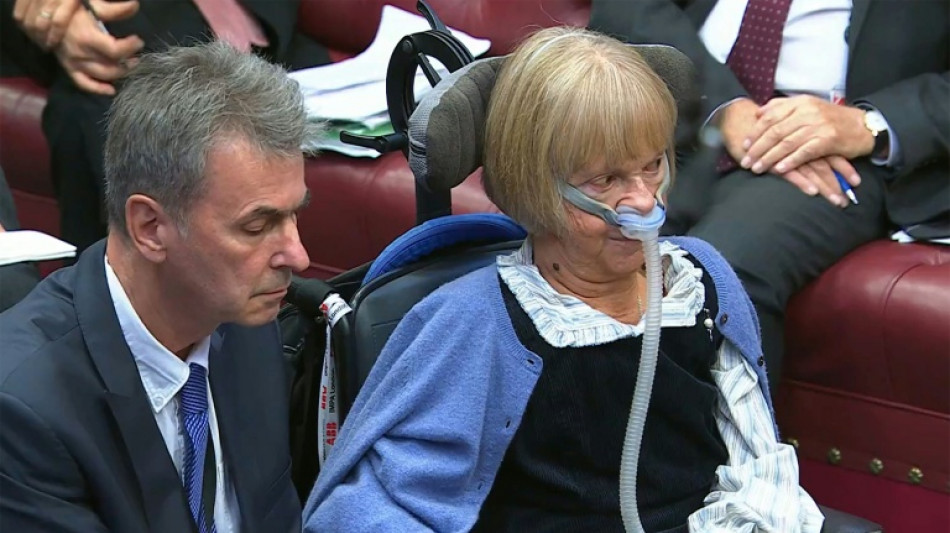
A British lawmaker made history on Tuesday by becoming the first person to use an AI-generated voice to deliver a speech in the UK parliament.
Jane Campbell, a peer in the House of Lords upper chamber, struggles to speak naturally due to spinal muscular atrophy, a condition that worsens over time.
During a debate about health on Tuesday, AI software was used to recreate the sound of her voice, as it used to be, to read a speech she wrote herself.
"This my lords is cutting-edge technology and it will enable me to contribute to debates in my own, once-clear voice before it began to deteriorate due to my disability," the 67-year-old told the chamber.
"I hope your lordships will agree with me that this is an exciting development for the House of Lords, showcasing to the world inclusion in democracy at its best.
"So my lords, may I introduce you to Baroness Campbell Mark 2," she added, before her AI-generated voice broadcast her address.
Campbell received permission from the procedure committee -- which considers protocol in the Lords, whose origins date back to the 11th century -- to use the technology.
In 2012, it had also allowed her to bring her personal assistant into the chamber to read her speeches when required, the House of Lords press office said in a release.
That was a departure from a 1707 ruling which prohibits non-peers from appearing on the floor of the chamber.
- 'Authentic' -
Campbell approached ElevenLabs, a company that specialises in developing natural-sounding speech, to recreate her voice, the firm's Gabi Leibowitz told AFP.
The company "worked with her briefly on her voice clone so that we could fine-tune it and make sure that it was exactly how she wanted and felt extremely authentic to her voice before illness," said Leibowitz, a speech therapist by training.
While 30 seconds of audio can be enough to recreate a voice, the company recommends between 30 minutes and an hour of recording for the best-quality clones.
The technology allows for the insertion of what ElevenLabs calls "emotion tags" -- indicators that control the tone of the voice being replicated.
Before the advent of AI, to recreate a voice, someone would have to record almost 400 sentences before they knew they were going to lose their voice, according to Leibowitz.
Even then "you would get a voice that was relatively robotic, didn't really have any feeling, and was only able to speak that one language," she told AFP.
Campbell was a year old when doctors predicted she would not live long enough to see her second birthday.
She became a leading disability rights campaigner and was appointed to the House of Lords, which is unelected, in 2007.
Her full title is Baroness Campbell of Surbiton. She is an independent crossbench peer, meaning she does not represent any political party.
(O.Robinson--TAG)