Seoul seeks apology after Ukraine reveals transfer of North Korean POWs / Photo: Yuri CORTEZ - AFP

 London
 14 °C
14 °C
 Manchester
9 °C
Manchester
9 °C
 Glasgow
15 °C
Glasgow
15 °C
 Dublin
 10 °C
10 °C
 Belfast
9 °C
Belfast
9 °C
 Washington
16 °C
Washington
16 °C
 Denver
19 °C
Denver
19 °C
 Atlanta
17 °C
Atlanta
17 °C
 Dallas
30 °C
Dallas
30 °C
 Houston Texas
28 °C
Houston Texas
28 °C
 New Orleans
 26 °C
26 °C
 El Paso
26 °C
El Paso
26 °C
 Phoenix
31 °C
Phoenix
31 °C
 Los Angeles
23 °C
San Diego
24 °C
San Francisco
14 °C
Chicago
15 °C
Minneapolis
16 °C
Seattle
12 °C
Portland
17 °C
Salt Lake City
21 °C
Las Vegas
29 °C
Miami
Los Angeles
23 °C
San Diego
24 °C
San Francisco
14 °C
Chicago
15 °C
Minneapolis
16 °C
Seattle
12 °C
Portland
17 °C
Salt Lake City
21 °C
Las Vegas
29 °C
Miami
 26 °C
Jacksonville
21 °C
San Antonio
26 °C
Jacksonville
21 °C
San Antonio
 29 °C
Bermuda
27 °C
Nassau
16 °C
Iqaluit
0 °C
Yellowknife
1 °C
Anchorage
9 °C
Fairbanks
10 °C
Barrow
0 °C
Calgary
7 °C
Edmonton
13 °C
Winnipeg
12 °C
Goose Bay
14 °C
Halifax
15 °C
Boston
14 °C
Ottawa
15 °C
Toronto
16 °C
Detroit
16 °C
Cleveland
16 °C
New York
16 °C
Baltimore
17 °C
Philadelphia
16 °C
Nuuk (Godthåb)
1 °C
Hong Kong
29 °C
Bermuda
27 °C
Nassau
16 °C
Iqaluit
0 °C
Yellowknife
1 °C
Anchorage
9 °C
Fairbanks
10 °C
Barrow
0 °C
Calgary
7 °C
Edmonton
13 °C
Winnipeg
12 °C
Goose Bay
14 °C
Halifax
15 °C
Boston
14 °C
Ottawa
15 °C
Toronto
16 °C
Detroit
16 °C
Cleveland
16 °C
New York
16 °C
Baltimore
17 °C
Philadelphia
16 °C
Nuuk (Godthåb)
1 °C
Hong Kong
 32 °C
Singapore
30 °C
Melbourne
22 °C
Canberra
32 °C
Singapore
30 °C
Melbourne
22 °C
Canberra
 17 °C
Adelaide
26 °C
Darwin
33 °C
Perth
17 °C
Adelaide
26 °C
Darwin
33 °C
Perth
 21 °C
Fort Worth
30 °C
Honolulu
28 °C
Sydney
17 °C
Johannesburg
13 °C
Dubai
30 °C
Mumbai
29 °C
Zürich
12 °C
Tokyo
23 °C
Seoul
25 °C
Delhi
25 °C
Beijing
22 °C
Riyadh
28 °C
Prague
9 °C
Pennsylvania
16 °C
Valletta
23 °C
Manama
32 °C
Warsaw
9 °C
Stockholm
11 °C
21 °C
Fort Worth
30 °C
Honolulu
28 °C
Sydney
17 °C
Johannesburg
13 °C
Dubai
30 °C
Mumbai
29 °C
Zürich
12 °C
Tokyo
23 °C
Seoul
25 °C
Delhi
25 °C
Beijing
22 °C
Riyadh
28 °C
Prague
9 °C
Pennsylvania
16 °C
Valletta
23 °C
Manama
32 °C
Warsaw
9 °C
Stockholm
11 °C
South Korea's presidential office has demanded an apology from Ukraine for denying an agreement to keep the transfer of two North Korean prisoners of war to Seoul confidential.
The row was ignited by Ukrainian President Volodymyr Zelensky's disclosure last week that his country had sent two North Korean soldiers to the South, adding they were "not easy to capture alive".
The intensifying dispute risks complicating Kyiv's efforts to obtain weapons from allies including South Korea to fight off bombardments from Russia.
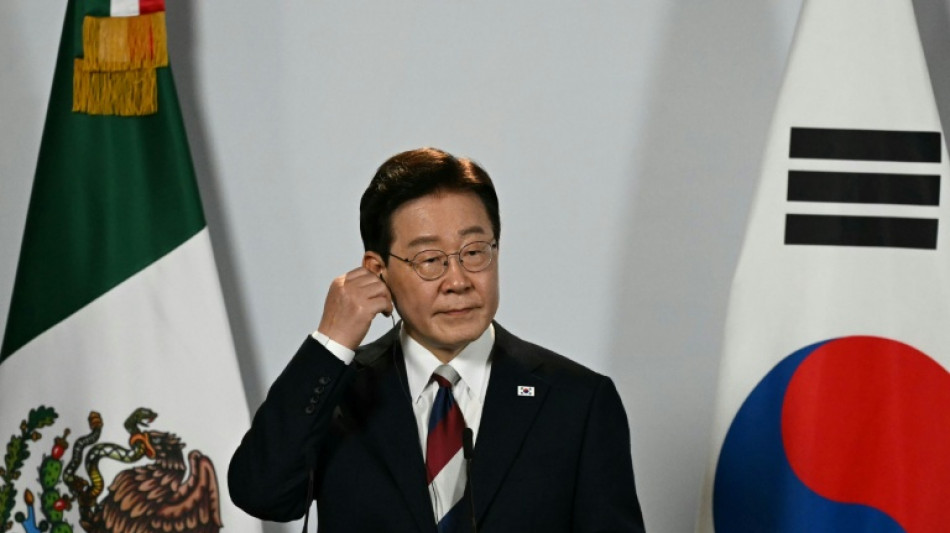
Hours after Zelensky's disclosure, South Korea's President Lee Jae Myung criticised the action.
"I do not know why the Ukrainian side broke the agreement and made the matter public, but it is very disappointing," he wrote on X.
Zelensky's aide Dmytro Lytvyn sought to play down the disclosure, saying that the president had only made public the fact that the soldiers were handed to South Korea.
Ukraine is an "open country", added Lytvyn, saying that it would be unusual to hand over the soldiers in secret.
But Seoul condemned it as a breach of trust.
Seong Ghi-hong, senior presidential secretary for public relations, said in a statement late Sunday that South Korea was "considering additional measures that may be necessary regarding this matter".
"It is in itself a very serious matter that the Ukrainian side violated the confidentiality agreement between the two countries and made the disclosure unilaterally.
"But the Ukrainian presidential press office's false statement that there had been no confidentiality agreement... seriously undermines trust between the two governments and gravely damages friendly relations between the two countries," he said.
The South Korean Presidential office demands "an official explanation and apology," said Seong.
- 'A normal life' -
Ukraine captured early last year two North Korean soldiers among Pyongyang's troops fighting for Moscow.
One of them said he served in a reconnaissance unit and while some North Korean soldiers had been trained to use Russian military equipment, he had not.
The soldier said he was conscripted to the military aged 17 and had been serving since then.
A South Korean lawmaker had previously said the pair wanted to live a "normal life" in the South.
Park Won-gon, a professor at Ewha Womans University, said Kyiv's disclosure may have sparked concern in Seoul that it could feed into Pyongyang's hostility towards South Korea.
Lee has reversed the stance of his hawkish predecessor Yoon Suk Yeol since taking power in June 2025, offering nuclear-armed Pyongyang talks without preconditions.
The South Korean President "appears to be taking a 'low-key' approach as he is mindful of a possible backlash from North Korea," said Park.
"North Korea has been using the deployed soldiers to create a heroic narrative for regime propaganda, and the South Korean government appears concerned that confirming the prisoners' return to the South and publicising it could further fuel hostility towards Seoul," he said.
Beyond the ramifications within South Korea, the row also risks complicating Kyiv's requests to the ally for armaments supplies.
South Korea has so far not provided lethal weapons to Ukraine, citing a domestic ban on militarily aiding countries at war.
Nevertheless, it had been considering requests for defensive weapons, especially since North Korea deployed troops to support Russia.
The incident "has dealt a significant blow to the relationship of trust between South Korea and Ukraine," Lim Eul-chul, a professor at Kyungnam University, told AFP.
With that trust damaged, "whether it is lethal or non-lethal weapons, the South Korean government will inevitably have to take a more cautious approach," Lim said.
(T.Brown--TAG)