US, Canada push to seal trade deal as deadline nears / Photo: Amid FARAHI - AFP

 London
 16 °C
16 °C
 Manchester
13 °C
Manchester
13 °C
 Glasgow
15 °C
Glasgow
15 °C
 Dublin
 14 °C
14 °C
 Belfast
 13 °C
13 °C
 Washington
 28 °C
28 °C
 Denver
 37 °C
37 °C
 Atlanta
33 °C
Atlanta
33 °C
 Dallas
 37 °C
37 °C
 Houston Texas
38 °C
Houston Texas
38 °C
 New Orleans
35 °C
New Orleans
35 °C
 El Paso
37 °C
El Paso
37 °C
 Phoenix
42 °C
Phoenix
42 °C
 Los Angeles
32 °C
San Diego
29 °C
San Francisco
20 °C
Chicago
27 °C
Minneapolis
27 °C
Seattle
27 °C
Portland
24 °C
Salt Lake City
36 °C
Las Vegas
41 °C
Miami
Los Angeles
32 °C
San Diego
29 °C
San Francisco
20 °C
Chicago
27 °C
Minneapolis
27 °C
Seattle
27 °C
Portland
24 °C
Salt Lake City
36 °C
Las Vegas
41 °C
Miami
 33 °C
Jacksonville
30 °C
San Antonio
38 °C
Bermuda
30 °C
Nassau
25 °C
Iqaluit
10 °C
Yellowknife
15 °C
Anchorage
15 °C
Fairbanks
14 °C
Barrow
10 °C
Calgary
24 °C
Edmonton
30 °C
Winnipeg
25 °C
Goose Bay
25 °C
Halifax
19 °C
Boston
22 °C
Ottawa
25 °C
Toronto
25 °C
Detroit
27 °C
Cleveland
28 °C
New York
26 °C
Baltimore
28 °C
Philadelphia
28 °C
Nuuk (Godthåb)
9 °C
Hong Kong
28 °C
Singapore
33 °C
Jacksonville
30 °C
San Antonio
38 °C
Bermuda
30 °C
Nassau
25 °C
Iqaluit
10 °C
Yellowknife
15 °C
Anchorage
15 °C
Fairbanks
14 °C
Barrow
10 °C
Calgary
24 °C
Edmonton
30 °C
Winnipeg
25 °C
Goose Bay
25 °C
Halifax
19 °C
Boston
22 °C
Ottawa
25 °C
Toronto
25 °C
Detroit
27 °C
Cleveland
28 °C
New York
26 °C
Baltimore
28 °C
Philadelphia
28 °C
Nuuk (Godthåb)
9 °C
Hong Kong
28 °C
Singapore
 28 °C
Melbourne
32 °C
Canberra
5 °C
Adelaide
12 °C
Darwin
22 °C
Perth
15 °C
Fort Worth
38 °C
Honolulu
29 °C
Sydney
10 °C
Johannesburg
12 °C
Dubai
38 °C
Mumbai
28 °C
Melbourne
32 °C
Canberra
5 °C
Adelaide
12 °C
Darwin
22 °C
Perth
15 °C
Fort Worth
38 °C
Honolulu
29 °C
Sydney
10 °C
Johannesburg
12 °C
Dubai
38 °C
Mumbai
 28 °C
Zürich
15 °C
Tokyo
26 °C
Seoul
26 °C
Delhi
31 °C
Beijing
25 °C
Riyadh
33 °C
Prague
14 °C
Pennsylvania
26 °C
Valletta
28 °C
Manama
33 °C
Warsaw
22 °C
Stockholm
16 °C
28 °C
Zürich
15 °C
Tokyo
26 °C
Seoul
26 °C
Delhi
31 °C
Beijing
25 °C
Riyadh
33 °C
Prague
14 °C
Pennsylvania
26 °C
Valletta
28 °C
Manama
33 °C
Warsaw
22 °C
Stockholm
16 °C
The United States and Canada were back at the trade negotiating table Friday, with the clock ticking down to a midnight deadline when punishing new US tariffs kick in.
In the latest salvo amid months of trade hostility, US President Donald Trump threatened to impose new 50-percent duties on a range of Canadian products by Wednesday. But he has issued a last-minute delay, citing major progress in trade talks.
Canadian negotiators have been camped out in Washington this week trying to finalize a deal that reportedly aims to address a range of flash points.
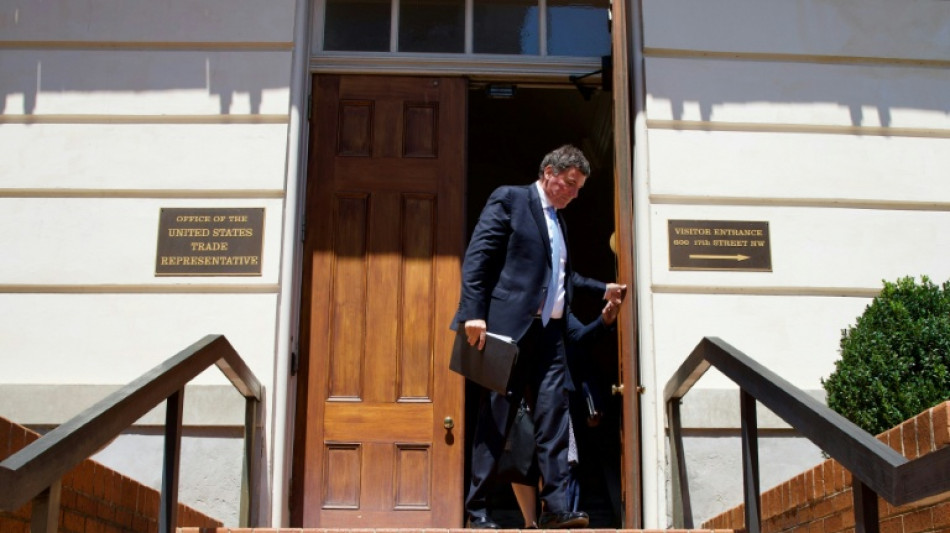
Both sides have said a pact is nearly done, but talks were continuing Friday, with top Canadian negotiator Dominic LeBlanc meeting US Trade Representative Jamieson Greer.
After meeting Greer on Thursday, LeBlanc told reporters "we're very close." He did not answer questions when he entered Greer's office on Friday.
Canada wants relief from Trump's tariffs on autos, steel and aluminum, which have battered Canada's economy, forced job losses, and strained what was once an iron-clad trade relationship.
Details of the proposed agreement emerged this week after Prime Minister Mark Carney briefed the leaders of Canada's provinces and territories.
US tariffs will likely be reduced in certain areas, but not removed entirely, with Saskatchewan's conservative Premier Scott Moe telling reporters there's no going back to the pre-Trump "status quo."
Ryan Majerus, a trade lawyer at King & Spalding, told AFP that Washington's apparent willingness to reduce the sector-specific tariffs "dramatically increases the potential of a deal."
"I think both sides want an off-ramp here," Majerus said, while noting that Ottawa was "under tremendous pressure" to get tariffs removed and the public may be unhappy with the outcome.
Canada's opposition Conservative Party was already on the offensive Friday, with its leader Pierre Poilievre saying "one-sided tariffs on Canadian industry would be a bad deal."
"Tell me how the Canadian company is supposed to compete against an American company when only our guy pays the tariff," Poilievre said.
- Booze ban -
Canada's regional leaders said the United States has been particularly irritated by one retaliatory measure: the removal of US alcohol and wine from liquor stores.
Carney on Wednesday asked the provinces to restock US booze.
Some publicly agreed, but others voiced hesitance.
Quebec Premier Christine Frechette said she wanted to study the deal before agreeing to anything, while Manitoba's left-wing Premier Wab Kinew told reporters Trump appeared "weak" and suggested Canada should "fight."
Ontario Premier Doug Ford, one of Trump's most prominent critics during the trade war, has so far stayed quiet.
Ford controls the Liquor Control Board of Ontario, one of the largest individual purchasers of US alcohol products.
Carney has repeatedly told Canadians that relations with the United States have been forever changed, regardless of what happens with an individual trade deal.
He says the country needs to diversify and reduce its reliance on the United States, which currently accounts for roughly 70 percent of Canadian exports.
Beyond the ongoing negotiations, the United States and Canada still have to agree on revisions to the North American free trade agreement, USMCA, which Trump declined to renew last month.
(F.Allen--TAG)