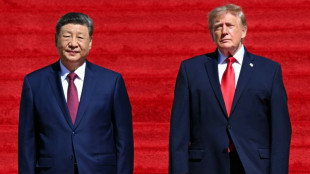
AI firm Manus to resume 'independent' operations after China blocks Meta deal / Photo: GREG BAKER - AFP

 London
 14 °C
14 °C

 Manchester
 9 °C
9 °C
 Glasgow
10 °C
Glasgow
10 °C
 Dublin
 13 °C
13 °C
 Belfast
 12 °C
12 °C
 Washington
17 °C
Washington
17 °C
 Denver
 15 °C
15 °C
 Atlanta
18 °C
Atlanta
18 °C
 Dallas
27 °C
Dallas
27 °C
 Houston Texas
27 °C
Houston Texas
27 °C
 New Orleans
24 °C
New Orleans
24 °C
 El Paso
25 °C
El Paso
25 °C
 Phoenix
30 °C
Phoenix
30 °C
 Los Angeles
22 °C
San Diego
22 °C
San Francisco
16 °C
Chicago
15 °C
Minneapolis
17 °C
Seattle
11 °C
Portland
14 °C
Salt Lake City
20 °C
Las Vegas
31 °C
Miami
26 °C
Jacksonville
18 °C
San Antonio
29 °C
Bermuda
28 °C
Nassau
14 °C
Iqaluit
2 °C
Yellowknife
7 °C
Anchorage
9 °C
Fairbanks
13 °C
Barrow
-1 °C
Calgary
13 °C
Edmonton
14 °C
Winnipeg
17 °C
Goose Bay
14 °C
Halifax
15 °C
Boston
15 °C
Ottawa
14 °C
Toronto
14 °C
Detroit
13 °C
Cleveland
14 °C
New York
15 °C
Baltimore
19 °C
Philadelphia
20 °C
Nuuk (Godthåb)
0 °C
Hong Kong
Los Angeles
22 °C
San Diego
22 °C
San Francisco
16 °C
Chicago
15 °C
Minneapolis
17 °C
Seattle
11 °C
Portland
14 °C
Salt Lake City
20 °C
Las Vegas
31 °C
Miami
26 °C
Jacksonville
18 °C
San Antonio
29 °C
Bermuda
28 °C
Nassau
14 °C
Iqaluit
2 °C
Yellowknife
7 °C
Anchorage
9 °C
Fairbanks
13 °C
Barrow
-1 °C
Calgary
13 °C
Edmonton
14 °C
Winnipeg
17 °C
Goose Bay
14 °C
Halifax
15 °C
Boston
15 °C
Ottawa
14 °C
Toronto
14 °C
Detroit
13 °C
Cleveland
14 °C
New York
15 °C
Baltimore
19 °C
Philadelphia
20 °C
Nuuk (Godthåb)
0 °C
Hong Kong
 31 °C
Singapore
31 °C
Singapore
 31 °C
Melbourne
23 °C
Canberra
26 °C
Adelaide
17 °C
Darwin
33 °C
Perth
17 °C
Fort Worth
28 °C
Honolulu
27 °C
Sydney
32 °C
Johannesburg
11 °C
Dubai
30 °C
Mumbai
30 °C
Zürich
10 °C
Tokyo
31 °C
Melbourne
23 °C
Canberra
26 °C
Adelaide
17 °C
Darwin
33 °C
Perth
17 °C
Fort Worth
28 °C
Honolulu
27 °C
Sydney
32 °C
Johannesburg
11 °C
Dubai
30 °C
Mumbai
30 °C
Zürich
10 °C
Tokyo
 19 °C
Seoul
26 °C
Delhi
26 °C
Beijing
25 °C
Riyadh
28 °C
Prague
8 °C
Pennsylvania
17 °C
Valletta
23 °C
Manama
34 °C
Warsaw
12 °C
Stockholm
12 °C
19 °C
Seoul
26 °C
Delhi
26 °C
Beijing
25 °C
Riyadh
28 °C
Prague
8 °C
Pennsylvania
17 °C
Valletta
23 °C
Manama
34 °C
Warsaw
12 °C
Stockholm
12 °C
AI startup Manus said Tuesday it would resume "operating as an independent company," months after Beijing blocked Meta's multi-billion-dollar acquisition of the Chinese-developed, Singapore-based company.
Some data going back to late December will be deleted as a result, and Manus urged users impacted by the change to back up their data.
"This is part of our separation from Meta; we must take this step to comply with regulatory requirements in specific parts of the world," Manus said in a blog post.
Meta agreed to acquire Manus, an artificial intelligence (AI) agent developed by the startup Butterfly Effect, in a deal reportedly worth around $2 billion.
AI agents are software programs that are designed to perform tasks without human intervention.
Meta pursued a deal with Manus to "bring a leading agent to billions of people and unlock opportunities for businesses across our products, the social media giant said in December when it announced the deal.
However, China's top economic planning body blocked the deal in April and ordered them to "withdraw the acquisition."
At the same time, Beijing also reportedly restricted travel for two of Manus' co-founders, preventing them from leaving China.
Meta previously told AFP in a statement that "the transaction complied fully with applicable law".
China has been cracking down on a practice known as "Singapore-washing," which is when companies leave the country to take advantage of looser regulations, global customers or funding opportunities.
Beijing "tolerated" it for a while, but "the Manus case marks a major turning point" as the US-China AI race heats up, Wendy Chang at the Mercator Institute for China Studies told AFP in April.
The crackdown is a signal "to its own tech leaders, more than to anybody else, that attempts to bypass national regulation will not be tolerated," Chang continued.
Many of Manus' former investors are in discussions to retake stakes in the startup at a $2 billion valuation, including Tencent which would become its largest shareholder, the FT reported.
- Meta Manifesto -
In the United States, the unwinding of the Manus deal may be a temporary setback for Meta, which is racing to strengthen its position in AI.
In a long essay published Monday about the future of artificial intelligence, Meta Chief Executive Mark Zuckerberg called for the United States to compete against China, prevent "government tyranny" over AI and ensure that "superintelligence" technology will become available to everyone.
Superintelligence is a theoretical point when AI's capabilities exceed human intelligence.
On Monday, Meta also announced a new model called Glimmer, which it developed in part from Muse Spark, a closed-source model it announced in April and updated last week.
Glimmer is an open weight model, meaning users can download and modify the underlying rules that govern the AI system.
"Rather than centralizing superintelligence, we should distribute it widely and give every person the ability to direct it," Zuckerberg wrote, arguing that open models are a key part of a global AI ecosystem.
Competitors like OpenAI and Anthropic largely focus on closed AI models, which are considered black boxes that users cannot inspect themselves.
Leading AI developers have met with the Trump administration in recent months, including OpenAI, Anthropic, Google, Nvidia, Microsoft and Meta, according to reports.
In June, President Donald Trump signed an executive order that called for major AI developers to submit new models to the government for review 30 days before they are publicly released. It also gave the federal government a 60-day deadline to finalize a proposed framework.
Open models will reportedly be exempt from the new voluntary review process.
That deadline passed on August 1 without any public announcement.
(T.Martin--TAG)