PNG leader says no foreign bases as Australia's defence presence grows / Photo: Ludovic MARIN - AFP

 London
 15 °C
15 °C

 Manchester
 10 °C
10 °C
 Glasgow
10 °C
Glasgow
10 °C
 Dublin
13 °C
Dublin
13 °C
 Belfast
10 °C
Belfast
10 °C
 Washington
21 °C
Washington
21 °C
 Denver
26 °C
Denver
26 °C
 Atlanta
26 °C
Atlanta
26 °C
 Dallas
30 °C
Dallas
30 °C
 Houston Texas
26 °C
Houston Texas
26 °C
 New Orleans
 28 °C
28 °C
 El Paso
31 °C
El Paso
31 °C
 Phoenix
 36 °C
36 °C
 Los Angeles
23 °C
San Diego
23 °C
San Francisco
14 °C
Chicago
24 °C
Minneapolis
24 °C
Seattle
19 °C
Portland
22 °C
Salt Lake City
28 °C
Las Vegas
35 °C
Miami
Los Angeles
23 °C
San Diego
23 °C
San Francisco
14 °C
Chicago
24 °C
Minneapolis
24 °C
Seattle
19 °C
Portland
22 °C
Salt Lake City
28 °C
Las Vegas
35 °C
Miami
 29 °C
Jacksonville
27 °C
San Antonio
28 °C
Bermuda
27 °C
Nassau
23 °C
Iqaluit
5 °C
Yellowknife
19 °C
Anchorage
20 °C
Fairbanks
21 °C
Barrow
12 °C
Calgary
16 °C
Edmonton
25 °C
Winnipeg
16 °C
Goose Bay
21 °C
Halifax
23 °C
Boston
24 °C
Ottawa
18 °C
Toronto
22 °C
Detroit
25 °C
Cleveland
25 °C
New York
24 °C
Baltimore
22 °C
Philadelphia
23 °C
Nuuk (Godthåb)
7 °C
Hong Kong
29 °C
Jacksonville
27 °C
San Antonio
28 °C
Bermuda
27 °C
Nassau
23 °C
Iqaluit
5 °C
Yellowknife
19 °C
Anchorage
20 °C
Fairbanks
21 °C
Barrow
12 °C
Calgary
16 °C
Edmonton
25 °C
Winnipeg
16 °C
Goose Bay
21 °C
Halifax
23 °C
Boston
24 °C
Ottawa
18 °C
Toronto
22 °C
Detroit
25 °C
Cleveland
25 °C
New York
24 °C
Baltimore
22 °C
Philadelphia
23 °C
Nuuk (Godthåb)
7 °C
Hong Kong
 34 °C
Singapore
32 °C
Melbourne
28 °C
Canberra
34 °C
Singapore
32 °C
Melbourne
28 °C
Canberra
 11 °C
Adelaide
15 °C
Darwin
11 °C
Adelaide
15 °C
Darwin
 27 °C
Perth
16 °C
Fort Worth
30 °C
Honolulu
27 °C
Sydney
21 °C
Johannesburg
5 °C
Dubai
35 °C
Mumbai
27 °C
Perth
16 °C
Fort Worth
30 °C
Honolulu
27 °C
Sydney
21 °C
Johannesburg
5 °C
Dubai
35 °C
Mumbai
 28 °C
Zürich
19 °C
Tokyo
29 °C
Seoul
31 °C
Delhi
32 °C
Beijing
32 °C
Riyadh
36 °C
Prague
18 °C
Pennsylvania
21 °C
Valletta
28 °C
Manama
34 °C
Warsaw
17 °C
Stockholm
12 °C
28 °C
Zürich
19 °C
Tokyo
29 °C
Seoul
31 °C
Delhi
32 °C
Beijing
32 °C
Riyadh
36 °C
Prague
18 °C
Pennsylvania
21 °C
Valletta
28 °C
Manama
34 °C
Warsaw
17 °C
Stockholm
12 °C
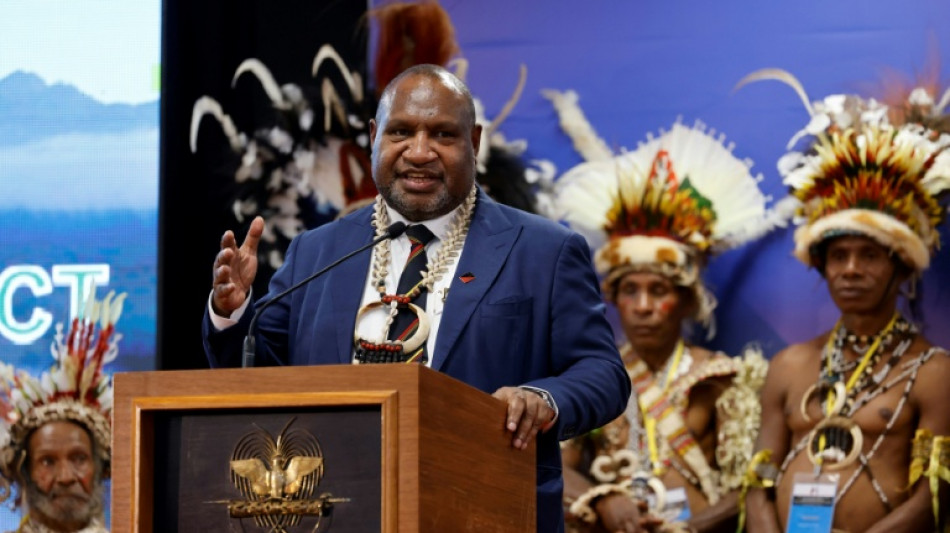
Papua New Guinea Prime Minister James Marape told AFP the South Pacific island nation won't allow foreign military bases, even as Australia steps up its presence at a naval port seen as central to blocking China in any regional conflict.
PNG's remote Lombrum navy base sits 2,000 kilometres (1,240 miles) south of the US territory of Guam, on the other side of a stretch of sea analysts said is the fastest direct route out of the South China Sea to the South Pacific.
Australia's military redeveloped the base for PNG at a cost of AU$500 million (US$358 million) last year, gazumping a 2018 Chinese offer to rebuild the port as Beijing expanded military training with the former Australian territory.
Tender documents show that Australia's Department of Defence is now seeking long-term "living services" for an "Australian compound" within the Lombrum base from August.
That would mean increased visits by Australian forces and vessels, but Marape said Lombrum was not a foreign base -- a sensitive issue for a country building trade ties with China and security cooperation with Washington and Canberra.
"Our policy is very clear. These are sovereign Papua New Guinea defence facilities," Marape told AFP in a statement on Wednesday.
"We work with trusted partners under treaty arrangements and defence cooperation agreements, but ownership and sovereignty remain with Papua New Guinea."
Lombrum's Australian compound was built to accomodate workers during base construction, Marape said, adding that it is also used by "visiting personnel if required".
"It does not in any way constitute a foreign military base," he said.
An Australian defence spokeswoman said the redeveloped Lombrum base "will create further opportunities for joint training, exercises and ship visits between the Australian Defence Force and the PNGDF".
"This would naturally involve Australian presence at the base from time to time," she said.
PNG bases in the capital Port Moresby and in Lae and Wewak on the north coast will also be used "temporarily" by the US military in July for joint training exercises under a 2023 defence agreement, a US Army spokeswoman said.
Australia signed a mutual defence treaty with its northern neighbour last year, ratified by the PNG parliament in April.
Prime Minister Anthony Albanese's government will spend AU$600 million to expand defence infrastructure across the Pacific Islands, including AU$114 million to build "dual-use" infrastructure in PNG to support integration of the two defence forces, Australia's national budget papers show.
- 'Deny the other side' -
The Lombrum base on Manus island was established by the US military during World War II as its springboard to Asia -- a response to Japan's "fortress in the South Pacific" at nearby Rabaul in PNG, said Peter Dean, professor of strategic studies at the Australian National University.
Eight decades later, China and US allies are vying for Pacific Island ports.
"The geography has not changed," said Dean, who was the co-author of a 2023 review of Australia's defence force that led to a new focus on denying China access to its northern approaches in any potential regional conflict.
He described PNG as "key" terrain to block China's navy.
The Chinese navy frequently sails to the South Pacific and held a live-fire exercise in the sea between Australia and New Zealand last year.
Besides its redevelopment of the navy base, Canberra will also fund another five port upgrades. Marape signed a funding deal with France and the European Union last week to redevelop Rabaul as a major trade port.
And on Tuesday, the Quad nations Australia, the United States, India and Japan said they would fund a commercial port for another South Pacific country, Fiji, which earlier sought funds from China.
Vanuatu's Prime Minister Jotham Napat told his parliament this month that the Pacific island country would also sign a treaty with Australia that denies access by an outside military to its territory.
China's key Pacific security pact is with PNG's neighbour, Solomon Islands. Newly elected Prime Minister Matthew Wale will visit Australia for security talks next week.
Dean said Canberra's treaty with PNG "gains Australia access, the ability to co-develop those facilities, to help train the Papua New Guinea defence force, and it denies the Chinese the ability to do the same thing".
"The most important thing you can do is gain access and trust now, and deny it to the other side," he said.
(N.Miller--TAG)