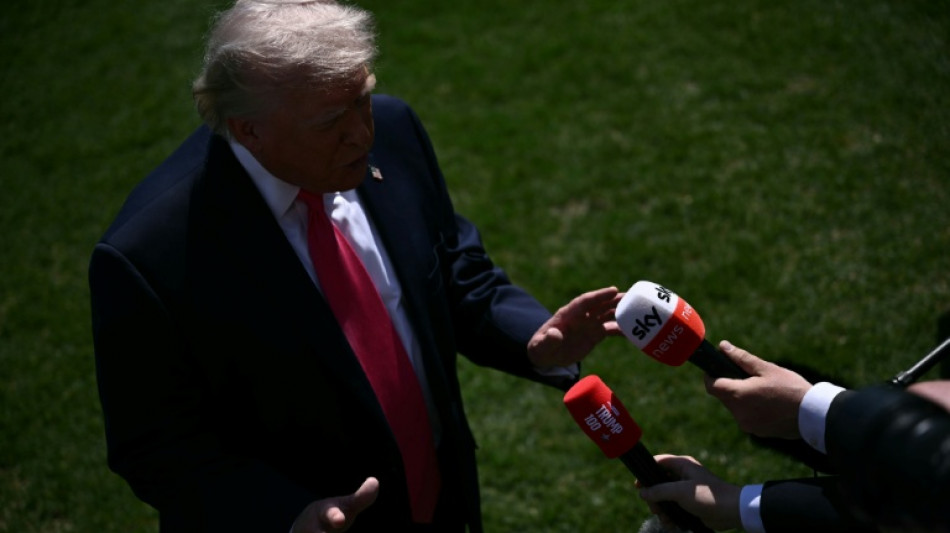
Trump's messaging on Iran grows increasingly erratic / Photo: Brendan SMIALOWSKI - AFP

 London
 18 °C
18 °C
 Manchester
 17 °C
17 °C
 Glasgow
12 °C
Glasgow
12 °C
 Dublin
18 °C
Dublin
18 °C
 Belfast
16 °C
Belfast
16 °C
 Washington
24 °C
Washington
24 °C
 Denver
25 °C
Denver
25 °C
 Atlanta
22 °C
Atlanta
22 °C
 Dallas
 31 °C
31 °C
 Houston Texas
28 °C
Houston Texas
28 °C
 New Orleans
27 °C
New Orleans
27 °C
 El Paso
 27 °C
27 °C
 Phoenix
 33 °C
33 °C
 Los Angeles
22 °C
San Diego
22 °C
San Francisco
14 °C
Chicago
23 °C
Minneapolis
23 °C
Seattle
17 °C
Portland
20 °C
Salt Lake City
26 °C
Las Vegas
33 °C
Miami
Los Angeles
22 °C
San Diego
22 °C
San Francisco
14 °C
Chicago
23 °C
Minneapolis
23 °C
Seattle
17 °C
Portland
20 °C
Salt Lake City
26 °C
Las Vegas
33 °C
Miami
 28 °C
Jacksonville
27 °C
San Antonio
28 °C
Bermuda
27 °C
Nassau
24 °C
Iqaluit
3 °C
Yellowknife
16 °C
Anchorage
14 °C
Fairbanks
18 °C
Barrow
1 °C
Calgary
12 °C
Edmonton
20 °C
Winnipeg
17 °C
Goose Bay
17 °C
Halifax
20 °C
Boston
21 °C
Ottawa
18 °C
Toronto
18 °C
Detroit
21 °C
Cleveland
19 °C
New York
25 °C
Baltimore
24 °C
Philadelphia
24 °C
Nuuk (Godthåb)
5 °C
Hong Kong
31 °C
Singapore
32 °C
Melbourne
27 °C
Canberra
11 °C
Adelaide
28 °C
Jacksonville
27 °C
San Antonio
28 °C
Bermuda
27 °C
Nassau
24 °C
Iqaluit
3 °C
Yellowknife
16 °C
Anchorage
14 °C
Fairbanks
18 °C
Barrow
1 °C
Calgary
12 °C
Edmonton
20 °C
Winnipeg
17 °C
Goose Bay
17 °C
Halifax
20 °C
Boston
21 °C
Ottawa
18 °C
Toronto
18 °C
Detroit
21 °C
Cleveland
19 °C
New York
25 °C
Baltimore
24 °C
Philadelphia
24 °C
Nuuk (Godthåb)
5 °C
Hong Kong
31 °C
Singapore
32 °C
Melbourne
27 °C
Canberra
11 °C
Adelaide
 13 °C
Darwin
30 °C
Perth
13 °C
Darwin
30 °C
Perth
 18 °C
Fort Worth
30 °C
Honolulu
25 °C
Sydney
18 °C
Johannesburg
5 °C
Dubai
18 °C
Fort Worth
30 °C
Honolulu
25 °C
Sydney
18 °C
Johannesburg
5 °C
Dubai
 38 °C
Mumbai
29 °C
Zürich
20 °C
Tokyo
26 °C
Seoul
32 °C
Delhi
36 °C
Beijing
24 °C
Riyadh
41 °C
Prague
16 °C
Pennsylvania
23 °C
Valletta
31 °C
Manama
36 °C
Warsaw
17 °C
Stockholm
15 °C
38 °C
Mumbai
29 °C
Zürich
20 °C
Tokyo
26 °C
Seoul
32 °C
Delhi
36 °C
Beijing
24 °C
Riyadh
41 °C
Prague
16 °C
Pennsylvania
23 °C
Valletta
31 °C
Manama
36 °C
Warsaw
17 °C
Stockholm
15 °C
With his sensational statements on Truth Social and serial phone chats with individual journalists, President Donald Trump has only added to the confusion surrounding his plans for Iran in recent days.
The US president has been commenting on the conflict almost in real time in seemingly off-the-cuff exchanges with reporters, including from AFP, who call his cell phone.
Twice in recent days the White House has had to correct statements the 79-year-old billionaire made in the calls.
On Sunday, Trump told broadcaster ABC that Vice President JD Vance would not be leading the US delegation for a second round of talks with Iran in Pakistan, a statement quickly pulled back by official sources.
On Monday, Trump told the New York Post that negotiators were en route to Islamabad. They were not. The vice president was still in Washington at midday Tuesday for "meetings."
The multiple conversations with reporters undermine well-established norms that the president's "time is precious" and that he "must always use secure communications," said Robert Rowland, a professor of communication studies at the University of Kansas.
- 'Exactly the opposite' -
Back in 2009, newly inaugurated president Barack Obama had a standoff with the Secret Service over surrendering his beloved BlackBerry, which his handlers thought would make him too accessible and was a security risk, Rowland recalled.
Previous presidents tried to adopt a unifying tone in times of conflict, but "Trump is exactly the opposite. He makes everything extremely partisan," the academic added.
The Republican lashed out at his political opponents yet again this week, calling Democrats "traitors" trying to undermine the military offensive in Iran, and attacking media outlets for their coverage of the conflict.
The Wall Street Journal revealed Monday that Trump neither consults nor notifies anyone before posting messages on Truth Social, where his posts -- cluttered with capital letters and exclamation points -- mix apocalyptic threats and casual, sometimes crude language.
The newspaper also reported that Trump's inner circle kept him partially in the dark during the recent rescue of a US Air Force officer in Iran, for fear that his "impatience" might disrupt the high-stakes operation.
That impulsiveness also manifests itself in "violations" of diplomatic protocol and solemn military ceremonies, Rowland said.
- Vietnam -
In March, Trump triggered bipartisan ire by wearing a "USA" cap during the repatriation of soldiers killed in the Middle East. At the time, a similar cap -- white, with gold embroidered letters -- was for sale on The Trump Organization website for $55.
He also outraged many American Christians by sharing an AI-generated image depicting himself as Jesus, accompanied by a soldier in uniform and a fighter jet. The post was quickly taken down, a rare communication retraction by the Trump administration.
The Republican president, who was exempted from fighting in Vietnam for medical reasons, even claimed on CNBC on Tuesday that he would have won that war (1954–1975) "very quickly," had he been in power at the time.
His erratic messaging on Iran is further diluted by increasingly frequent digressions on his favorite topic: the construction and renovation of buildings.
During his CNBC interview, he launched into a detailed and animated critique of ongoing renovations at the headquarters of the Federal Reserve, whose current chair, Jerome Powell, he detests.
Then he returned to the construction project closest to his heart: a monumental new White House ballroom. "I build under budget, ahead of schedule," the former real estate magnate boasted.
According to the Washington Post, the US president has mentioned his famous ballroom on average once every three days since the beginning of the year.
(R.White--TAG)