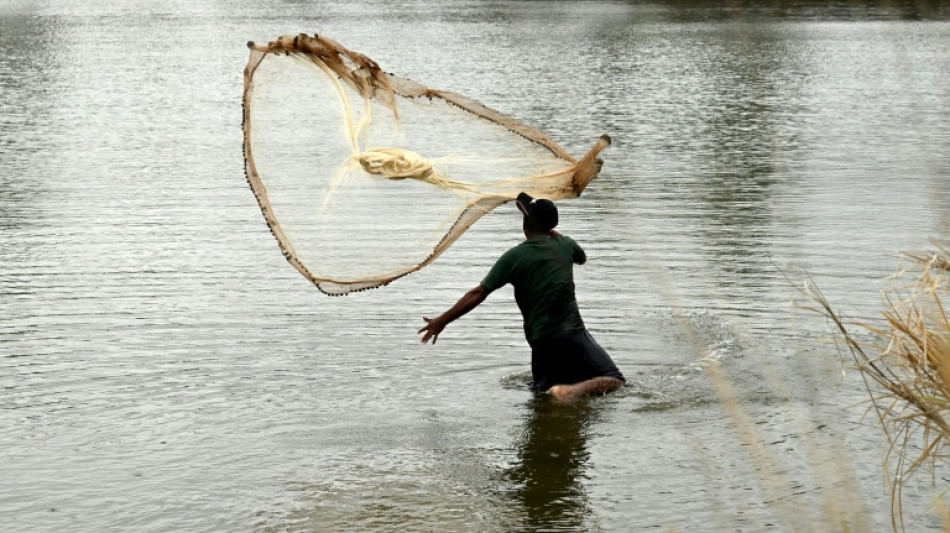
Pacific nations take centre stage at 'pre-COP' climate summit / Photo: SAEED KHAN - AFP

 London
 14 °C
14 °C

 Manchester
15 °C
Manchester
15 °C
 Glasgow
9 °C
Glasgow
9 °C
 Dublin
 17 °C
17 °C
 Belfast
17 °C
Belfast
17 °C
 Washington
18 °C
Washington
18 °C
 Denver
 27 °C
27 °C
 Atlanta
 21 °C
21 °C
 Dallas
25 °C
Dallas
25 °C
 Houston Texas
25 °C
Houston Texas
25 °C
 New Orleans
27 °C
New Orleans
27 °C
 El Paso
24 °C
El Paso
24 °C
 Phoenix
37 °C
Phoenix
37 °C
 Los Angeles
37 °C
San Diego
37 °C
San Francisco
25 °C
Chicago
22 °C
Minneapolis
20 °C
Seattle
21 °C
Portland
26 °C
Salt Lake City
30 °C
Las Vegas
36 °C
Miami
Los Angeles
37 °C
San Diego
37 °C
San Francisco
25 °C
Chicago
22 °C
Minneapolis
20 °C
Seattle
21 °C
Portland
26 °C
Salt Lake City
30 °C
Las Vegas
36 °C
Miami
 31 °C
Jacksonville
25 °C
San Antonio
31 °C
Jacksonville
25 °C
San Antonio
 25 °C
Bermuda
27 °C
Nassau
13 °C
Iqaluit
0 °C
Yellowknife
6 °C
Anchorage
5 °C
Fairbanks
5 °C
Barrow
-7 °C
Calgary
19 °C
Edmonton
25 °C
Winnipeg
16 °C
Goose Bay
18 °C
Halifax
15 °C
Boston
16 °C
Ottawa
17 °C
Toronto
20 °C
Detroit
23 °C
Cleveland
21 °C
New York
14 °C
Baltimore
17 °C
Philadelphia
15 °C
Nuuk (Godthåb)
3 °C
Hong Kong
25 °C
Singapore
28 °C
Melbourne
30 °C
Canberra
10 °C
Adelaide
14 °C
Darwin
24 °C
Perth
25 °C
Bermuda
27 °C
Nassau
13 °C
Iqaluit
0 °C
Yellowknife
6 °C
Anchorage
5 °C
Fairbanks
5 °C
Barrow
-7 °C
Calgary
19 °C
Edmonton
25 °C
Winnipeg
16 °C
Goose Bay
18 °C
Halifax
15 °C
Boston
16 °C
Ottawa
17 °C
Toronto
20 °C
Detroit
23 °C
Cleveland
21 °C
New York
14 °C
Baltimore
17 °C
Philadelphia
15 °C
Nuuk (Godthåb)
3 °C
Hong Kong
25 °C
Singapore
28 °C
Melbourne
30 °C
Canberra
10 °C
Adelaide
14 °C
Darwin
24 °C
Perth
 13 °C
Fort Worth
24 °C
Honolulu
28 °C
Sydney
16 °C
Johannesburg
14 °C
Dubai
13 °C
Fort Worth
24 °C
Honolulu
28 °C
Sydney
16 °C
Johannesburg
14 °C
Dubai
 32 °C
Mumbai
29 °C
Zürich
16 °C
Tokyo
19 °C
Seoul
14 °C
Delhi
25 °C
Beijing
7 °C
Riyadh
29 °C
Prague
12 °C
Pennsylvania
16 °C
Valletta
23 °C
Manama
32 °C
Warsaw
32 °C
Mumbai
29 °C
Zürich
16 °C
Tokyo
19 °C
Seoul
14 °C
Delhi
25 °C
Beijing
7 °C
Riyadh
29 °C
Prague
12 °C
Pennsylvania
16 °C
Valletta
23 °C
Manama
32 °C
Warsaw
 12 °C
Stockholm
12 °C
12 °C
Stockholm
12 °C
The UN "pre-COP" climate gathering kicked off on Monday in the Fijian city of Nadi, where Pacific leaders are seeking to draw the world's attention to life on the frontline of climate change.
The South Pacific is among the most vulnerable regions in the world to global warming -- from rising sea waters jeopardizing homes to increasing temperatures causing coral bleaching.
This week's talks in Nadi and on the atoll nation of Tuvalu are a precursor to the larger UN-sponsored global climate summit -- known as COP31 -- to be held next month in Turkey.
Pacific leaders are pushing for the world to stick to a target of limiting global warming to 1.5C, enhance access to climate finance and give more attention to the impact on oceans.
"Our prime minister will carry three clear messages to the leaders this week: keep 1.5 degrees within reach, make finance reach the communities that need it and give the ocean its rightful place in the climate regime," Fiji's climate minister Lynda Tabuya told the opening ceremony.
Sea levels are rising at a record pace, driven by warming oceans and glacier melt, according to a UN report.
Up to 1.2 billion people could be displaced by 2050, with Pacific island countries experiencing sea level rise at twice the global average, the report released in August said.
It also highlighted a financing gap, with developing countries needing $310-$365 billion to adapt, yet having only $26 billion in adaptation finance available in 2023.
"Today in Fiji, we are again calling on the world to match ambition with delivery," said Australia's climate minister Chris Bowen, who is also president of negotiations for COP31.
He said talks at the pre-COP would focus on "capturing, capitalising on, and putting to work the knowledge of those who've been dealing with climate change here at its forefront, here at its cutting edge".
Regional leaders have pitched the pre-COP as a chance to bring the world to the Pacific.
- Limited guest list -
But officials have been forced to concede that the guest list will be smaller than they had hoped.
Fewer than a dozen world leaders have publicly confirmed that they will attend.
On the streets of Nadi, most locals seemed unaware that a global summit was even taking place.
Australia said last month 4,000 people from 60 nations would attend, without providing a full breakdown.
Among those attending will be Foreign Minister Shisir Khanal of Nepal, which is still reeling from August's Himalayan flood disaster which killed nearly 1,500 people and left 5,800 missing in Nepal and China.
Top delegates to the Pacific talks will also hold a one-day retreat on low-lying Tuvalu, already laying plans to relocate the population if it is consumed by the ocean.
The highest point in the capital Funafuti is just two metres (6.6 feet) above sea level, and two of its nine coral atolls are already largely swamped by rising waters.
- 'Act now decisively' -
"Sea-level rise is not a future threat, it is a present reality," Tuvalu Prime Minister Feleti Teo told the UN General Assembly ahead of the climate talks.
"Tuvalu's message is clear: the world must act now decisively, collectively, and with urgency to protect the future for generations to come."
Only a handful of leaders are expected to join the Tuvalu leg of the trip.
"It does make you think nobody cares," said marine scientist Rajneel Singh, part of a team that reported large-scale coral death around Tuvalu.
"It's very, very sad."
As leader of the climate talks, major coal exporter Australia has faced accusations of hypocrisy.
Australian officials have insisted the country is rapidly expanding its renewable energy sources.
But activists accuse Australia of "double talk" on climate change, and have urged leaders to listen to Pacific communities most affected by global warming.
"As Australia prepares to chair the upcoming COP31 talks in partnership with the Pacific, it must do much more to turn empty rhetoric into real action to end the fossil fuel chokehold," Greenpeace's Shiva Gounden said.
(E.Taylor--TAG)