You Can See Everything review – Nathan Fielder’s intense study of Elizabeth Holmes

 London
 7 °C

 Manchester
 7 °C
 Glasgow
 4 °C
 Dublin
9 °C
 Belfast
6 °C
 Washington
 21 °C
 Denver
10 °C
 Atlanta
 21 °C
 Dallas
22 °C
 Houston Texas
22 °C
 New Orleans
 20 °C
 El Paso
 19 °C
 Phoenix
21 °C
 Los Angeles
15 °C
San Diego
19 °C
San Francisco
11 °C
Chicago
18 °C
Minneapolis
12 °C
Seattle
8 °C
Portland
7 °C
Salt Lake City
 5 °C
Las Vegas
14 °C
Miami
27 °C
Jacksonville
21 °C
San Antonio
21 °C
Bermuda
22 °C
Nassau
17 °C
Iqaluit
-11 °C
Yellowknife
-10 °C
Anchorage
3 °C
Fairbanks
-4 °C
Barrow
-3 °C
Calgary
-2 °C
Edmonton
22 °C
Winnipeg
5 °C
Goose Bay
14 °C
Halifax
17 °C
Boston
18 °C
Ottawa
15 °C
Toronto
16 °C
Detroit
18 °C
Cleveland
18 °C
New York
18 °C
Baltimore
21 °C
Philadelphia
20 °C
Nuuk (Godthåb)
 -4 °C
Hong Kong
19 °C
Singapore
26 °C
Melbourne
23 °C
Canberra
16 °C
Adelaide
 19 °C
Darwin
27 °C
Perth
 17 °C
Fort Worth
22 °C
Honolulu
25 °C
Sydney
18 °C
Johannesburg
21 °C
Dubai
28 °C
Mumbai
28 °C
Zürich
10 °C
Tokyo
10 °C
Seoul
-3 °C
Delhi
14 °C
Beijing
-1 °C
Riyadh
22 °C
Prague
8 °C
Pennsylvania
19 °C
Valletta
22 °C
Manama
24 °C
Warsaw
8 °C
Stockholm
0 °C
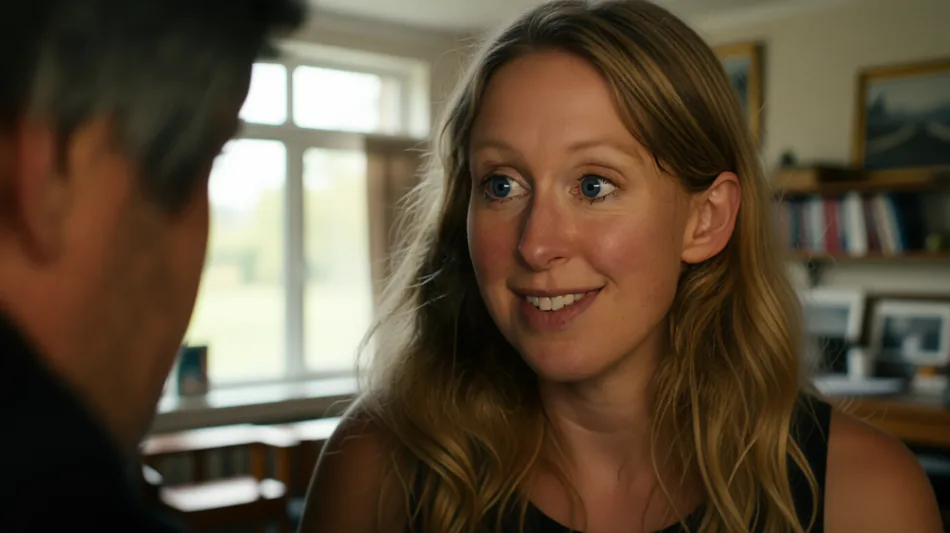
In the documentary You Can See Everything, directors Nathan Fielder and Lance Oppenheim conduct an intense, close-range study of convicted Theranos fraudster Elizabeth Holmes. The film captures Holmes’s interactions with her partner Billy Evans and actress Amanda Seyfried, exploring her continued denial of guilt and the complex dynamics surrounding her post-prison life.
Nathan Fielder’s You Can See Everything presents an intense, close-range examination of convicted fraudster Elizabeth Holmes, described by critics as a gripping thriller that rivals any fictional narrative. Co-directed by Fielder and Lance Oppenheim, the film operates as a situationist docu-hybrid, placing the former biotech CEO in intimate proximity to her own mythology.
The documentary revisits the collapse of Theranos, the US biotech firm Holmes ran with her then-partner Sunny Balwani. In 2003, the company famously claimed to have invented a device capable of diagnosing numerous illnesses from a single drop of blood. The firm’s prestige was bolstered by credulous board members including George Schultz and Henry Kissinger. However, the technology failed to materialize, leading to Holmes’s conviction for fraud.
In the film, Holmes is depicted in the rented San Diego beachfront home she shares with her current partner, Billy Evans. Evans is characterized as a protective figure, described by the review as an "alpha-dog blowhard" and a wannabe tech entrepreneur who is an enthusiast of conservative commentator Charlie Kirk. The couple has two small children together.
Holmes maintains her innocence throughout the film, adopting what the review describes as a "wide-eyed gaze and vacuous smile." She insists that the technology works, a position she frames not as current reality but as future certainty. According to the report, Holmes appears to believe that the act of faking the technology’s viability is equivalent to making it work, leaving only the logistical matter of acquiring the necessary components for the device.
Fielder’s objective is to determine whether Holmes is aware she is lying and to compel her to admit the truth. The review notes that this mission requires considerable indirection and subtlety, comparing Fielder’s approach to journalist Gitta Sereny’s conversations with Nazi official Albert Speer. Fielder aims to uncover how and why Holmes has internalized her own delusional narrative.
The interactions are described as an "Olympic stare-out contest" between Fielder and Holmes, both maintaining polite, straight faces. Similar tension arises in Fielder’s conversations with Evans. The review highlights a sequence where Fielder shows Holmes a clip of the comedy duo Abbott and Costello performing their routine "Who’s on first?" While the scene is described as gloriously funny and insightful, Holmes flinches and sobs when shown clips of actress Amanda Seyfried portraying her in the miniseries The Dropout.
The film explores the dysfunctional, co-dependent relationship Holmes once had with Balwani and questions whether her "disingenuous idealism" attracts abusive puppetmasters. It also examines why Holmes and Evans agreed to Fielder as their interrogator, citing their appreciation for his ability to think outside the box and his HBO series The Rehearsal, which merges reality and fiction.
A significant shift occurs when Holmes is sent to prison. Fielder and Oppenheim contact Seyfried to re-enact conversations with Holmes and Evans that were not filmed. Seyfried is described as explosively incredulous and overexcited, contrasting with Fielder’s cool demeanor. Unlike the other subjects, Seyfried’s emotions are fully visible on screen.
The review suggests the film executes a "whiplash change-of-mind" regarding its central narrative, similar to Andrew Jarecki’s Capturing the Friedmans. The inclusion of Seyfried creates a hyperreal version of Holmes, prompting questions about whether Holmes is playing a role, a suggestion originally made by The New York Times that Holmes rejects. Evans is also shown discussing plans to keep Holmes present in his life and on his computer screen.
The documentary’s narrative mystery is partly constructed through editing and musical score, leaving open the question of what information has been withheld. The review concludes that the film is a high-wire act of audacity, offering an unblinking look at a figure who remains an enigma.
(R.White--TAG)