Nepal Flood Death Toll Reaches 675 as Rescuers Confront Rain and Tunnel Crisis

 London
 20 °C
20 °C

 Manchester
16 °C
Manchester
16 °C
 Glasgow
19 °C
Glasgow
19 °C
 Dublin
 17 °C
17 °C
 Belfast
16 °C
Belfast
16 °C
 Washington
 29 °C
29 °C
 Denver
31 °C
Denver
31 °C
 Atlanta
 29 °C
29 °C
 Dallas
37 °C
Dallas
37 °C
 Houston Texas
34 °C
Houston Texas
34 °C
 New Orleans
33 °C
New Orleans
33 °C
 El Paso
34 °C
El Paso
34 °C
 Phoenix
41 °C
Phoenix
41 °C
 Los Angeles
 32 °C
San Diego
33 °C
San Francisco
19 °C
Chicago
27 °C
Minneapolis
24 °C
Seattle
15 °C
Portland
19 °C
Salt Lake City
18 °C
Las Vegas
38 °C
Miami
27 °C
Jacksonville
31 °C
San Antonio
34 °C
Bermuda
31 °C
Nassau
25 °C
Iqaluit
7 °C
Yellowknife
15 °C
Anchorage
13 °C
Fairbanks
8 °C
Barrow
1 °C
Calgary
20 °C
Edmonton
31 °C
Winnipeg
26 °C
Goose Bay
22 °C
Halifax
24 °C
Boston
25 °C
Ottawa
24 °C
Toronto
25 °C
Detroit
28 °C
Cleveland
28 °C
New York
26 °C
Baltimore
27 °C
Philadelphia
26 °C
Nuuk (Godthåb)
10 °C
Hong Kong
32 °C
San Diego
33 °C
San Francisco
19 °C
Chicago
27 °C
Minneapolis
24 °C
Seattle
15 °C
Portland
19 °C
Salt Lake City
18 °C
Las Vegas
38 °C
Miami
27 °C
Jacksonville
31 °C
San Antonio
34 °C
Bermuda
31 °C
Nassau
25 °C
Iqaluit
7 °C
Yellowknife
15 °C
Anchorage
13 °C
Fairbanks
8 °C
Barrow
1 °C
Calgary
20 °C
Edmonton
31 °C
Winnipeg
26 °C
Goose Bay
22 °C
Halifax
24 °C
Boston
25 °C
Ottawa
24 °C
Toronto
25 °C
Detroit
28 °C
Cleveland
28 °C
New York
26 °C
Baltimore
27 °C
Philadelphia
26 °C
Nuuk (Godthåb)
10 °C
Hong Kong
 29 °C
Singapore
29 °C
Singapore
 28 °C
Melbourne
32 °C
Canberra
28 °C
Melbourne
32 °C
Canberra
 3 °C
Adelaide
8 °C
Darwin
22 °C
Perth
15 °C
Fort Worth
37 °C
Honolulu
26 °C
Sydney
9 °C
Johannesburg
3 °C
Adelaide
8 °C
Darwin
22 °C
Perth
15 °C
Fort Worth
37 °C
Honolulu
26 °C
Sydney
9 °C
Johannesburg
 10 °C
Dubai
36 °C
Mumbai
28 °C
Zürich
21 °C
Tokyo
20 °C
Seoul
23 °C
Delhi
31 °C
Beijing
19 °C
Riyadh
38 °C
Prague
21 °C
Pennsylvania
26 °C
Valletta
30 °C
Manama
36 °C
Warsaw
19 °C
Stockholm
17 °C
10 °C
Dubai
36 °C
Mumbai
28 °C
Zürich
21 °C
Tokyo
20 °C
Seoul
23 °C
Delhi
31 °C
Beijing
19 °C
Riyadh
38 °C
Prague
21 °C
Pennsylvania
26 °C
Valletta
30 °C
Manama
36 °C
Warsaw
19 °C
Stockholm
17 °C
Rescue teams continued searching flood-hit Nepal and the Tibetan border region as the confirmed toll rose, thousands remained missing and authorities assessed a multibillion-dollar reconstruction effort.
The death toll from the flash floods that swept through the Nepal-Tibet border region reached at least 675 in Nepal on Saturday, August 29, according to Nepali police. Chinese state media reported seven additional deaths on the Tibetan side. The operation entered its fourth day with search teams still trying to locate thousands of people.
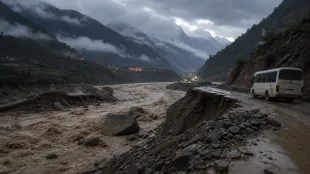
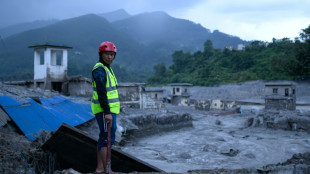
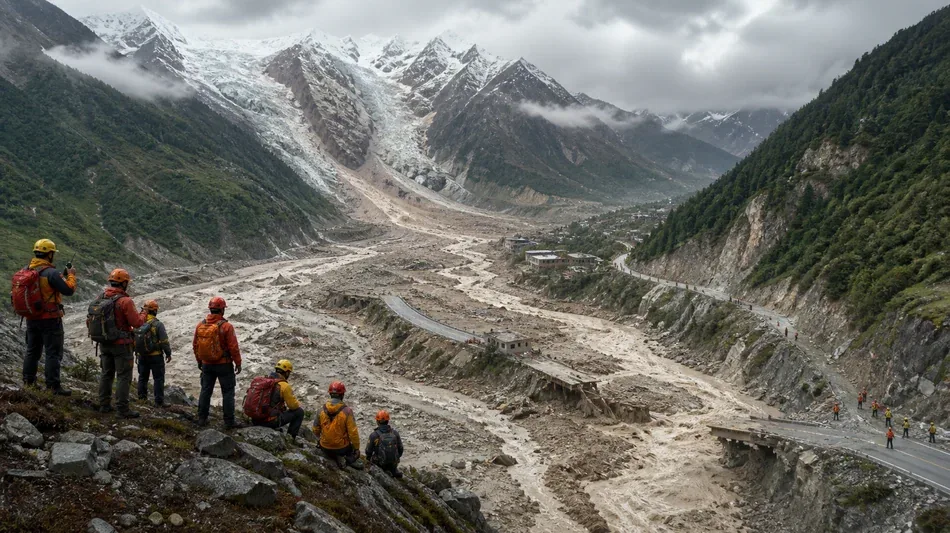
An ice-and-rock avalanche after a glacier collapse near the border sent a mass of water, mud and debris through central Nepal on Wednesday, August 26. Towns and villages were destroyed, homes and vehicles were carried away, bridges and roads were cut, and major hydropower installations were damaged.
Nearly 3,000 stranded people were evacuated in Nepal, including foreign visitors. The Nepal Army’s Public Relations Directorate gave a confirmed evacuation figure of 2,465, among them 163 foreigners: 113 Indians, 26 Chinese nationals, 15 South Koreans, four Germans, two Italians, two Americans and one citizen of Oman.
The army also reported that 191 workers had been removed from tunnels at hydropower sites in Trishuli and Rasuwa. More than 100 people were still believed trapped in the Trishuli-3A Hydropower Project tunnel, where rescuers used drilling equipment and tried to clear the entrance.
An 82-person team drawn from the Nepal Army, Armed Police Force and Nepal Police worked from Friday night to excavate the entrance. The Prime Minister’s Office said 350 people had already been rescued from the site under highly dangerous conditions, but bad weather was making the remaining operation exceptionally difficult.
India sent an 11-member team of medical personnel and tunnel-rescue specialists at Nepal’s request. After aerial reconnaissance over Chilime and Langtang, the specialists reached the Trishuli area to assess the rescue problem. China dispatched five tunnel experts by helicopter from Tibet for work at the hydropower station.
The third Indian Air Force assistance flight reached Kathmandu late Friday. India’s Ministry of External Affairs said the consignment was delivered to Nepal’s Minister for Science, Technology and Innovation, Mahabir Pun. The specialized team marked a move from immediate supply deliveries toward complex tunnel operations.
Defence Minister Rajnath Singh said India was concerned by the crisis and was sending relief material. He said Prime Minister Narendra Modi had offered whatever help Nepal required. Indian officials also maintained a 24-hour embassy helpline and deployed National Disaster Response Force teams in border areas, including along Uttar Pradesh and Bihar.
Nepalese Foreign Minister Shisir Khanal thanked the international community, including India, and denied reports that Nepal had rejected outside assistance. He said support would be needed during reconstruction as well as during immediate relief.
Khanal said Nepal particularly needed foreign expertise to rescue people in tunnels, restore transport and communications where bridges had been destroyed, identify bodies, conduct DNA testing and preserve remains. He said the country could manage general search and rescue but required highly technical support.
Finance Minister Swarnim Wagle estimated rebuilding costs at $4 billion to $5 billion, while stressing that a formal loss-and-damage assessment was still under way. More than ₹2.295 billion had been donated to the Prime Minister’s Disaster Relief Fund by Friday night through accounts at 10 commercial banks.
The relief fund received ₹1.91 billion between Wednesday afternoon and Thursday midnight and another ₹385.5 million on Friday. Officials said its balance had risen from ₹2.17 billion to ₹4.09 billion.
Wagle said the immediate priorities were rescuing anyone still alive, including those trapped at hydropower plants, and flying supplies to Dhunche, Rasuwa and Syaphru Besi, where roads were unusable. The Nepal Army had airlifted 1,930 people, including many foreigners, he said.
Authorities also faced the challenge of managing bodies carried downstream toward Chitwan and Nawalpur and potentially into India. Nepal has morgue capacity for about 350 bodies nationwide, creating a shortage as remains awaited identification and collection by relatives.
Bodies from the Rasuwa and Nuwakparasi flood zones were recovered in Nuwakot and farther downstream in Chitwan, Tanahun, Nawalparasi and other low-lying districts. Three unidentified bodies were recovered from the Gandak River in Kushinagar district in Uttar Pradesh after apparently crossing from Nepal.
Those bodies were found near barrage pier number three in the Madanpur-Sukrauli area of Khadda on Friday. State Disaster Response Force teams removed them. Vehicles, gas cylinders, furniture, household items, drums, logs and other debris were also seen in the Gandak or along its banks.
An earlier district breakdown from Nepal’s National Disaster Risk Reduction and Management Authority listed 233 bodies in Chitwan, 158 in Nawalparasi East, 51 in Nuwakot, 48 in Gorkha, 47 in Nawalparasi West, 45 in Dhading, 31 in Tanahu and 13 in Rasuwa. The figures continued to rise during the day.
Nepal’s weather service warned that more rain and thunderstorms could interrupt rescue and relief work. Heavy rain was forecast in mountainous and hilly parts of Koshi, Bagmati and Gandaki provinces, in the hills of Karnali and in the Terai areas of Lumbini and Sudurpashchim.
Meteorologist Hari Prasad Dahal said most places in the Bhotekoshi flood zone in Rasuwa could receive moderate rain, with heavy rain possible in one or two locations. Officials warned that thunder, lightning and snow could also affect mountain areas.
Weather briefly halted helicopter operations at Trishuli as the river level rose. Nearby residents were evacuated as a precaution before Nepal and China resumed their rescue work.
Chinese authorities said the immediate danger from a lake created by the glacier collapse had declined as water gradually flowed through it. Satellite images showed the lake at the confluence of two rivers shrinking between Thursday and Saturday morning.
The Chinese Water Resources Ministry said the lake on the Purepu Tsangpo River covered 99,000 square meters early Saturday, about the combined area of 14 football fields. That was 21,000 square meters smaller than on Thursday.
Officials were also monitoring another, larger body of water below the glacier collapse. Chen Hongqi of the Ministry of Natural Resources’ Geological Disaster Technical Guidance Center estimated its surface area at more than 120,000 square meters, although its depth was unknown.
On the Tibetan side, emergency authorities reported seven deaths and 554 missing people. The missing included 260 foreign nationals whose nationalities had not been released.
Chinese officials said more than 1,000 people had been evacuated from Gyirong County, including 555 tourists and 499 local residents. State media reported that no tourists remained stranded there.
In Nepal, the Mugling-Kathmandu highway reopened on Saturday after being shut since Wednesday because of floods and landslide risks. Police began allowing vehicles to move gradually, relieving passengers who had spent days stranded, although many national highways and other central routes remained obstructed.
The disaster had an especially severe impact on energy infrastructure. Nepal’s missing-person list added 933 hydropower workers to groups that already included trekkers and people traveling to Mount Kailash.
India intensified monitoring of Himalayan glaciers and glacial lakes near Nepal and China. Uttarakhand Disaster Management Minister Madan Kaushik said State departments had been directed to watch known lakes and glaciers and look for signs of a similar emergency.
Former National Disaster Management Authority adviser Safi Ahsan Rizvi called for faster implementation of India’s National Glacial Lake Outburst Flood Risk Mitigation Programme and permanent cross-border control-room coordination with Nepal.
Rizvi said India and Nepal had experienced several such disasters over the past 20 to 25 years. He described the Indian mitigation program as a ₹150 crore initiative covering four States and two Union Territories and said the work should be accelerated.
Bihar Minister Ramkripal Yadav said his government was tracking the danger because water from Nepal has previously caused deaths, crop losses and damage to homes in Bihar. Nepalese President Ramchandra Paudel thanked India for its solidarity and expressed condolences over Indian citizens killed in the floods.
Congress president Mallikarjun Kharge wrote to Modi requesting more urgent humanitarian assistance and faster efforts to find, evacuate and repatriate Indians. He also asked Home Minister Amit Shah to deploy the NDRF in Nepal wherever necessary.
Indian States continued tracing residents and bringing stranded travelers home. NoRKA-Roots said 16 Keralites had returned and the safety of 45 had been confirmed. Seven remained unreachable, including four Malayalis with Australian citizenship, and their details were sent to the External Affairs Ministry.
The Kerala agency said Rineeth Mohan of Piravom returned after losing his phone while traveling from the Pokhara area toward New Delhi. A 14-person Kochi group and Kailash Mansarovar traveler Sruthi Shikhamani of Kakkanad also reached home.
Assam authorities initially listed 16 people missing, then confirmed that five were safe. The 11 still unaccounted for included a retired Gauhati University professor, her husband and a doctor from Nalbari Medical College and Hospital.
The Assam State Disaster Management Authority identified Pankaj Barman and Samar Bezbaruah of Nalbari and Shiva Marak, Sarbison Marak and Elipson Sangma of West Karbi Anglong as safe. A later update counted 10 missing after two more families confirmed contact.
Karnataka’s State Emergency Operations Centre recorded 28 people stranded or missing in Nepal and the Tibet Autonomous Region: 23 from Bengaluru Urban, two from Mysuru and one each from Dharwad, Udupi and Vijayanagara. Four were confirmed safe, while efforts continued to trace 24.
Most of the Karnataka group were thought to be in Timure in Nepal’s Rasuwa district, with others in Darchen in Tibet. Chief Minister D.K. Shivakumar spoke with residents in Nepal, promised safe travel and directed officials to arrange accommodation in Delhi before onward journeys to Bengaluru.
Maharashtra reported 404 residents stranded in the Nepal-Tibet area. Contact had been established with 338, and 37 were being moved to India. Sixty people traveling with Mumbai-based Richa Tours remained untraceable.
The External Affairs Ministry supplied Maharashtra with a list of 149 safe Indians from the State who were in China or Tibet. State authorities sent that list to district collectors for identification and coordination.
Around 100 Maharashtra pilgrims stranded in Kathmandu were moved by the Bihar government at Maharashtra’s request. Sitamarhi officials received them at the Nepal border, provided food, water and other necessities and placed them on a train home.
A separate group of Maharashtra residents reached India and spoke with Chief Minister Devendra Fadnavis by video call while traveling back to the State.
Twenty-eight Andhra Pradesh pilgrims who completed the Kailash Mansarovar Yatra returned safely after encountering the floods. Their Tirupati-based travel organizer, P. Venkatramana, said the group’s journey had already been delayed three days in Kathmandu while they waited for Chinese visas.
A group of 21 Tamil Nadu pilgrims arrived in Chennai and was received by State Ministers Narayanasamy Anand and D. Sarathkumar. Anand said four State ministers were coordinating rescue work from Delhi.
One survivor said the group saw a sudden surge of muddy water carrying a truck and a bus. They escaped through the driver’s area, climbed about 10 feet and were later taken by local police to a point from which a Nepal Army helicopter transported them toward Kathmandu.
Puducherry Chief Minister N. Rangasamy told the territorial Assembly that authorities were seeking information about Ananda Sundari, Vaishnavy Ramassamy and Geetha Ramassamy. They were part of a 57-person pilgrim group arranged by a Tamil Nadu travel company.
Rangasamy said the government was communicating with central and Nepalese authorities. He accepted a proposal to send senior officials for coordination and wrote to External Affairs Minister S. Jaishankar requesting help locating the three residents.
Infosys said Lax Gopisetty, chief executive of Infosys Public Services, could not be reached while on a private visit to Nepal. The company said it was working with agencies, supporting his family and trying to establish contact.
There was also no new information on 77 pilgrims traveling with the Isha Foundation. The group, led by the organization founded by Jaggi Vasudev, included participants from 19 countries and had been out of contact since the flood.
Coordinator Maa Gambhiri said the foundation had contacted embassies and government offices in India, China and Nepal. She said Sadhguru sought permission to visit Gyirong to assist but did not receive approval.
Road restoration continued in Dhading, where floodwater and mudslides blocked the Prithvi Highway and disrupted travel. Helicopters remained essential for reaching isolated parts of Rasuwa where land routes had vanished or merged with rivers.
The official picture changed repeatedly as bodies were recovered through the day. Early reports placed Nepal’s toll at 586, then 616 and 626; combined figures for Nepal and Tibet later reached 633 before Nepalese authorities reported 669 and finally at least 675 deaths. The missing count also moved from nearly 2,000 to more than 2,400 and then close to 3,000 as authorities added workers from damaged hydropower projects.
The rising figures reflected both new searches and the distance that victims were carried. Emergency teams found remains far from the original flood zone, and officials said some may have crossed the international border through river systems. That movement complicated identification, forced coordination across districts and created the possibility that families would have to search outside their home areas.
The National Disaster Risk Reduction and Management Authority said bodies had been recovered in eight Nepalese districts. Chitwan’s 233 and Nawalparasi East’s 158 made up the largest shares in one update, followed by Nuwakot, Gorkha, Nawalparasi West, Dhading, Tanahu and Rasuwa. Those totals represented a point in a continuing recovery operation rather than the final toll.
Hospitals and public authorities had to preserve remains long enough for relatives to identify them, but national storage space was insufficient for the number arriving. Khanal appealed for international assistance with identification, DNA work and longer-term preservation, explaining that bodies exposed to water for extended periods were decomposing rapidly.
The Bhotekoshi flood carried destruction through an area with both settlements and nationally important energy sites. Tunnels, worker camps and access routes were overwhelmed. Adding 933 energy workers to the missing list substantially changed the scale of the emergency and made specialized underground rescue one of the government’s most urgent needs.
At Trishuli-3A, teams could not simply enter the tunnel because mud and debris blocked the approach and weather continued to threaten the site. Army and police personnel worked to expose the entrance while Indian specialists prepared an aerial assessment. Chinese experts were also sent specifically because conventional surface rescue methods were not enough for the conditions underground.
The lake above the disaster zone remained an important secondary risk even after Chinese officials said its immediate danger had declined. A controlled outflow appeared to be lowering the smaller lake, but the newly identified body of water below the collapse was larger and its depth was unknown. Monitoring therefore continued on both sides of the border.
In Nepal’s cut-off communities, the emergency was not limited to finding the missing. Roads, bridges and communications had to be restored so food, medicine and other supplies could reach residents. Wagle said air delivery was required in several Rasuwa locations, while the reopening of the Mugling-Kathmandu highway restored only one major link in a wider damaged network.
Survivors who escaped the initial torrent faced the loss of homes, vehicles, livelihoods and public services. Officials said the reconstruction estimate could only be preliminary while assessments were incomplete. The projected $4 billion to $5 billion cost covered a recovery expected to continue long after evacuation flights and emergency searches ended.
India’s response combined diplomatic coordination, supplies, technical personnel and State-level tracing efforts. The embassy help line collected information on missing or stranded citizens, special flights carried assistance to Kathmandu, and border States prepared for possible downstream effects. State governments separately organized transport from Delhi, Bihar and other arrival points.
The large number of pilgrims and tourists complicated the effort because travel groups originated across India and often included foreign citizens. State emergency centers, tour operators, families, the Ministry of External Affairs and Nepalese authorities worked from separate lists that were updated as telephone contact was restored or travelers crossed into India.
For the families of people who remained uncontactable, an absence of telephone service did not necessarily establish that a traveler had been harmed. Rineeth Mohan’s safe return after losing his phone demonstrated that communications failures could leave families without information even when a person had moved away from the flood zone.
The evacuation of foreign nationals included organized military flights and difficult rescues from places inaccessible by road. Nepal’s Army reported 163 foreigners among 2,465 people evacuated, while China said tourists had been cleared from Gyirong. Nationality-specific totals continued to be reconciled with embassy and State records.
Officials in Nepal remained on high alert because fresh precipitation could send more debris into rivers, destabilize slopes and interrupt excavation at tunnels. The warning covered a broad area rather than only Rasuwa, with rain, thunderstorms and snow possible across several provinces and mountain regions.
Chinese and Nepalese teams had briefly paused operations over the possibility of another outburst before returning to the field. At Trishuli, rain also prevented a helicopter from flying and prompted precautionary movement of nearby residents as water levels increased.
The scale of international support was expected to evolve with the crisis. Nepal said it welcomed aid but would direct outside expertise to tasks it could not readily perform, including underground rescue, bridge and communications restoration and the forensic management of a very large number of victims.
As the latest toll rose and the lake threat eased somewhat, rescue officials remained focused on people trapped underground, isolated communities and the large number still missing. Nepalese ministers said the scale of reconstruction would require sustained international technical and financial support long after the immediate search ended.
(J.Torres--TAG)