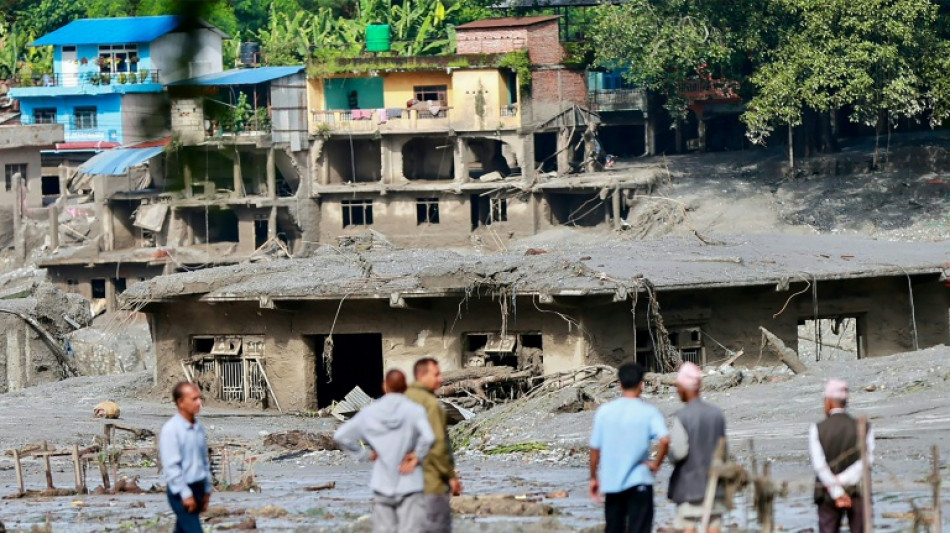
Swallowed by silt: Survivors recount Nepal flood horror / Photo: Prabin RANABHAT - AFP

 London
 20 °C
20 °C

 Manchester
18 °C
Manchester
18 °C
 Glasgow
 23 °C
23 °C
 Dublin
17 °C
Dublin
17 °C
 Belfast
 18 °C
18 °C
 Washington
 23 °C
23 °C
 Denver
18 °C
Denver
18 °C
 Atlanta
23 °C
Atlanta
23 °C
 Dallas
 27 °C
27 °C
 Houston Texas
28 °C
Houston Texas
28 °C
 New Orleans
25 °C
New Orleans
25 °C
 El Paso
29 °C
El Paso
29 °C
 Phoenix
35 °C
Phoenix
35 °C
 Los Angeles
25 °C
San Diego
23 °C
San Francisco
15 °C
Chicago
Los Angeles
25 °C
San Diego
23 °C
San Francisco
15 °C
Chicago
 19 °C
Minneapolis
16 °C
Seattle
17 °C
Portland
18 °C
Salt Lake City
23 °C
Las Vegas
33 °C
Miami
19 °C
Minneapolis
16 °C
Seattle
17 °C
Portland
18 °C
Salt Lake City
23 °C
Las Vegas
33 °C
Miami
 28 °C
Jacksonville
23 °C
San Antonio
27 °C
Bermuda
27 °C
Nassau
22 °C
Iqaluit
9 °C
Yellowknife
17 °C
Anchorage
9 °C
Fairbanks
8 °C
Barrow
0 °C
Calgary
19 °C
Edmonton
19 °C
Winnipeg
11 °C
Goose Bay
18 °C
Halifax
17 °C
Boston
18 °C
Ottawa
16 °C
Toronto
19 °C
Detroit
19 °C
Cleveland
19 °C
New York
22 °C
Baltimore
23 °C
Philadelphia
22 °C
Nuuk (Godthåb)
8 °C
Hong Kong
30 °C
Singapore
30 °C
Melbourne
24 °C
Canberra
10 °C
Adelaide
13 °C
Darwin
29 °C
Perth
15 °C
Fort Worth
26 °C
Honolulu
25 °C
Sydney
13 °C
Johannesburg
16 °C
Dubai
28 °C
Jacksonville
23 °C
San Antonio
27 °C
Bermuda
27 °C
Nassau
22 °C
Iqaluit
9 °C
Yellowknife
17 °C
Anchorage
9 °C
Fairbanks
8 °C
Barrow
0 °C
Calgary
19 °C
Edmonton
19 °C
Winnipeg
11 °C
Goose Bay
18 °C
Halifax
17 °C
Boston
18 °C
Ottawa
16 °C
Toronto
19 °C
Detroit
19 °C
Cleveland
19 °C
New York
22 °C
Baltimore
23 °C
Philadelphia
22 °C
Nuuk (Godthåb)
8 °C
Hong Kong
30 °C
Singapore
30 °C
Melbourne
24 °C
Canberra
10 °C
Adelaide
13 °C
Darwin
29 °C
Perth
15 °C
Fort Worth
26 °C
Honolulu
25 °C
Sydney
13 °C
Johannesburg
16 °C
Dubai
 40 °C
Mumbai
30 °C
Zürich
26 °C
Tokyo
25 °C
Seoul
28 °C
Delhi
33 °C
Beijing
25 °C
Riyadh
43 °C
Prague
24 °C
Pennsylvania
21 °C
Valletta
33 °C
Manama
41 °C
Warsaw
23 °C
Stockholm
21 °C
40 °C
Mumbai
30 °C
Zürich
26 °C
Tokyo
25 °C
Seoul
28 °C
Delhi
33 °C
Beijing
25 °C
Riyadh
43 °C
Prague
24 °C
Pennsylvania
21 °C
Valletta
33 °C
Manama
41 °C
Warsaw
23 °C
Stockholm
21 °C
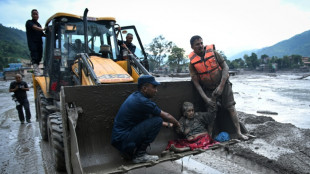
Survivors from Nepal's flood-ravaged districts, some on stretchers, others gently supported by the shoulders, were airlifted to safety on Thursday as the constant roar of helicopters echoed across the devastated town of Bidur.
A few walked alone, their faces frozen in shock, as helicopters landed every few minutes on a football field inside the town's military cantonment, whipping up clouds of dust.
Among the survivors was customs agent Omkar Joshi, who spent the previous night stranded on a hilltop in the border town of Timure before being rescued.
"Everything is finished," Joshi, 35, told AFP, his voice breaking with emotion.
The town he fled had all but vanished beneath a torrent of water, mud and debris.
"Ninety percent" of its people were dead, he said, swallowed by silt.
"It is a giant graveyard. All that is left are sand and pebbles, soaked red by human blood."
He said hundreds of people survived only by scrambling up nearby slopes as floodwaters roared through the valley below.
"It rained all night, but we stayed put till the choppers came for us," he added.
On Wednesday, a tsunami-like wall of water and mud swept through villages and towns along Nepal's Bhote Koshi and Trishuli rivers. Nepali police have recovered 270 bodies, but search operations continue.
Many of the missing are foreign tourists caught in the disaster, which according to the US Geological Survey was caused by a glacial collapse that resulted in an overwhelming flow of icy debris.
- Buried alive -
In Bidur, scores of anxious relatives peered through the barbed wire separating the football ground from the road, hoping to see the familiar face of a loved one.
Sita BK was searching for her younger brother Ramchandra, a schoolteacher in Timure.
"I spoke to him in the morning just before I heard the news," said the 37-year-old. "But ever since, his phone is switched off."
She said she had no choice but to wait.
Nearby, Anisha Nepali sat quietly in a corner, tears running down her cheeks.
The 24-year-old had rushed back from Kathmandu on Wednesday after hearing about the disaster, but has received no news of her missing mother and younger brother.
"I have given their names, but am yet to hear anything," she said.
Two young girls climbed out of a helicopter, still in their bright green school uniforms. A rescuer gently caressed their heads and offered them biscuits and water, before leading them away to safety.
Farther downstream, the devastation was etched into the shattered landscape of Devighat.
Residents said only one of roughly 150 houses along the banks of the Trishuli River remained intact: a four-storey old-age care home.
But rescuers said up to seven elderly residents were buried when a landslide crashed into the home as they tried to flee.
Images shared by a rescuer showed one of the victims trapped beneath an uprooted tree.
Sabir Miyan, a resident of the town, said warnings that floodwaters were racing down from the mountains had helped save lives.
"Many of us could save our lives but everything else is gone," he said. "It is all ruins now."
(B.Ramirez--TAG)