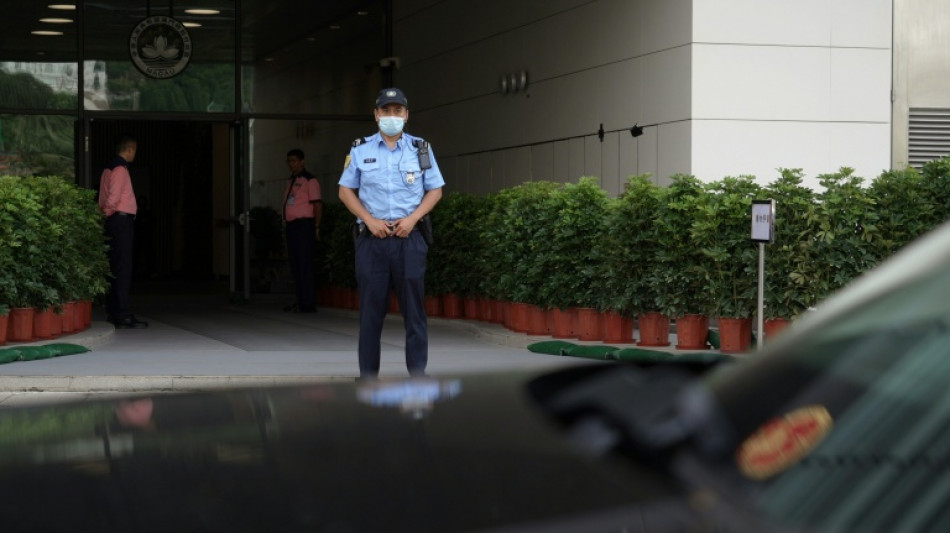
Macau holds first closed-door national security trial / Photo: Catherine LAI - AFP

 London
 14 °C
14 °C

 Manchester
 13 °C
13 °C
 Glasgow
 16 °C
16 °C
 Dublin
13 °C
Dublin
13 °C
 Belfast
13 °C
Belfast
13 °C
 Washington
17 °C
Washington
17 °C
 Denver
16 °C
Denver
16 °C
 Atlanta
 24 °C
24 °C
 Dallas
29 °C
Dallas
29 °C
 Houston Texas
28 °C
Houston Texas
28 °C
 New Orleans
 28 °C
28 °C
 El Paso
24 °C
El Paso
24 °C
 Phoenix
31 °C
Phoenix
31 °C
 Los Angeles
21 °C
San Diego
21 °C
San Francisco
15 °C
Chicago
Los Angeles
21 °C
San Diego
21 °C
San Francisco
15 °C
Chicago
 21 °C
Minneapolis
11 °C
Seattle
13 °C
Portland
14 °C
Salt Lake City
18 °C
Las Vegas
30 °C
Miami
28 °C
Jacksonville
27 °C
San Antonio
27 °C
Bermuda
21 °C
Minneapolis
11 °C
Seattle
13 °C
Portland
14 °C
Salt Lake City
18 °C
Las Vegas
30 °C
Miami
28 °C
Jacksonville
27 °C
San Antonio
27 °C
Bermuda
 27 °C
Nassau
17 °C
Iqaluit
0 °C
Yellowknife
2 °C
Anchorage
12 °C
Fairbanks
9 °C
Barrow
-1 °C
Calgary
6 °C
Edmonton
25 °C
Winnipeg
6 °C
Goose Bay
17 °C
Halifax
10 °C
Boston
13 °C
Ottawa
17 °C
Toronto
18 °C
Detroit
21 °C
Cleveland
23 °C
New York
17 °C
Baltimore
16 °C
Philadelphia
15 °C
Nuuk (Godthåb)
5 °C
Hong Kong
27 °C
Nassau
17 °C
Iqaluit
0 °C
Yellowknife
2 °C
Anchorage
12 °C
Fairbanks
9 °C
Barrow
-1 °C
Calgary
6 °C
Edmonton
25 °C
Winnipeg
6 °C
Goose Bay
17 °C
Halifax
10 °C
Boston
13 °C
Ottawa
17 °C
Toronto
18 °C
Detroit
21 °C
Cleveland
23 °C
New York
17 °C
Baltimore
16 °C
Philadelphia
15 °C
Nuuk (Godthåb)
5 °C
Hong Kong
 31 °C
Singapore
33 °C
Melbourne
26 °C
Canberra
11 °C
Adelaide
14 °C
Darwin
32 °C
Perth
24 °C
Fort Worth
29 °C
Honolulu
27 °C
Sydney
14 °C
Johannesburg
22 °C
Dubai
38 °C
Mumbai
31 °C
Singapore
33 °C
Melbourne
26 °C
Canberra
11 °C
Adelaide
14 °C
Darwin
32 °C
Perth
24 °C
Fort Worth
29 °C
Honolulu
27 °C
Sydney
14 °C
Johannesburg
22 °C
Dubai
38 °C
Mumbai
 31 °C
Zürich
21 °C
Tokyo
21 °C
Seoul
29 °C
Delhi
35 °C
Beijing
31 °C
Riyadh
38 °C
Prague
18 °C
Pennsylvania
14 °C
Valletta
27 °C
Manama
37 °C
Warsaw
17 °C
Stockholm
16 °C
31 °C
Zürich
21 °C
Tokyo
21 °C
Seoul
29 °C
Delhi
35 °C
Beijing
31 °C
Riyadh
38 °C
Prague
18 °C
Pennsylvania
14 °C
Valletta
27 °C
Manama
37 °C
Warsaw
17 °C
Stockholm
16 °C
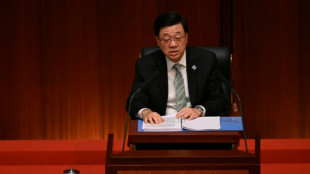
Macau was to start its first national security trial behind closed doors on Wednesday, in a case against a former pro-democracy lawmaker charged with subversion.
The Chinese casino hub expanded the scope of national security laws in May 2023, and a new bill passed this year allows judges to hear national security cases behind closed doors.
Au Kam San, a former Macau lawmaker who was detained in July 2025, was the first person to be arrested under the island's new laws and the first to face a closed trial.
The 69-year-old has been charged with "subversion of state power", as well as building ties with foreign groups and media outlets that endanger China.
Since Au's arrest, details about the case have remained scarce.
But Michael Polak, a London-based barrister representing Au, said holding the hearings in private would "be a sham process".
Prosecutors' allegations appear to arise from Au's "peaceful political activity, belief in democracy, and his regular meetings with the Office of the European Union to Hong Kong and Macau", Polak's group said earlier this year.
Au was also one of the organisers of annual vigils in Macau -- a former Portuguese territory which reverted to China in 1999 -- to remember the victims of the 1989 Tiananmen Square crackdown.
Macau and Hong Kong were once the only places in China where such public commemorations could take place.
An AFP reporter outside the court Wednesday had their details registered by police, and officials did not confirm whether the case had started.
AFP saw several vans arriving at the court, but it was not clear who was inside.
A judge last week decided to "hold the trial behind closed doors in order to ensure that national security interests are not compromised", said a statement released by judicial authorities.
The European Union has condemned Au's arrest, saying it only heightened concerns about the "erosion of political pluralism" in the territory.
Last year, the authorities also seized pro-democracy books and material relating to the 1989 Tiananmen crackdown from his home, according to Polak's advocacy group.
Au's family said earlier this year that they had been long unable to contact him or his court-appointed lawyer.
Under Macau's security law, subversion offences are subject to a prison term of up to 25 years.
(P.Clark--TAG)