Japan to boost coal-fired power as Mideast war causes energy turmoil / Photo: Kazuhiro NOGI - AFP

 London
 30 °C
30 °C

 Manchester
 30 °C
30 °C
 Glasgow
22 °C
Glasgow
22 °C
 Dublin
27 °C
Dublin
27 °C
 Belfast
23 °C
Belfast
23 °C
 Washington
 23 °C
23 °C
 Denver
22 °C
Denver
22 °C
 Atlanta
22 °C
Atlanta
22 °C
 Dallas
 27 °C
27 °C
 Houston Texas
27 °C
Houston Texas
27 °C
 New Orleans
27 °C
New Orleans
27 °C
 El Paso
24 °C
El Paso
24 °C
 Phoenix
 30 °C
30 °C
 Los Angeles
20 °C
San Diego
22 °C
San Francisco
14 °C
Chicago
22 °C
Minneapolis
21 °C
Seattle
15 °C
Portland
Los Angeles
20 °C
San Diego
22 °C
San Francisco
14 °C
Chicago
22 °C
Minneapolis
21 °C
Seattle
15 °C
Portland
 18 °C
Salt Lake City
23 °C
Las Vegas
31 °C
Miami
18 °C
Salt Lake City
23 °C
Las Vegas
31 °C
Miami
 28 °C
Jacksonville
27 °C
San Antonio
26 °C
Bermuda
27 °C
Nassau
23 °C
Iqaluit
4 °C
Yellowknife
13 °C
Anchorage
14 °C
Fairbanks
9 °C
Barrow
5 °C
Calgary
12 °C
Edmonton
22 °C
Winnipeg
14 °C
Goose Bay
18 °C
Halifax
22 °C
Boston
22 °C
Ottawa
18 °C
Toronto
19 °C
Detroit
21 °C
Cleveland
19 °C
New York
23 °C
Baltimore
23 °C
Philadelphia
24 °C
Nuuk (Godthåb)
5 °C
Hong Kong
31 °C
Singapore
30 °C
Melbourne
27 °C
Canberra
7 °C
Adelaide
12 °C
Darwin
26 °C
Perth
28 °C
Jacksonville
27 °C
San Antonio
26 °C
Bermuda
27 °C
Nassau
23 °C
Iqaluit
4 °C
Yellowknife
13 °C
Anchorage
14 °C
Fairbanks
9 °C
Barrow
5 °C
Calgary
12 °C
Edmonton
22 °C
Winnipeg
14 °C
Goose Bay
18 °C
Halifax
22 °C
Boston
22 °C
Ottawa
18 °C
Toronto
19 °C
Detroit
21 °C
Cleveland
19 °C
New York
23 °C
Baltimore
23 °C
Philadelphia
24 °C
Nuuk (Godthåb)
5 °C
Hong Kong
31 °C
Singapore
30 °C
Melbourne
27 °C
Canberra
7 °C
Adelaide
12 °C
Darwin
26 °C
Perth
 13 °C
Fort Worth
27 °C
Honolulu
13 °C
Fort Worth
27 °C
Honolulu
 24 °C
Sydney
13 °C
Johannesburg
13 °C
Dubai
38 °C
Mumbai
30 °C
Zürich
32 °C
Tokyo
25 °C
Seoul
27 °C
Delhi
36 °C
Beijing
25 °C
Riyadh
45 °C
Prague
24 °C
Pennsylvania
23 °C
Valletta
35 °C
Manama
42 °C
Warsaw
23 °C
Stockholm
20 °C
24 °C
Sydney
13 °C
Johannesburg
13 °C
Dubai
38 °C
Mumbai
30 °C
Zürich
32 °C
Tokyo
25 °C
Seoul
27 °C
Delhi
36 °C
Beijing
25 °C
Riyadh
45 °C
Prague
24 °C
Pennsylvania
23 °C
Valletta
35 °C
Manama
42 °C
Warsaw
23 °C
Stockholm
20 °C
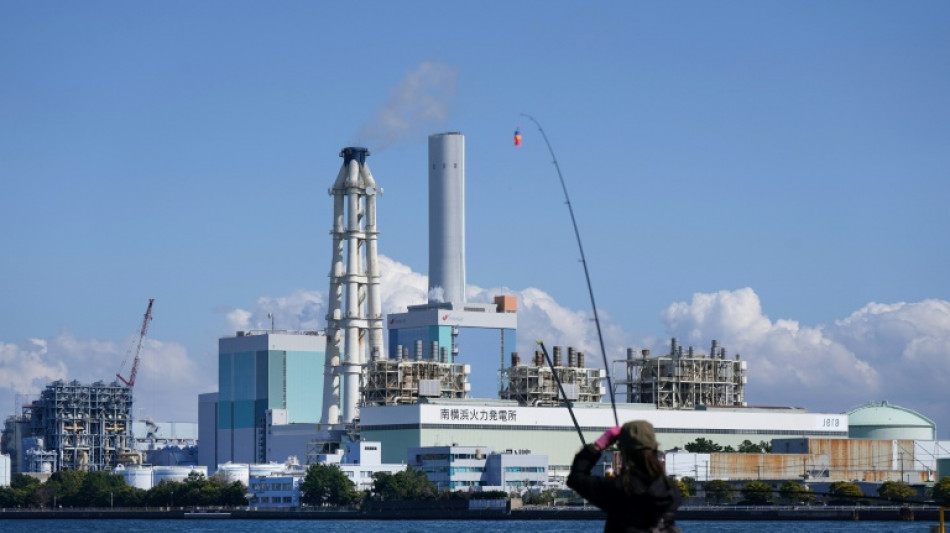
Japan's government plans to temporarily lift restrictions on coal-fired power plants as it seeks to ease an energy crunch caused by the Middle East war, officials said on Friday.
Officials presented the plan at a meeting of a panel of experts, who approved the proposal, the industry ministry said on its website.
"Given the current situation in the Middle East affecting fuel prices, we believe that uncertainty regarding future LNG procurement is increasing," an industry ministry official said at the meeting, which was broadcast online.
"We think it will be necessary, by increasing the operation of coal-fired power plants, to... ensure the reliability of stable supply," he said.
Power suppliers have previously been required to keep the operating rate of coal-fired thermal power stations that emit large amounts of carbon dioxide at or below 50 percent.
But the government now intends to allow the full operation of older, less efficient coal-fired plants, for a year from the new fiscal year starting April, according to the plan presented at the meeting.
Japan relies on thermal power plants to generate around 70 percent of its electricity needs, with coal constituting 30 percent of their fuel.
Liquefied natural gas (LNG) accounts for another 30 percent, and oil comprises seven percent.
The emergency measure to boost reliance on coal is estimated to "result in an LNG savings effect of approximately 500,000 tonnes", the official added.
But Yoko Mulholland of climate think-tank E3G told AFP that the plans to lift coal power restrictions "deepen the risk that Japan will not meet its goal of phasing out inefficient coal plants by 2030".
Not only threatening climate health, the move can also "lock Japan into a vicious cycle of fossil-fuel dependence" and delay progress toward Prime Minister Sanae Takaichi's stated goal of 100 percent domestic energy self-sufficiency, she said.
"This crisis has laid bare the risks of relying on imported fossil fuels, and now is the time for Japan to shift course to fully embrace renewable energy as a strategic national asset."
Since the Middle East war prompted Iran to partially close the crucial Strait of Hormuz trade route and target energy facilities in the Gulf, many Asian nations have pivoted towards coal to power their economies.
South Korea plans to lift a cap on coal-powered generation capacity while also increasing nuclear plant operations.
The Philippines also intended to boost the output of its coal-fired power plants to keep electricity costs down as the war wreaks havoc with gas shipments.
Japan is the fifth-biggest importer of oil with more than 90 percent of it coming from the Middle East.
Around 10 percent of its LNG imports are also from the region.
Tokyo purchases nearly 80 percent of its coal imports from Australia and Indonesia, according to the Agency for Natural Resources and Energy.
Japan on Thursday said it had also started to release another part of its strategic oil reserves, as it faced supply challenges to its oil imports.
(D.Lewis--TAG)