On Iran, Trump executes his most spectacular U-turn yet / Photo: SAUL LOEB - AFP

 London
 30 °C
30 °C
 Manchester
 31 °C
31 °C
 Glasgow
 22 °C
22 °C
 Dublin
27 °C
Dublin
27 °C
 Belfast
22 °C
Belfast
22 °C
 Washington
 30 °C
30 °C
 Denver
32 °C
Denver
32 °C
 Atlanta
32 °C
Atlanta
32 °C
 Dallas
36 °C
Dallas
36 °C
 Houston Texas
35 °C
Houston Texas
35 °C
 New Orleans
34 °C
New Orleans
34 °C
 El Paso
30 °C
El Paso
30 °C
 Phoenix
35 °C
Phoenix
35 °C
 Los Angeles
27 °C
San Diego
26 °C
San Francisco
19 °C
Chicago
25 °C
Minneapolis
30 °C
Seattle
21 °C
Portland
20 °C
Salt Lake City
29 °C
Las Vegas
36 °C
Miami
34 °C
Jacksonville
34 °C
San Antonio
35 °C
Bermuda
30 °C
Nassau
29 °C
Iqaluit
4 °C
Yellowknife
20 °C
Anchorage
14 °C
Fairbanks
17 °C
Barrow
9 °C
Calgary
Los Angeles
27 °C
San Diego
26 °C
San Francisco
19 °C
Chicago
25 °C
Minneapolis
30 °C
Seattle
21 °C
Portland
20 °C
Salt Lake City
29 °C
Las Vegas
36 °C
Miami
34 °C
Jacksonville
34 °C
San Antonio
35 °C
Bermuda
30 °C
Nassau
29 °C
Iqaluit
4 °C
Yellowknife
20 °C
Anchorage
14 °C
Fairbanks
17 °C
Barrow
9 °C
Calgary
 13 °C
Edmonton
33 °C
Winnipeg
25 °C
Goose Bay
24 °C
Halifax
28 °C
Boston
29 °C
Ottawa
24 °C
Toronto
24 °C
Detroit
27 °C
Cleveland
25 °C
New York
30 °C
Baltimore
30 °C
Philadelphia
30 °C
Nuuk (Godthåb)
7 °C
Hong Kong
30 °C
Singapore
29 °C
Melbourne
32 °C
Canberra
13 °C
Edmonton
33 °C
Winnipeg
25 °C
Goose Bay
24 °C
Halifax
28 °C
Boston
29 °C
Ottawa
24 °C
Toronto
24 °C
Detroit
27 °C
Cleveland
25 °C
New York
30 °C
Baltimore
30 °C
Philadelphia
30 °C
Nuuk (Godthåb)
7 °C
Hong Kong
30 °C
Singapore
29 °C
Melbourne
32 °C
Canberra
 6 °C
Adelaide
6 °C
Adelaide
 11 °C
Darwin
24 °C
Perth
9 °C
Fort Worth
36 °C
Honolulu
27 °C
Sydney
12 °C
Johannesburg
7 °C
Dubai
38 °C
Mumbai
11 °C
Darwin
24 °C
Perth
9 °C
Fort Worth
36 °C
Honolulu
27 °C
Sydney
12 °C
Johannesburg
7 °C
Dubai
38 °C
Mumbai
 29 °C
Zürich
28 °C
Tokyo
29 °C
Zürich
28 °C
Tokyo
 25 °C
Seoul
23 °C
Delhi
32 °C
Beijing
25 °C
Riyadh
40 °C
Prague
23 °C
Pennsylvania
29 °C
Valletta
30 °C
Manama
37 °C
Warsaw
20 °C
Stockholm
20 °C
25 °C
Seoul
23 °C
Delhi
32 °C
Beijing
25 °C
Riyadh
40 °C
Prague
23 °C
Pennsylvania
29 °C
Valletta
30 °C
Manama
37 °C
Warsaw
20 °C
Stockholm
20 °C
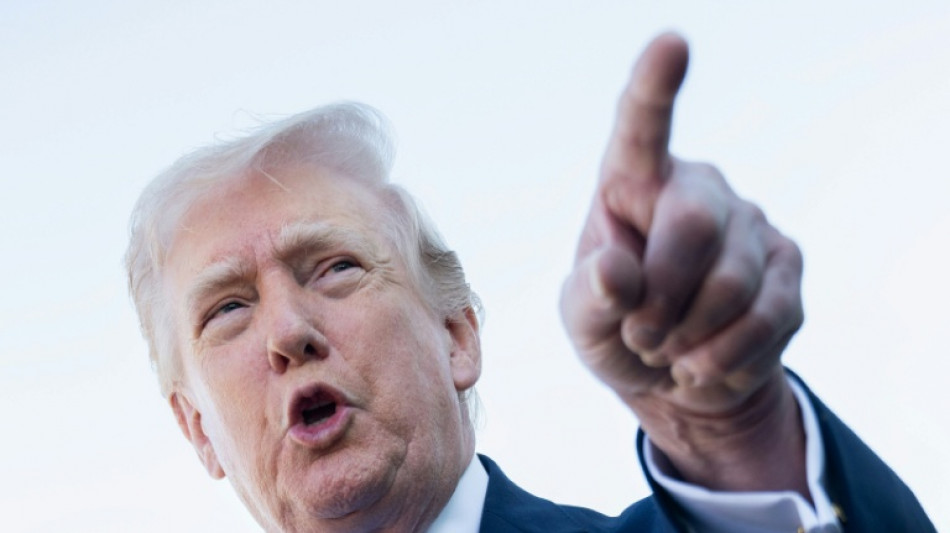
International markets and the world at large have grown used to US President Donald Trump's abrupt reversals, but Monday's about-face on Iran was one of his most spectacular yet.
Since returning to power last year, Trump has openly embraced governing "by instinct."
On the Mideast conflict, he has made a flurry of contradictory statements about goals and the timeline, and even declared on March 13 that the war would end when he "felt it in his bones."
"Trump has been a master of sudden pivots and switches. So it's sometimes hard to know if there is a strategy or if it's just always improvisation," said Garret Martin, a professor of international relations at American University in Washington.
These reversals typically follow a pattern. The Republican president issues commercial, diplomatic or military threats -- often accompanied by ultimatums -- that stun the international community.
Then he abruptly reverses course. He claims to have secured decisive concessions that he rarely divulges and promises a resolution to the crisis, causing markets to swing dramatically.
On Monday, oil prices plunged and stocks surged after Trump announced on his Truth Social platform that the United States had held talks with Iran about ending the conflict. North Sea Brent crude plummeted by more than 14 percent while its American equivalent, West Texas Intermediate, lost nearly 10 percent. The Dow Jones Industrial Average, meanwhile, jumped 700 points.
- TACO -
As recently as Saturday, Trump had given Iran 48 hours to reopen the Strait of Hormuz — a vital passage for oil shipments out of the Gulf — under threat of massive strikes against the country's power plants. He did not mention dialogue.
But then on Monday, he declared a new deadline — five days this time — to allow time for the talks to continue.
He spoke of "very productive" discussions with "highly respected" and "very solid" Iranian officials, without identifying them.
But Iranian officials denied that any negotiations were taking place, which partially dampened market enthusiasm.
Trump bragged about this negotiating skills in a speech Monday in Memphis, Tennessee, highlighting his business instincts rather than specific concessions from Tehran.
"My whole life has been a negotiation, but with Iran we've been negotiating for a long time," he said. "And this time they mean business."
The pattern is so familiar that it has its own acronym -- "TACO" for "Trump Always Chickens Out" -- coined by The Financial Times journalist Robert Armstrong in May 2025 after Trump backed down on threats to impose global tariffs that caused market havoc.
- Shaking up markets -
The TACO term originally referred to a stock market strategy involving capitalizing on a decline in assets -- triggered by a bombastic announcement from Trump -- to buy low, in the hope of reselling at a profit once he inevitably changed his mind.
Other examples include Trump backing down from threats on the United States taking over Greenland, or those directed at Federal Reserve Chairman Jerome Powell over US interest rates.
Quite often, while these U-turns shake up markets, they remain nebulous in terms of actual deals.
US partners and adversaries alike now know "there's always an impermanence with everything with this administration; agreements and promises are only as good as the minute they're made," said Martin.
In the case of Iran, Martin suggests that Trump backed down due to three factors: market jitters, potential pressure from Gulf nations and the emergence of "tensions" within his own Make America Great Again, or MAGA, political movement over the conflict.
(F.Allen--TAG)