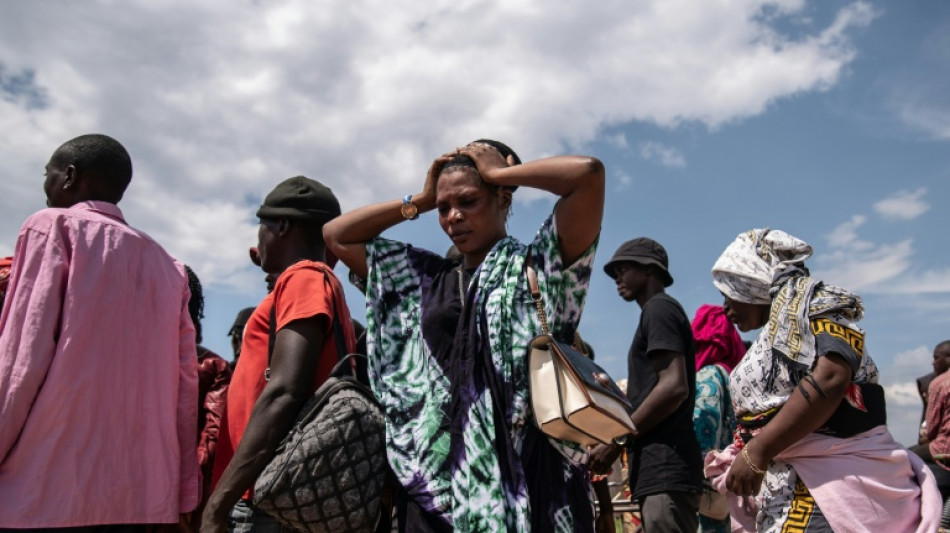
Civilians venture home after militia seizes DR Congo town / Photo: Jospin Mwisha - AFP

 London
 19 °C
19 °C

 Manchester
 12 °C
12 °C
 Glasgow
15 °C
Glasgow
15 °C
 Dublin
13 °C
Dublin
13 °C
 Belfast
13 °C
Belfast
13 °C
 Washington
28 °C
Washington
28 °C
 Denver
22 °C
Denver
22 °C
 Atlanta
31 °C
Atlanta
31 °C
 Dallas
 37 °C
37 °C
 Houston Texas
33 °C
Houston Texas
33 °C
 New Orleans
 33 °C
33 °C
 El Paso
 34 °C
34 °C
 Phoenix
40 °C
Phoenix
40 °C
 Los Angeles
 26 °C
San Diego
25 °C
San Francisco
18 °C
Chicago
26 °C
Minneapolis
26 °C
Seattle
25 °C
Portland
23 °C
Salt Lake City
30 °C
Las Vegas
32 °C
Miami
26 °C
San Diego
25 °C
San Francisco
18 °C
Chicago
26 °C
Minneapolis
26 °C
Seattle
25 °C
Portland
23 °C
Salt Lake City
30 °C
Las Vegas
32 °C
Miami
 30 °C
Jacksonville
31 °C
San Antonio
36 °C
Bermuda
27 °C
Nassau
24 °C
Iqaluit
10 °C
Yellowknife
15 °C
Anchorage
18 °C
Fairbanks
24 °C
Barrow
17 °C
Calgary
24 °C
Edmonton
30 °C
Winnipeg
21 °C
Goose Bay
19 °C
Halifax
19 °C
Boston
22 °C
Ottawa
20 °C
Toronto
21 °C
Detroit
25 °C
Cleveland
25 °C
New York
25 °C
Baltimore
27 °C
Philadelphia
30 °C
Jacksonville
31 °C
San Antonio
36 °C
Bermuda
27 °C
Nassau
24 °C
Iqaluit
10 °C
Yellowknife
15 °C
Anchorage
18 °C
Fairbanks
24 °C
Barrow
17 °C
Calgary
24 °C
Edmonton
30 °C
Winnipeg
21 °C
Goose Bay
19 °C
Halifax
19 °C
Boston
22 °C
Ottawa
20 °C
Toronto
21 °C
Detroit
25 °C
Cleveland
25 °C
New York
25 °C
Baltimore
27 °C
Philadelphia
 26 °C
Nuuk (Godthåb)
8 °C
Hong Kong
30 °C
Singapore
29 °C
Melbourne
30 °C
Canberra
12 °C
Adelaide
13 °C
Darwin
28 °C
Perth
14 °C
Fort Worth
37 °C
Honolulu
28 °C
Sydney
17 °C
Johannesburg
26 °C
Nuuk (Godthåb)
8 °C
Hong Kong
30 °C
Singapore
29 °C
Melbourne
30 °C
Canberra
12 °C
Adelaide
13 °C
Darwin
28 °C
Perth
14 °C
Fort Worth
37 °C
Honolulu
28 °C
Sydney
17 °C
Johannesburg
 9 °C
Dubai
34 °C
Mumbai
28 °C
Zürich
21 °C
Tokyo
26 °C
Seoul
25 °C
Delhi
28 °C
Beijing
23 °C
Riyadh
32 °C
Prague
22 °C
Pennsylvania
26 °C
Valletta
28 °C
Manama
36 °C
Warsaw
20 °C
Stockholm
17 °C
9 °C
Dubai
34 °C
Mumbai
28 °C
Zürich
21 °C
Tokyo
26 °C
Seoul
25 °C
Delhi
28 °C
Beijing
23 °C
Riyadh
32 °C
Prague
22 °C
Pennsylvania
26 °C
Valletta
28 °C
Manama
36 °C
Warsaw
20 °C
Stockholm
17 °C
With rifles at their feet, Burundian soldiers watch from behind barriers as more than 500 of their compatriots cross the Kavimvira border, returning home.
The group of civilians had been stranded in the Democratic Republic of Congo by fighting after the M23 militia launched an offensive in early December.
Days after signing a US-brokered peace deal in Washington, the M23 seized the eastern DRC town of Uvira, allowing it to control the land border with Burundi and cut the DRC off from military support from its neighbour.
At a visit to the newly reopened border organised by the M23, the force's spokesman Lawrence Kanyuka sought to show media on Sunday that Burundians were now safely able to return.
Two long, single-file queues stretched from the checkpoint into the horizon: one for men, another for women.
"We pleaded with the M23 to understand our suffering and help us cross the border," said Heshimwe Bismas, one of the Burundian nationals waiting.
But the capture of Uvira has raised fears of a wider war.
UN peacekeeping chief Jean-Pierre Lacroix warned that the M23's latest advance "has revived the spectre of a regional conflagration" in Africa's Great Lakes region, as well as the prospect of the "fragmentation" of the DRC.
- Looted homes -
Since taking up arms again in 2021, the M23 has seized swathes of territory, leading to a spiralling humanitarian crisis.
More than 200,000 people, mostly civilians, have been displaced by the fighting, according to the UN.
The M23's latest advance, launched early December, has left its mark along National Route 5, which runs from Kamanyola to Uvira.
Burnt-out Congolese army trucks, abandoned weapons and ammunition, deserted villages and looted homes line the usually busy road, now almost empty of traffic.
On Saturday, a few dozen displaced people walked along the roadside through the bare Ruzizi plain, against mountains rising in the background.
Among them, Samuel Masikitiko struggled to push an overloaded bicycle piled high with sacks of flour, solar panels and empty jerrycans, his son perched on top.
Now that the fighting has stopped, Masikitiko decided to return home.
For the father-son pair, the end of a long journey is near.
"Last Tuesday, the fighting was intense and we fled towards Sange," a settlement near Uvira, he said.
"After two days there, the fighting reached Sange. We fled again towards Kigube on the Burundian border."
Neaby, Yona Were hoped to find his three sisters, lost in the chaos when they fled.
"I don't know if they are dead or alive. My mother went to look for them across the border in Burundi," he said.
Safi Mapendo, a displaced woman from Luvungi, walked on foot, balancing a heavy bundle on her head.
She said she was forced to return home to avoid "dying of hunger".
- Search for fighters -
On the outskirts of Uvira near the border, the stalls and shops of Kavimvira, usually bustling, were almost all closed on Sunday.
Residents hurried home before evening, while M23 fighters searched houses for Congolese or Burundian soldiers or allied militia members and hidden weapons.
Burundi had sent 18,000 troops to support Congolese forces against the M23, but most of that contingent has now crossed back.
"The situation is not yet back to normal. We walk to do our shopping. Taxis are scarce," said one resident, who asked not to be named.
"Even finding a shop to buy water is a headache," he added.
Some residents gathered on Sunday in Uvira's cathedral to attend mass and pray for peace.
While a fragile calm has returned to the city, fighting rages just 15 kilometres (nine miles) to the south in Makobola.
Despite Washington's protests, the M23 continues to advance and now threatens the towns of Baraka and Fizi, where Congolese and Burundian forces have retreated.
(K.Jones--TAG)