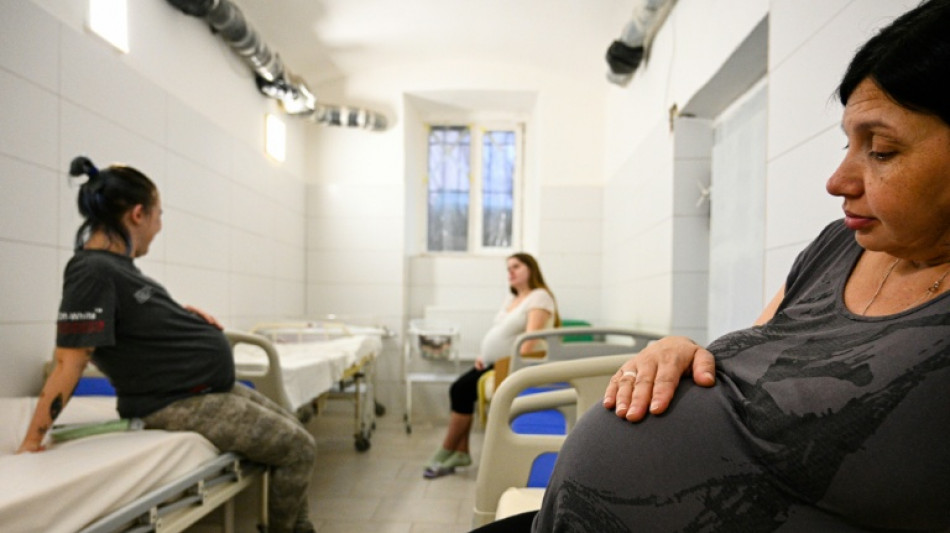
UN sounds alarm over Ukraine war's impact on pregnant women / Photo: YURIY DYACHYSHYN - AFP

 London
 17 °C
17 °C
 Manchester
11 °C
Manchester
11 °C
 Glasgow
12 °C
Glasgow
12 °C
 Dublin
15 °C
Dublin
15 °C
 Belfast
 14 °C
14 °C
 Washington
25 °C
Washington
25 °C
 Denver
18 °C
Denver
18 °C
 Atlanta
28 °C
Atlanta
28 °C
 Dallas
 33 °C
33 °C
 Houston Texas
29 °C
Houston Texas
29 °C
 New Orleans
30 °C
New Orleans
30 °C
 El Paso
28 °C
El Paso
28 °C
 Phoenix
36 °C
Phoenix
36 °C
 Los Angeles
21 °C
San Diego
21 °C
San Francisco
Los Angeles
21 °C
San Diego
21 °C
San Francisco
 15 °C
Chicago
25 °C
Minneapolis
24 °C
Seattle
19 °C
Portland
20 °C
Salt Lake City
23 °C
Las Vegas
31 °C
Miami
29 °C
Jacksonville
28 °C
San Antonio
29 °C
Bermuda
28 °C
Nassau
15 °C
Chicago
25 °C
Minneapolis
24 °C
Seattle
19 °C
Portland
20 °C
Salt Lake City
23 °C
Las Vegas
31 °C
Miami
29 °C
Jacksonville
28 °C
San Antonio
29 °C
Bermuda
28 °C
Nassau
 22 °C
Iqaluit
8 °C
Yellowknife
14 °C
Anchorage
16 °C
Fairbanks
21 °C
Barrow
13 °C
Calgary
15 °C
Edmonton
26 °C
Winnipeg
17 °C
Goose Bay
14 °C
Halifax
15 °C
Boston
17 °C
Ottawa
16 °C
Toronto
19 °C
Detroit
24 °C
Cleveland
24 °C
New York
23 °C
Baltimore
24 °C
Philadelphia
22 °C
Nuuk (Godthåb)
6 °C
Hong Kong
33 °C
Singapore
32 °C
Melbourne
27 °C
Canberra
22 °C
Iqaluit
8 °C
Yellowknife
14 °C
Anchorage
16 °C
Fairbanks
21 °C
Barrow
13 °C
Calgary
15 °C
Edmonton
26 °C
Winnipeg
17 °C
Goose Bay
14 °C
Halifax
15 °C
Boston
17 °C
Ottawa
16 °C
Toronto
19 °C
Detroit
24 °C
Cleveland
24 °C
New York
23 °C
Baltimore
24 °C
Philadelphia
22 °C
Nuuk (Godthåb)
6 °C
Hong Kong
33 °C
Singapore
32 °C
Melbourne
27 °C
Canberra
 13 °C
Adelaide
16 °C
Darwin
13 °C
Adelaide
16 °C
Darwin
 31 °C
Perth
23 °C
Fort Worth
32 °C
Honolulu
26 °C
Sydney
31 °C
Perth
23 °C
Fort Worth
32 °C
Honolulu
26 °C
Sydney
 17 °C
Johannesburg
3 °C
Dubai
35 °C
Mumbai
29 °C
Zürich
18 °C
Tokyo
26 °C
Seoul
24 °C
Delhi
30 °C
Beijing
25 °C
Riyadh
17 °C
Johannesburg
3 °C
Dubai
35 °C
Mumbai
29 °C
Zürich
18 °C
Tokyo
26 °C
Seoul
24 °C
Delhi
30 °C
Beijing
25 °C
Riyadh
 36 °C
Prague
18 °C
Pennsylvania
22 °C
Valletta
27 °C
Manama
38 °C
Warsaw
19 °C
Stockholm
16 °C
36 °C
Prague
18 °C
Pennsylvania
22 °C
Valletta
27 °C
Manama
38 °C
Warsaw
19 °C
Stockholm
16 °C
The war in Ukraine is endangering pregnant women, and maternal mortality has risen sharply, the UN's population agency warned Wednesday.
The maternal mortality rate among pregnant women jumped by approximately 37 percent from 2023 to 2024, according to the United Nations Population Fund (UNFPA), citing the most recent full year of available data.
"Our latest analysis shows a sharp deterioration in maternal health across Ukraine, with more women at risk of dying and more pregnancies ending in life-threatening complications," Florence Bauer, the agency's director for Eastern Europe, said in a statement.
"These are not abstract statistics – they are people and families living under unbearable stress and reflect a health system under attack," she added.
UNFPA sounded the alarm six days after a strike damaged a maternity hospital run by the agency in Kherson. No injuries were reported.
Since Russia's full-scale invasion of its neighbor in 2022, more than 80 maternity and neonatal facilities have been damaged or destroyed, among the over 2,760 healthcare sites hit nationwide, UNFPA said.
Such strikes on hospitals and the breakdown of essential services "force women to give birth in increasingly dangerous conditions," the agency said.
"Safe childbirth must be protected even in war, and international humanitarian law is clear: health facilities, health workers and humanitarian access must never be targeted," Bauer said.
Between 2023 and 2024, despite a decline in the number of births, maternal mortality rose from 18.9 to 25.9 deaths per 100,000 live births -- a 37 percent increase -- according to UNFPA data.
During that period, there was a higher proportion of pregnant women affected by severe complications. That included a 44 percent increase in uterine ruptures and a 12 percent rise in hypertension during pregnancy.
The cesarean section rate, a marker of strained maternity care in humanitarian crises, was also high, with some frontline regions of Ukraine having "among the highest rates in Europe," UNFPA said.
(J.Torres--TAG)