What happens if the US bans diesel exports / Photo: Patrick T. Fallon - AFP

 London
 22 °C
22 °C

 Manchester
19 °C
Manchester
19 °C
 Glasgow
15 °C
Glasgow
15 °C
 Dublin
20 °C
Dublin
20 °C
 Belfast
17 °C
Belfast
17 °C
 Washington
17 °C
Washington
17 °C
 Denver
18 °C
Denver
18 °C
 Atlanta
18 °C
Atlanta
18 °C
 Dallas
28 °C
Dallas
28 °C
 Houston Texas
29 °C
Houston Texas
29 °C
 New Orleans
 28 °C
28 °C
 El Paso
20 °C
El Paso
20 °C
 Phoenix
 27 °C
27 °C
 Los Angeles
21 °C
San Diego
Los Angeles
21 °C
San Diego
 21 °C
San Francisco
17 °C
Chicago
18 °C
Minneapolis
17 °C
Seattle
12 °C
Portland
11 °C
Salt Lake City
21 °C
San Francisco
17 °C
Chicago
18 °C
Minneapolis
17 °C
Seattle
12 °C
Portland
11 °C
Salt Lake City
 20 °C
Las Vegas
25 °C
Miami
30 °C
Jacksonville
23 °C
San Antonio
29 °C
Bermuda
30 °C
Nassau
16 °C
Iqaluit
7 °C
Yellowknife
7 °C
Anchorage
20 °C
Las Vegas
25 °C
Miami
30 °C
Jacksonville
23 °C
San Antonio
29 °C
Bermuda
30 °C
Nassau
16 °C
Iqaluit
7 °C
Yellowknife
7 °C
Anchorage
 4 °C
Fairbanks
4 °C
Fairbanks
 -2 °C
Barrow
-3 °C
Calgary
9 °C
Edmonton
21 °C
Winnipeg
14 °C
Goose Bay
15 °C
Halifax
16 °C
Boston
17 °C
Ottawa
17 °C
Toronto
17 °C
Detroit
18 °C
Cleveland
17 °C
New York
16 °C
Baltimore
17 °C
Philadelphia
16 °C
Nuuk (Godthåb)
3 °C
Hong Kong
28 °C
Singapore
28 °C
Melbourne
29 °C
Canberra
-2 °C
Barrow
-3 °C
Calgary
9 °C
Edmonton
21 °C
Winnipeg
14 °C
Goose Bay
15 °C
Halifax
16 °C
Boston
17 °C
Ottawa
17 °C
Toronto
17 °C
Detroit
18 °C
Cleveland
17 °C
New York
16 °C
Baltimore
17 °C
Philadelphia
16 °C
Nuuk (Godthåb)
3 °C
Hong Kong
28 °C
Singapore
28 °C
Melbourne
29 °C
Canberra
 12 °C
Adelaide
19 °C
Darwin
27 °C
Perth
14 °C
Fort Worth
28 °C
Honolulu
26 °C
Sydney
12 °C
Adelaide
19 °C
Darwin
27 °C
Perth
14 °C
Fort Worth
28 °C
Honolulu
26 °C
Sydney
 17 °C
Johannesburg
25 °C
Dubai
35 °C
Mumbai
29 °C
Zürich
19 °C
Tokyo
25 °C
Seoul
19 °C
Delhi
31 °C
Beijing
19 °C
Riyadh
38 °C
Prague
14 °C
Pennsylvania
15 °C
Valletta
26 °C
Manama
35 °C
Warsaw
14 °C
Stockholm
15 °C
17 °C
Johannesburg
25 °C
Dubai
35 °C
Mumbai
29 °C
Zürich
19 °C
Tokyo
25 °C
Seoul
19 °C
Delhi
31 °C
Beijing
19 °C
Riyadh
38 °C
Prague
14 °C
Pennsylvania
15 °C
Valletta
26 °C
Manama
35 °C
Warsaw
14 °C
Stockholm
15 °C
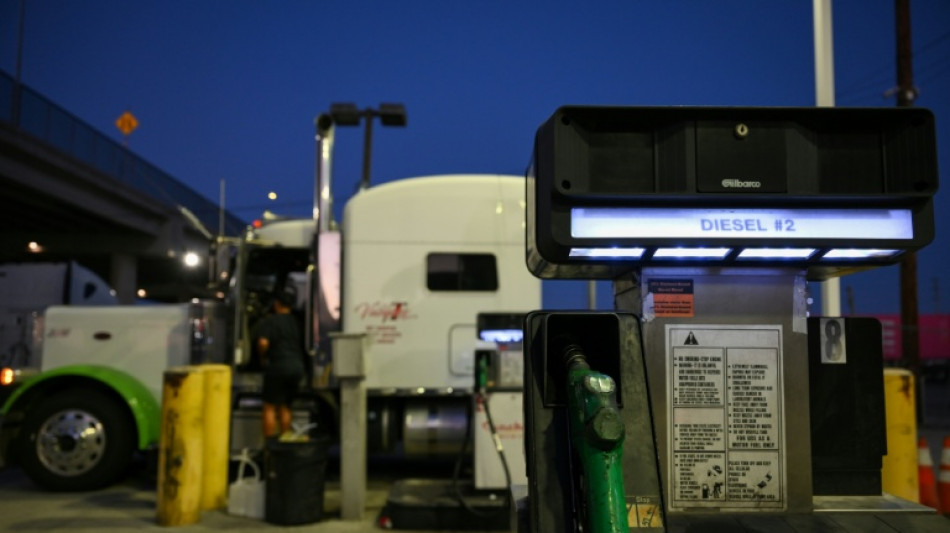
With diesel prices hitting records ahead of the US midterm elections, President Donald Trump has expressed support for a ban on diesel exports, but analysts warn the move could drive up wider fuel prices.
AFP examines the reasons below:
- Why Trump wants a ban -
Average diesel prices have struck record highs in recent weeks, pushing US prices to a fresh peak of $6.53 per gallon on Tuesday, according to the motorists' association AAA.
Prices have surged from $3.76 a gallon at the start of the US-Iran war in late February.
Soaring fuel prices threaten to cost Trump's Republicans their control of Congress in November's midterms.
Diesel is used largely in road hauling, agriculture and construction, meaning price rises can quickly spread across the economy and spur inflation.
The question of a ban still appears to be dividing the Trump administration. But several Republican figures have called for restricting diesel exports.
"I've said let's not send out the diesel," Trump told reporters on Tuesday.
- Consequences for US prices -
In the short term, "if there's an export ban, then there will be more supply in the US and therefore, prices will come down," in the country, Rystad Energy analyst Jorge Leon told AFP.
The United States produces more diesel than it consumes, exporting 1.3 million barrels per day and importing 0.2 mb/d, according to Morgan Stanley analysts.
Diesel is refined from crude oil along with other transport fuels, notably petrol and kerosene that is used to power planes.
An export ban would mean storage tanks for refined products in the US Gulf coast would "fill up in around three weeks," Morgan Stanley analysts said.
"If there's too much diesel in the US that cannot be exported, then refineries in the US will have to reduce runs," meaning they will produce less petrol and less jet fuel, said Leon.
"What we would see is prices of diesel coming down, but prices of gasoline and jet fuel increasing," he added.
- Global consequences -
If there is a ban, "international refining margins will surge" along with prices at the pump, said Helge Andre Martinsen and Tobias Ingebrigtsen at DNB Carnegie.
It could create a new energy shock, particularly for Europe which is dependent on Washington for diesel imports and would struggle to replace the volumes it needs.
Global diesel supply is already severely weakened.
A large portion of refined products from the Middle East are unavailable due to disruptions to maritime transport linked to the war, while some facilities have suffered damage from attacks.
Additionally, Ukraine's attacks on Russian refineries have forced Moscow, a key producer, to implement a moratorium on its diesel exports.
A halt in US exports to Europe could drive the price of diesel at the pump in France to around 3.90 euros ($4.40) per litre, according to consulting firm Bersingeco.
(A.Johnson--TAG)