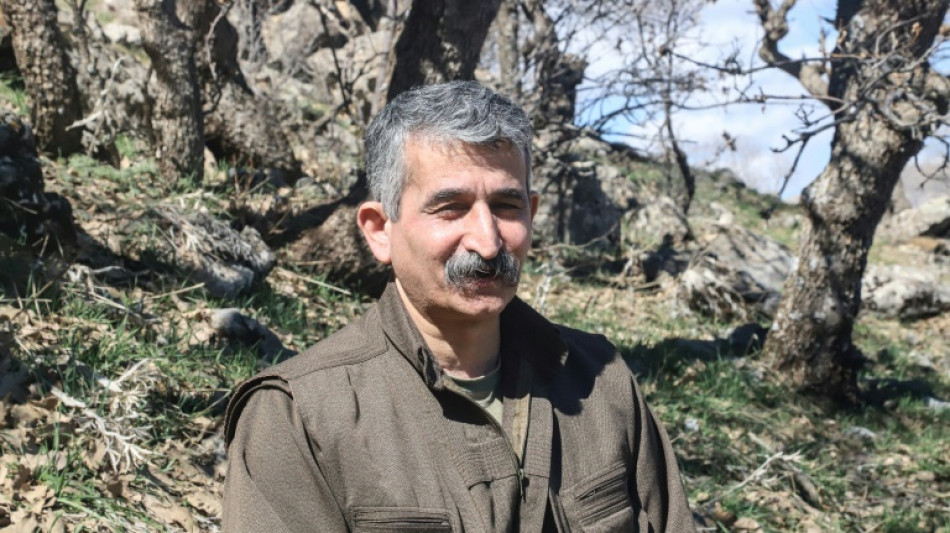
Kurdish Iranian groups in Iraq eye opportunity for change at home / Photo: Shwan MOHAMMED - AFP

 London
 27 °C
27 °C
 Manchester
21 °C
Manchester
21 °C
 Glasgow
18 °C
Glasgow
18 °C
 Dublin
21 °C
Dublin
21 °C
 Belfast
 18 °C
18 °C
 Washington
31 °C
Washington
31 °C
 Denver
 26 °C
26 °C
 Atlanta
34 °C
Atlanta
34 °C
 Dallas
36 °C
Dallas
36 °C
 Houston Texas
32 °C
Houston Texas
32 °C
 New Orleans
33 °C
New Orleans
33 °C
 El Paso
28 °C
El Paso
28 °C
 Phoenix
37 °C
Phoenix
37 °C
 Los Angeles
24 °C
San Diego
Los Angeles
24 °C
San Diego
 24 °C
San Francisco
16 °C
Chicago
23 °C
Minneapolis
26 °C
Seattle
16 °C
Portland
24 °C
San Francisco
16 °C
Chicago
23 °C
Minneapolis
26 °C
Seattle
16 °C
Portland
 17 °C
Salt Lake City
29 °C
Las Vegas
34 °C
Miami
33 °C
Jacksonville
34 °C
San Antonio
31 °C
Bermuda
29 °C
Nassau
23 °C
Iqaluit
7 °C
Yellowknife
14 °C
Anchorage
13 °C
Fairbanks
15 °C
Barrow
7 °C
Calgary
14 °C
Edmonton
31 °C
Winnipeg
20 °C
Goose Bay
23 °C
Halifax
22 °C
Boston
22 °C
Ottawa
23 °C
Toronto
25 °C
Detroit
23 °C
Cleveland
24 °C
New York
24 °C
Baltimore
31 °C
Philadelphia
26 °C
Nuuk (Godthåb)
8 °C
Hong Kong
29 °C
Singapore
17 °C
Salt Lake City
29 °C
Las Vegas
34 °C
Miami
33 °C
Jacksonville
34 °C
San Antonio
31 °C
Bermuda
29 °C
Nassau
23 °C
Iqaluit
7 °C
Yellowknife
14 °C
Anchorage
13 °C
Fairbanks
15 °C
Barrow
7 °C
Calgary
14 °C
Edmonton
31 °C
Winnipeg
20 °C
Goose Bay
23 °C
Halifax
22 °C
Boston
22 °C
Ottawa
23 °C
Toronto
25 °C
Detroit
23 °C
Cleveland
24 °C
New York
24 °C
Baltimore
31 °C
Philadelphia
26 °C
Nuuk (Godthåb)
8 °C
Hong Kong
29 °C
Singapore
 29 °C
Melbourne
33 °C
Canberra
5 °C
Adelaide
29 °C
Melbourne
33 °C
Canberra
5 °C
Adelaide
 14 °C
Darwin
26 °C
Perth
13 °C
Fort Worth
35 °C
Honolulu
25 °C
Sydney
11 °C
Johannesburg
14 °C
Darwin
26 °C
Perth
13 °C
Fort Worth
35 °C
Honolulu
25 °C
Sydney
11 °C
Johannesburg
 17 °C
Dubai
41 °C
Mumbai
28 °C
Zürich
22 °C
Tokyo
26 °C
Seoul
24 °C
Delhi
31 °C
Beijing
23 °C
Riyadh
43 °C
Prague
18 °C
Pennsylvania
29 °C
Valletta
31 °C
Manama
36 °C
Warsaw
24 °C
Stockholm
21 °C
17 °C
Dubai
41 °C
Mumbai
28 °C
Zürich
22 °C
Tokyo
26 °C
Seoul
24 °C
Delhi
31 °C
Beijing
23 °C
Riyadh
43 °C
Prague
18 °C
Pennsylvania
29 °C
Valletta
31 °C
Manama
36 °C
Warsaw
24 °C
Stockholm
21 °C
In the Iraqi mountains near Iran, an exiled Kurdish Iranian commander told AFP that whether or not the US launches strikes on Iran, he will still seek regime change in order to win self-determination for the Kurds.
Iraq's autonomous Kurdistan region has long been a haven for Kurdish Iranian armed factions, which have repeatedly faced cross-border strikes from Iran.
"We cannot take the side of either the Americans or the Iranians. Our cause is different... our goal is democratic change in Iran -- a democracy that will benefit the Kurdish people," said Mazloum Haftan, a senior commander in the Party of Free Life of Kurdistan (PJAK).
"We will neither attack Iran nor defend the current regime. We have chosen a third path: working towards democratic, peaceful change," the 54-year-old added.
An AFP team of journalists met Haftan and his fellow fighters in a bunker carved into a rugged mountainous area, now blanketed with snow, near the border with Iran.
Iran has designated his group as a terrorist organisation, and many Iranian Kurdish groups like his have previously fought Iranian security forces in Kurdish-majority areas along the border.
But in recent years, they have largely refrained from armed activity, although they continue to actively campaign from exile against the Islamic republic.
They recently stepped up their lobbying after mass anti-government protests in Iran that sparked a deadly crackdown, and as the United States conducted a military build-up in the region not seen in decades.
- 'With blood' -
If war breaks out, Haftan said he believes Iran might target Kurdish opposition positions in northern Iraq.
He also said Iranian authorities have already started boosting their security and military presence in Kurdish-majority areas of western Iran.
The impact of any US strikes would very much depend on how far they go. Should they go as far as effecting regime change, Haftan said groups like his would aim for "a decentralised system after having tried the monarchy and the Supreme Leader rule".
Last week, the PJAK and another four exiled groups announced a political coalition to seek the overthrow of Iran's Islamic republic and ultimately to secure Kurdish self-determination.
Kurdish opposition groups have long supported anti-government protests in Iran. Last month, they called for a general strike in support of the demonstrations.
In 2022, Iran launched deadly military strikes on exiled Kurdish Iranian militants, accusing them of instigating protests sparked by the death in custody of Kurdish Iranian woman Mahsa Amini.
In Iran, "the Kurds have been at the forefront of the struggle for democracy and freedom. When one leads people, one must pay a price—we have paid in blood," Haftan said.
- 'An opportunity' -
The Kurds, whose community spans areas of Turkey through Syria, Iraq and Iran, make up one of Iran's most important non-Persian ethnic minority groups.
The Democratic Party of Iranian Kurdistan (PDKI) is one of the oldest and biggest Kurdish Iranian opposition groups, and it has lost fighters and commanders, including three of its chiefs, to Iranian fire.
Despite his enmity with the Iranian state, PDKI commander Mohammed Nazif Kader told AFP over the phone his group has not supported Israeli or American attacks on the Islamic republic.
"Our coalition relies on the Iranian people, especially the Kurds," he said.
But "if a war breaks out, it will likely create an opportunity for the Iranian opposition to return" and "seek to establish a democratic system".
"We are on full alert and fully prepared... and for all forms of struggle," he added.
(T.Martin--TAG)