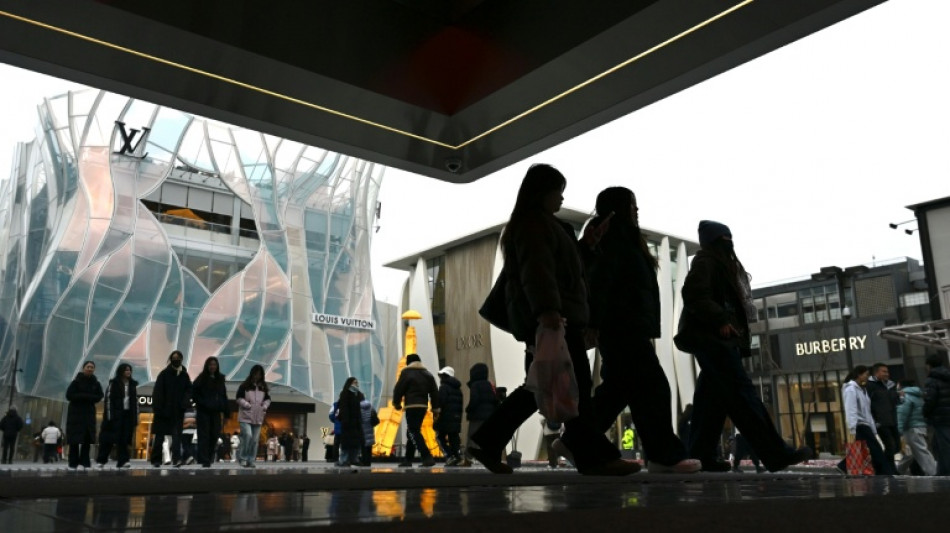
China's 2025 economic growth among slowest in decades / Photo: WANG Zhao - AFP

 London
 25 °C
25 °C

 Manchester
23 °C
Manchester
23 °C
 Glasgow
 19 °C
19 °C
 Dublin
22 °C
Dublin
22 °C
 Belfast
16 °C
Belfast
16 °C
 Washington
 32 °C
32 °C
 Denver
19 °C
Denver
19 °C
 Atlanta
28 °C
Atlanta
28 °C
 Dallas
 27 °C
27 °C
 Houston Texas
28 °C
Houston Texas
28 °C
 New Orleans
30 °C
New Orleans
30 °C
 El Paso
24 °C
El Paso
24 °C
 Phoenix
26 °C
Phoenix
26 °C
 Los Angeles
16 °C
San Diego
18 °C
San Francisco
13 °C
Chicago
25 °C
Minneapolis
22 °C
Seattle
15 °C
Portland
15 °C
Salt Lake City
19 °C
Las Vegas
24 °C
Miami
29 °C
Jacksonville
28 °C
San Antonio
26 °C
Bermuda
27 °C
Nassau
32 °C
Iqaluit
5 °C
Yellowknife
15 °C
Anchorage
11 °C
Fairbanks
10 °C
Barrow
1 °C
Calgary
14 °C
Edmonton
25 °C
Winnipeg
16 °C
Goose Bay
26 °C
Halifax
30 °C
Boston
31 °C
Ottawa
26 °C
Toronto
26 °C
Detroit
29 °C
Cleveland
30 °C
New York
32 °C
Baltimore
33 °C
Philadelphia
33 °C
Nuuk (Godthåb)
5 °C
Hong Kong
28 °C
Singapore
29 °C
Melbourne
30 °C
Canberra
7 °C
Adelaide
11 °C
Darwin
Los Angeles
16 °C
San Diego
18 °C
San Francisco
13 °C
Chicago
25 °C
Minneapolis
22 °C
Seattle
15 °C
Portland
15 °C
Salt Lake City
19 °C
Las Vegas
24 °C
Miami
29 °C
Jacksonville
28 °C
San Antonio
26 °C
Bermuda
27 °C
Nassau
32 °C
Iqaluit
5 °C
Yellowknife
15 °C
Anchorage
11 °C
Fairbanks
10 °C
Barrow
1 °C
Calgary
14 °C
Edmonton
25 °C
Winnipeg
16 °C
Goose Bay
26 °C
Halifax
30 °C
Boston
31 °C
Ottawa
26 °C
Toronto
26 °C
Detroit
29 °C
Cleveland
30 °C
New York
32 °C
Baltimore
33 °C
Philadelphia
33 °C
Nuuk (Godthåb)
5 °C
Hong Kong
28 °C
Singapore
29 °C
Melbourne
30 °C
Canberra
7 °C
Adelaide
11 °C
Darwin
 25 °C
Perth
12 °C
Fort Worth
27 °C
Honolulu
24 °C
Sydney
10 °C
Johannesburg
18 °C
Dubai
34 °C
Mumbai
27 °C
Zürich
27 °C
Tokyo
22 °C
Seoul
25 °C
Delhi
38 °C
Beijing
25 °C
Perth
12 °C
Fort Worth
27 °C
Honolulu
24 °C
Sydney
10 °C
Johannesburg
18 °C
Dubai
34 °C
Mumbai
27 °C
Zürich
27 °C
Tokyo
22 °C
Seoul
25 °C
Delhi
38 °C
Beijing
 31 °C
Riyadh
43 °C
Prague
23 °C
Pennsylvania
32 °C
Valletta
27 °C
Manama
34 °C
Warsaw
23 °C
Stockholm
18 °C
31 °C
Riyadh
43 °C
Prague
23 °C
Pennsylvania
32 °C
Valletta
27 °C
Manama
34 °C
Warsaw
23 °C
Stockholm
18 °C
China's economy grew at one of the slowest rates in decades last year, according to official data released Monday, as officials struggle to overcome persistently low consumer spending and a debt crisis in the country's property sector.
While the five percent expansion was in line with Beijing's annual target -- a low-ball figure analysts have likened to a political comfort blanket -- observers warned it was driven largely by exports and masked weak sentiment on the ground.
And in a sign of the work ahead for leaders, the data also showed a significant slowdown in the last quarter of the year, growing at 4.5 percent as expected.
"The impact of changes in the external environment has deepened," admitted National Bureau of Statistics (NBS) official Kang Yi.
"The domestic contradiction of strong supply and weak demand is prominent, and there are still many old problems and new challenges in economic development," he told a news briefing.
While the reading was in line with the government's target of "around five percent" -- allowing officials to declare victory, Chinese consumers remain jittery about the wider economy and high unemployment.
That is despite officials relaxing fiscal policy and subsidising the replacement of household items in a sputtering bid to boost spending.
Policies and measures to boost consumption would continue into 2026, Kang noted, including a trade-in scheme for old household appliances.
"The gradual implementation of policies to clear unreasonable restrictions in the consumption sector will support consumption growth," he said.
- Overstated strength -
Figures on Monday also showed growth in retail sales, a key indicator of consumption, slowed to 3.7 percent last year from four percent in 2024.
And for December, the reading came in at 0.9 percent on-year -- the weakest pace since the end of 2022, when stringent zero-Covid measures ended.
The decline in sales likely reflects the waning impact of consumer subsidies, Zichun Huang of Capital Economics wrote in a note.
But overall figures likely "overstate the strength of the economy", she said.
Meanwhile, industrial output expanded 5.9 percent in 2025, a slight slowdown from the previous year, while the 5.2 percent increase seen in December was an improvement on November's pace.
"The December activity data suggest that output growth gained some momentum at the end of the year, but that's largely driven by resilient exports," Huang said.
"We expect growth this year to be at least slightly softer than in 2025," she added.
Officials were keen to point to China's factory activity, which ticked up slightly in December to provide an unexpected silver lining to an otherwise lacklustre year's end.
A key measure of industrial health, the manufacturing purchasing managers' index, ticked up to 50.1 last month, according to NBS data, just above the 50-point mark separating contractions from expansions. The figure had not been positive since March.
But China's crucial property sector, once a major indicator of the country's economic strength, has failed to overcome a debt crisis despite interest rate cuts and loosened restrictions on homebuying.
Fixed-asset investments in China shrunk 3.8 percent in 2025, reflecting a rebalancing following decades of heavy spending on property and infrastructure.
The broader housing market remains sluggish, with real estate investment down 17.2 percent last year.
- Trillion-dollar surplus -
The return of Donald Trump to the White House last January and the revival of a fierce trade war between the world's two largest economies added to Beijing's problems.
Chinese President Xi Jinping and Trump reached a tentative truce when they met in late October, agreeing a pause to painful measures that included lofty tit-for-tat tariffs.
Official data showed Chinese exports to the United States plunged 20 percent in 2025, but that had little impact on demand for Chinese products elsewhere.
Robust exports remained a bright spot in the cloudy economic picture despite the bruising trade war.
China's trade surplus hit a record $1.2 trillion last year, with officials lauding a "new historical high" filled by other trade partners.
Shipments to the Association of Southeast Asian Nations rose 13.4 percent year-on-year, while exports to Africa surged 25.8 percent.
Exports to the European Union were also up 8.4 percent, though imports from the bloc dipped.
(R.White--TAG)