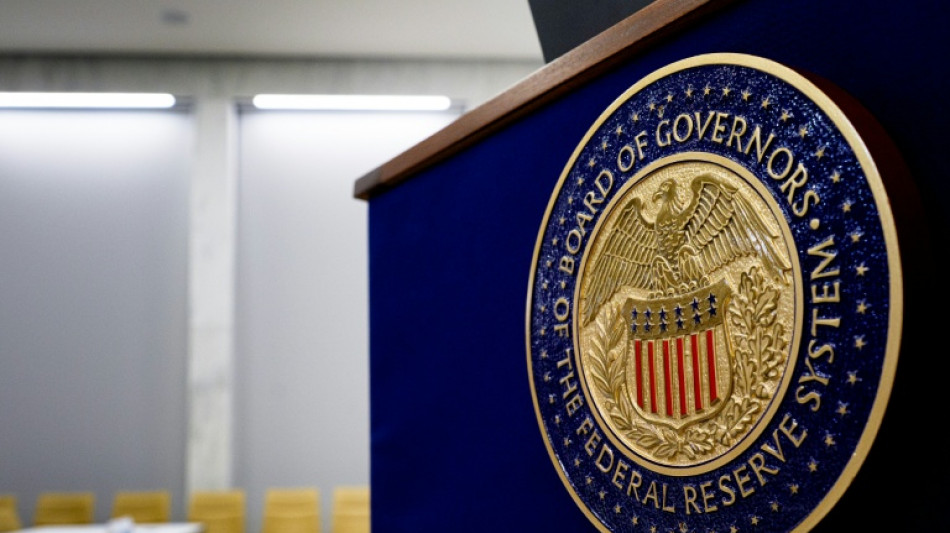
Most markets track Wall St losses as jitters set in ahead of Fed / Photo: Andrew Harnik - GETTY IMAGES NORTH AMERICA/AFP

 London
 23 °C
23 °C

 Manchester
 20 °C
20 °C
 Glasgow
 14 °C
14 °C
 Dublin
20 °C
Dublin
20 °C
 Belfast
19 °C
Belfast
19 °C
 Washington
28 °C
Washington
28 °C
 Denver
 17 °C
17 °C
 Atlanta
 22 °C
22 °C
 Dallas
 27 °C
27 °C
 Houston Texas
27 °C
Houston Texas
27 °C
 New Orleans
26 °C
New Orleans
26 °C
 El Paso
27 °C
El Paso
27 °C
 Phoenix
30 °C
Phoenix
30 °C
 Los Angeles
17 °C
San Diego
18 °C
San Francisco
12 °C
Chicago
21 °C
Minneapolis
20 °C
Seattle
14 °C
Portland
15 °C
Salt Lake City
19 °C
Las Vegas
25 °C
Miami
26 °C
Jacksonville
23 °C
San Antonio
Los Angeles
17 °C
San Diego
18 °C
San Francisco
12 °C
Chicago
21 °C
Minneapolis
20 °C
Seattle
14 °C
Portland
15 °C
Salt Lake City
19 °C
Las Vegas
25 °C
Miami
26 °C
Jacksonville
23 °C
San Antonio
 25 °C
Bermuda
27 °C
Nassau
27 °C
Iqaluit
5 °C
Yellowknife
13 °C
Anchorage
25 °C
Bermuda
27 °C
Nassau
27 °C
Iqaluit
5 °C
Yellowknife
13 °C
Anchorage
 10 °C
Fairbanks
10 °C
Barrow
1 °C
Calgary
14 °C
Edmonton
19 °C
Winnipeg
13 °C
Goose Bay
22 °C
Halifax
26 °C
Boston
26 °C
Ottawa
22 °C
Toronto
23 °C
Detroit
22 °C
Cleveland
22 °C
New York
27 °C
Baltimore
28 °C
Philadelphia
27 °C
Nuuk (Godthåb)
7 °C
Hong Kong
28 °C
Singapore
31 °C
Melbourne
25 °C
Canberra
3 °C
Adelaide
9 °C
Darwin
25 °C
Perth
15 °C
Fort Worth
27 °C
Honolulu
24 °C
Sydney
10 °C
Johannesburg
16 °C
Dubai
35 °C
Mumbai
27 °C
Zürich
26 °C
Tokyo
25 °C
Seoul
25 °C
Delhi
39 °C
Beijing
34 °C
Riyadh
43 °C
Prague
22 °C
Pennsylvania
26 °C
Valletta
31 °C
Manama
36 °C
Warsaw
19 °C
Stockholm
20 °C
10 °C
Fairbanks
10 °C
Barrow
1 °C
Calgary
14 °C
Edmonton
19 °C
Winnipeg
13 °C
Goose Bay
22 °C
Halifax
26 °C
Boston
26 °C
Ottawa
22 °C
Toronto
23 °C
Detroit
22 °C
Cleveland
22 °C
New York
27 °C
Baltimore
28 °C
Philadelphia
27 °C
Nuuk (Godthåb)
7 °C
Hong Kong
28 °C
Singapore
31 °C
Melbourne
25 °C
Canberra
3 °C
Adelaide
9 °C
Darwin
25 °C
Perth
15 °C
Fort Worth
27 °C
Honolulu
24 °C
Sydney
10 °C
Johannesburg
16 °C
Dubai
35 °C
Mumbai
27 °C
Zürich
26 °C
Tokyo
25 °C
Seoul
25 °C
Delhi
39 °C
Beijing
34 °C
Riyadh
43 °C
Prague
22 °C
Pennsylvania
26 °C
Valletta
31 °C
Manama
36 °C
Warsaw
19 °C
Stockholm
20 °C
Most stocks fell in Asia on Tuesday as investors grow nervous about the Federal Reserve's plans for interest rates next year following an expected cut this week.
With traders fully confident of a reduction Wednesday, observers said they would be keeping a close eye on the central bank's so-called "dot plot" of projections for monetary policy.
They will also be poring over its post-meeting statement and boss Jerome Powell's news conference, looking for clues about the debate taking place among decision-makers.
Bets on a third successive cut -- and more in 2026 -- have surged on the back of data pointing to a weakening jobs market, which has offset concerns about stubbornly high inflation.
That optimism was boosted last month by reports that President Donald Trump's top economic aide Kevin Hassett -- a proponent of more cuts -- was the frontrunner to take the Fed's helm when Powell's term ends.
However, the excitement has calmed in recent days and Bloomberg reported that markets are pricing two more reductions next year, down from the three expected last week.
"This decision is unlikely to be unanimous, with dissent expected from hawks and doves," wrote Fiona Cincotta, senior market analyst at City Index.
"The focus will be on economic projections and the dot plot to provide further insight into the Fed's plans for next year. The market sees two rate cuts by the summer. Should the Fed's dot plot differ from this, there could be volatility."
And Pictet Wealth Management senior US economist Xiao Cui said: "We expect solid growth, above-target inflation, and a slowing labour market to increase internal divisions at the (policy board) and make 2026 a particularly challenging year for policymakers.
"Downside risks to the labour market should lead the Committee to cut once more in December, before shifting to a quarterly pace of cuts in March and June."
However, she said her team "see risks that Fed cuts are delayed into the second half of 2026".
After a pullback in all three main indexes on Wall Street, Asian markets also struggled.
Hong Kong, Shanghai, Sydney, Seoul, Wellington, Taipei and Manila were all down, though there were gains in Tokyo, Singapore and Jakarta.
Regional chip-makers were mixed after Trump said he had reached an agreement with Chinese counterpart Xi Jinping to allow US chip giant Nvidia to export advanced artificial intelligence chips to China.
The announcement marks a significant shift in US export policy for advanced AI chips, which Trump's predecessor Joe Biden had heavily restricted over national security concerns.
Biden's administration required chip companies to create modified, less powerful versions specifically for the Chinese market.
Tokyo-listed Renesas rose more than two percent and Advantest put on almost one percent, while tech investment titan SoftBank was also in positive territory.
But in Seoul, Samsung fell more than one percent and rival SK hynix was off nearly two percent. TSMC was down one percent in Taipei.
- Key figures at around 0230 GMT -
Tokyo - Nikkei 225: UP 0.2 percent at 50,688.20 (break)
Hong Kong - Hang Seng Index: DOWN 0.8 percent at 25,569.78
Shanghai - Composite: DOWN 0.2 percent at 3,918.31
Dollar/yen: UP at 155.90 yen from 155.86 yen on Monday
Euro/dollar: UP at $1.1646 from $1.1640
Pound/dollar: UP at $1.3330 from $1.3328
Euro/pound: UP at 87.37 pence from 87.34 pence
West Texas Intermediate: DOWN 0.1 percent at $58.80 per barrel
Brent North Sea Crude: DOWN 0.1 percent at $62.43 per barrel
New York - Dow: DOWN 0.5 percent at 47,739.32 (close)
London - FTSE 100: DOWN 0.2 percent at 9,645.09 (close)
(O.Garcia--TAG)